Everest Base Camp trek: what agents need to know before selling it
The Everest Base Camp trek is a teahouse trek of about 11 days from Lukla to Everest Base Camp (5,364 m) and Kala Patthar (5,545 m on the NTB figure) and back, including two acclimatisation days, and is usually sold as 12 to 14 days from Kathmandu. It suits fit clients with no technical experience, but needs proper acclimatisation, two local fees, a realistic plan for Lukla flights and spare days for weather.
| Lukla and Kala Patthar | Lukla about 2,850 m; Kala Patthar 5,545 mSource: Nepal Tourism Board, Everest region (checked 18 Nov 2026) |
|---|---|
| Sagarmatha National Park entry | NPR 3,000 foreigners, NPR 1,500 SAARC nationals, VAT includedSource: Sagarmatha National Park citizen charter (checked 18 Nov 2026) |
| Khumbu Pasang Lhamu municipality fee | NPR 3,000 foreigners, NPR 2,000 SAARC and Chinese nationals, from FY 2024/25Source: Himal Press, 23 July 2024 (checked 18 Nov 2026) |
| Guide and TIMS rule | Listed by NTB for the Everest region since 31 March 2023Source: Nepal Tourism Board, TIMS card (checked 18 Nov 2026) |
| Lukla flights, autumn 2026 | From Manthali (Ramechhap) until 15 Mangsir, around 1 December 2026Source: Kantipur, 4 October 2026 (checked 18 Nov 2026) |
| Peak season pressure | Around 400 flights a day at Lukla, including helicopter operations, in mid November 2026Source: The Kathmandu Post, 13 November 2026 (checked 18 Nov 2026) |
The Everest Base Camp trek is the trek most clients ask for by name, and the one where small planning mistakes cost the most. The walking is not technical, but it goes high, the access depends on one of the most weather exposed airstrips in the world, and in peak weeks lodges and flights run close to capacity. This briefing is written for agents and tour operators: what the product is, who it suits, when to sell it, the fees and rules as checked in November 2026, and how we package it to protect your clients and your margins.
Everest Base Camp in brief
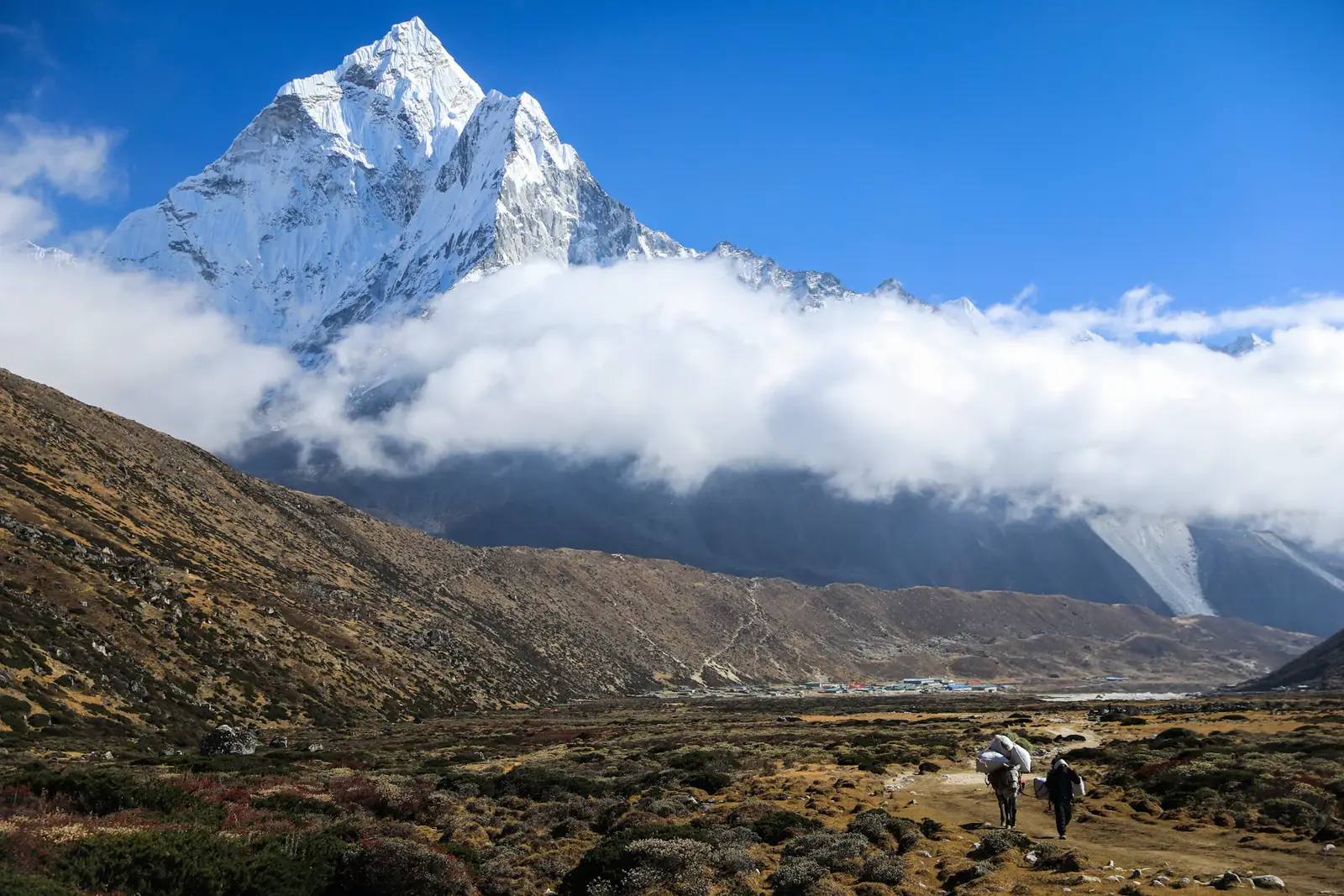
The trek starts at Lukla, which the Nepal Tourism Board puts at about 2,850 m, and follows the Dudh Koshi and Imja valleys through Sagarmatha National Park to Gorak Shep, the last lodge settlement. From there clients walk to Everest Base Camp on the Khumbu Glacier and, usually the next morning, climb Kala Patthar for the classic view of Everest.
| Point | Approximate altitude | Notes |
|---|---|---|
| Lukla | About 2,850 m (NTB) | Airstrip; start and finish of the walk |
| Namche Bazaar | About 3,440 to 3,500 m (sources differ) | First acclimatisation stop, two nights |
| Dingboche | About 4,350 to 4,410 m (sources differ) | Second acclimatisation stop, two nights; Pheriche is the alternative |
| Gorak Shep | About 5,160 to 5,180 m | Highest overnight on the standard route |
| Everest Base Camp | 5,364 m (commonly quoted) | Day visit from Gorak Shep |
| Kala Patthar | 5,545 m (NTB); some operators quote 5,644 m | Highest point of the trek |
Our standard Everest Base Camp trek runs 12 to 14 days from Kathmandu to Kathmandu. Most of that is walking; the rest is the transfer to and from the airstrip, two acclimatisation days and a spare day. Shorter versions exist, but they cut acclimatisation, which is the one place we do not compromise.
Who it suits and who it does not
Good fit
- Fit clients who walk regularly and can manage five to seven hours a day on rough trail for most of two weeks.
- First time Himalayan trekkers who want the best known route, good lodges and a strong sense of place.
- Groups of mixed ability, because the lodge network is dense and the walking days can be split.
- Clients considering a trekking peak later; the same trail leads to Lobuche East and Island Peak.
Poor fit
- Clients with heart or lung conditions who have not been cleared by a doctor for sleeping above 5,000 m.
- Clients with a hard deadline at the end of the trip. Lukla weather can delay the flight out by several days.
- Clients who want solitude in October or April. The main trail is busy in those weeks.
- Anyone unwilling to accept turning back if they show signs of altitude illness.
Best months
The main seasons are spring (March to May) and autumn (late September to November). For a fuller comparison with the Annapurna region, see our Everest or Annapurna season guide.
| Period | Conditions | Our view for groups |
|---|---|---|
| March to May | Warmer, more cloud and haze as the season goes on; Everest expedition season brings activity to base camp | Good; April and early May the most reliable |
| June to September | Monsoon cloud and rain, frequent flight cancellations | Not recommended |
| Late September to November | Clearest skies, busiest trail and flights | Best overall; book flights and lodges early |
| December to February | Cold nights, clear days, some lodges closed higher up | Possible for well equipped private groups |
Pressure in peak season is real. The Kathmandu Post reported on 13 November 2026 that Lukla was handling around 400 flights a day, including helicopter operations, and that seats from Lukla back to Kathmandu were increasingly hard to secure.
Permits and rules
The Everest Base Camp trek does not need a restricted area permit. It does need two local entry fees, and the guide rule needs explaining carefully. Fees below were checked on 18 November 2026.
| Fee or rule | Current position | Source |
|---|---|---|
| Sagarmatha National Park entry | NPR 3,000 for foreigners, NPR 1,500 for SAARC nationals, VAT included | Sagarmatha National Park citizen charter |
| Khumbu Pasang Lhamu Rural Municipality fee | NPR 3,000 for foreigners, NPR 2,000 for SAARC and Chinese nationals, since the 2024/25 fiscal year | Himal Press, 23 July 2024 |
| Licensed guide and TIMS card | Listed as required for the Everest region by the Nepal Tourism Board; locally not strictly enforced | NTB TIMS page; Explorersweb, 28 October 2026 |
The park fee is set out in the Sagarmatha National Park citizen charter, which lists it inclusive of VAT. The municipality fee was raised by NPR 1,000 from the 2024/25 fiscal year, as Himal Press reported in July 2024; we found no later change, but confirm it with us before quoting a client.
The guide rule in the Everest region
The Nepal Tourism Board TIMS card page lists the Everest region among the areas where a licensed guide and an agency issued TIMS card have been required since 31 March 2023. The local municipality has taken a different line and issues its own permits, and Explorersweb reported in October 2026 that the guide rule is still not strictly enforced in the Khumbu. For agents the answer is simple: sell the trek with a licensed guide. It is the national rule, it is what your insurance and duty of care expect, and it is how we operate. Our guide to the mandatory guide rule has the background, and our full list of Nepal trekking permits covers the other regions.
Logistics and risks
Lukla flights and Ramechhap
In the busy seasons, Lukla flights normally operate from Manthali airport in Ramechhap rather than Kathmandu, so confirm the routing for your dates. Manthali is several hours by road from Kathmandu, which means a pre dawn departure from the hotel. Kantipur reported on 4 October 2026 that the autumn Manthali period runs to 15 Mangsir, around 1 December 2026, with more than 60 flights a day in good weather; the spring period runs from Chaitra to Jestha, roughly mid March to mid June. Our Ramechhap and Lukla flights guide covers timings, baggage and what happens when flights stop.
The road option
A road now reaches close to Lukla from the south. The Annapurna Express reported on 25 October 2026 that the Surke to Lukla section is open to small vehicles but not formally inaugurated, with work continuing; it is not a road to base camp. For most groups it is a fallback when flights are suspended for days, not a planned route, and it involves a long, rough jeep journey.
Altitude
Altitude illness is the main health risk on this trek. A sound itinerary sleeps two nights in Namche and two in Dingboche or Pheriche, keeps daily sleeping gains modest above 3,000 m, and gives the guide authority to hold or descend a client. Our article on designing itineraries around altitude sickness explains the approach we use.
Helicopters
Helicopters are part of life in the Khumbu: rescue, cargo and charter returns. Rules on sightseeing landings in the upper valley are set locally and can change, so confirm what is permitted for your dates before selling a helicopter element. Insurance must cover helicopter evacuation; see our Everest helicopter operator notes for the practical limits.
Operator tip: Put the spare day at the end of the trek in Lukla, not in Kathmandu. If the flight out goes on time, the day moves to Kathmandu. If it does not, the client still makes the international connection, and you avoid a costly rebooking in the busiest week of the season.
Variations: Gokyo, Three Passes, heli return
| Variation | Our programme length | Who it suits |
|---|---|---|
| EBC via Gokyo and the Cho La | 16 to 18 days | Fit repeat trekkers who want the Gokyo lakes and a glaciated pass as well as base camp |
| Gokyo Lakes only | 11 to 13 days | Clients who want the views without the busiest trail |
| Everest Three Passes | 18 to 20 days | Experienced trekkers comfortable with long days and steep, icy passes |
| Tengboche and Everest view | 7 to 9 days | Clients short of time or not suited to sleeping above 4,000 m |
| EBC with helicopter return | Usually saves two or three walking days | Clients short of time at the end; confirm landing rules and weather first |
All of these are on our trekking programmes page. For clients who prefer a quieter, more remote circuit, our Manaslu Circuit briefing sets out the trade offs.
For travel agents: how to package it
What to include
- Sagarmatha National Park and municipality fees, shown as government fees with the date checked.
- A licensed guide throughout, porters, and a guide to client ratio that leaves room to split the group if someone needs to descend.
- Lukla flights with the Ramechhap transfer explained in plain words in your documents.
- Lodge nights on the trek and hotel nights in Kathmandu before and after.
- Insurance with helicopter evacuation as a booking condition.
Buffers
- Two acclimatisation days and at least one spare day for flights, two in October and April.
- No non refundable onward flights on the day after the planned return to Kathmandu.
Upsells
- Gokyo and the Cho La, or the Three Passes, for repeat clients.
- A trekking peak such as Lobuche East after base camp.
- Extra nights in Kathmandu for the Kathmandu Valley heritage sites.
- Guides in the client's language on request with advance notice.
We are licensed by the Government of Nepal for travel, tour, trekking and mountaineering, we are an NMA member and a TAAN member, and run our own guides and transport for groups from FIT to large parties. To build Everest Base Camp departures for your market, talk to us about a partnership.
Frequently asked questions
How difficult is the Everest Base Camp trek?
It is non technical but demanding because of altitude and length, with several days above 4,000 m. Fit clients who walk regularly and follow a properly acclimatised itinerary manage it well.
How many days is the EBC trek?
Our standard programme runs 12 to 14 days from Kathmandu to Kathmandu, including two acclimatisation days and a spare day for Lukla flights.
When is the best time for Everest Base Camp?
Late September to November gives the clearest weather, and April to early May is the best of spring. Monsoon months bring cloud and frequent flight cancellations.
Do clients need a guide for Everest Base Camp?
The Nepal Tourism Board lists the Everest region under the licensed guide and TIMS rule, although local enforcement has been loose. We always operate the trek with a licensed guide.
Do Lukla flights leave from Kathmandu?
In the main seasons they operate from Manthali airport in Ramechhap, which means an early road transfer from Kathmandu. Confirm the routing for your dates when booking.
Sources
- Nepal Tourism Board: Everest region
- Sagarmatha National Park: citizen charter
- Himal Press: Entry fee to Everest region hiked by Rs 1,000 (23 July 2024)
- Nepal Tourism Board: TIMS card
- Explorersweb: Solo trekker flouts Khumbu rules, evacuated after cliff fall (28 October 2026)
- Kantipur: Manthali to Lukla flights added (4 October 2026, in Nepali)
- The Kathmandu Post: Lukla sees a rush of tourists as trekking season picks up (13 November 2026)
- The Annapurna Express: road to Lukla (25 October 2026)