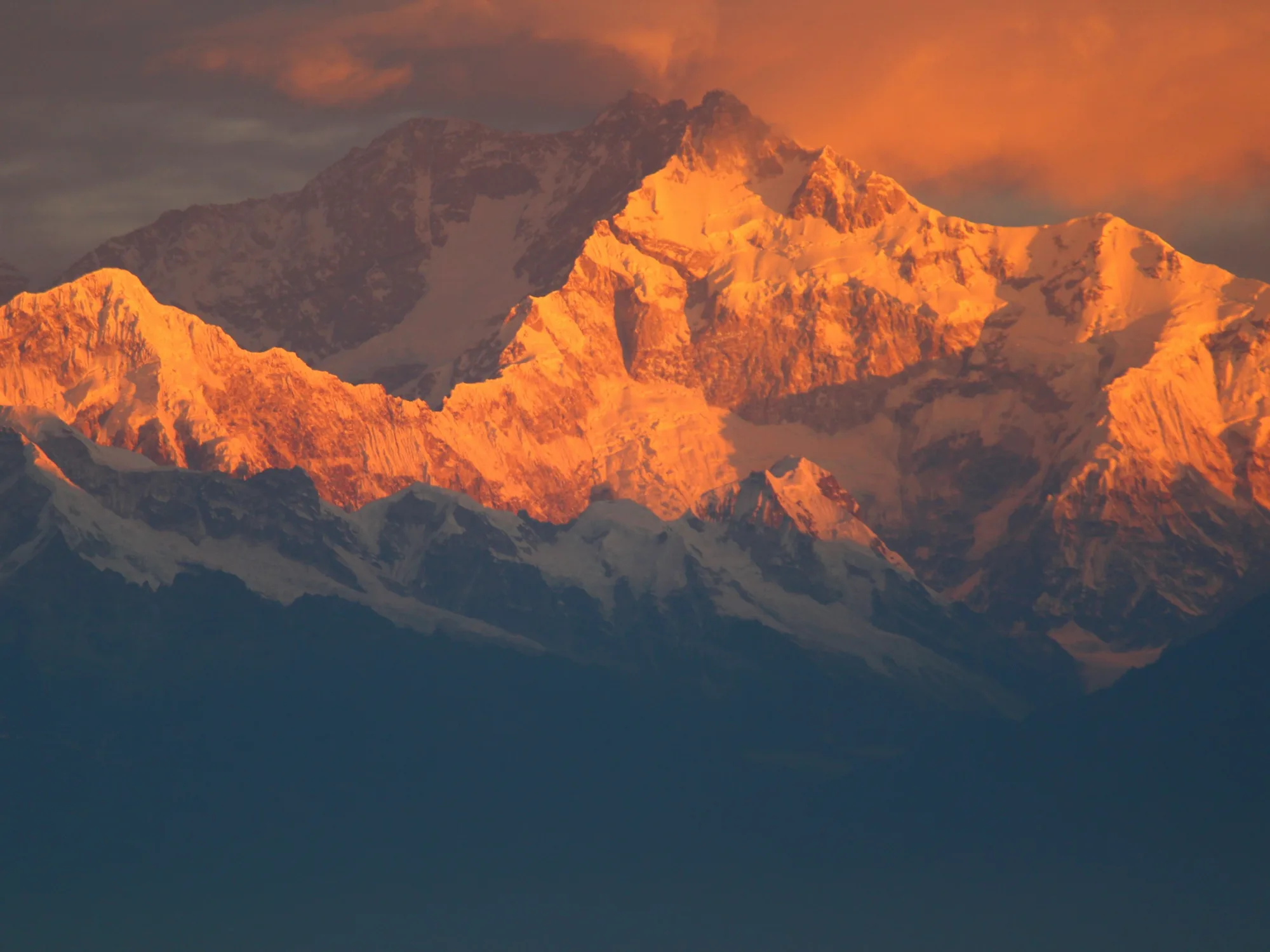
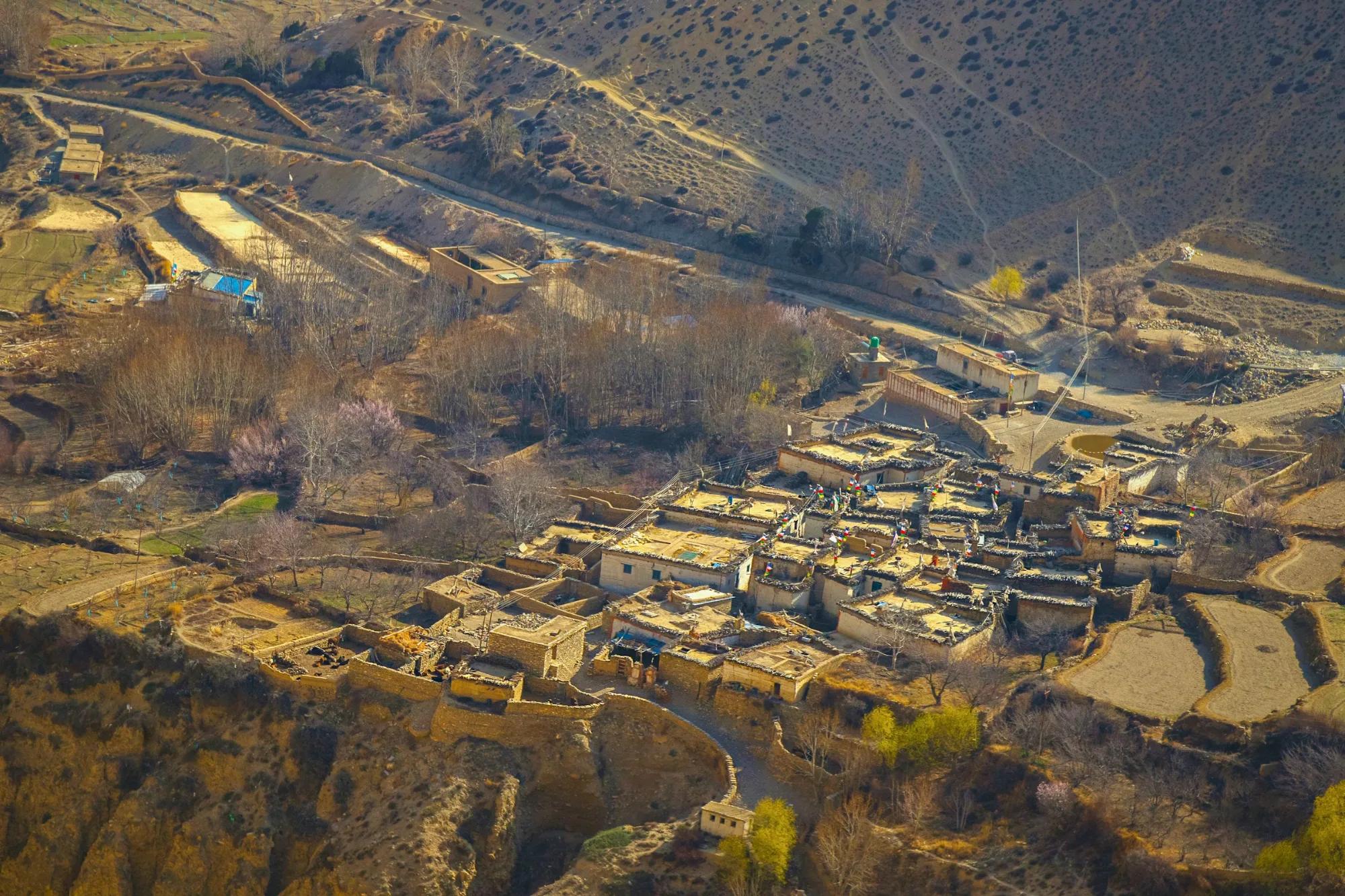
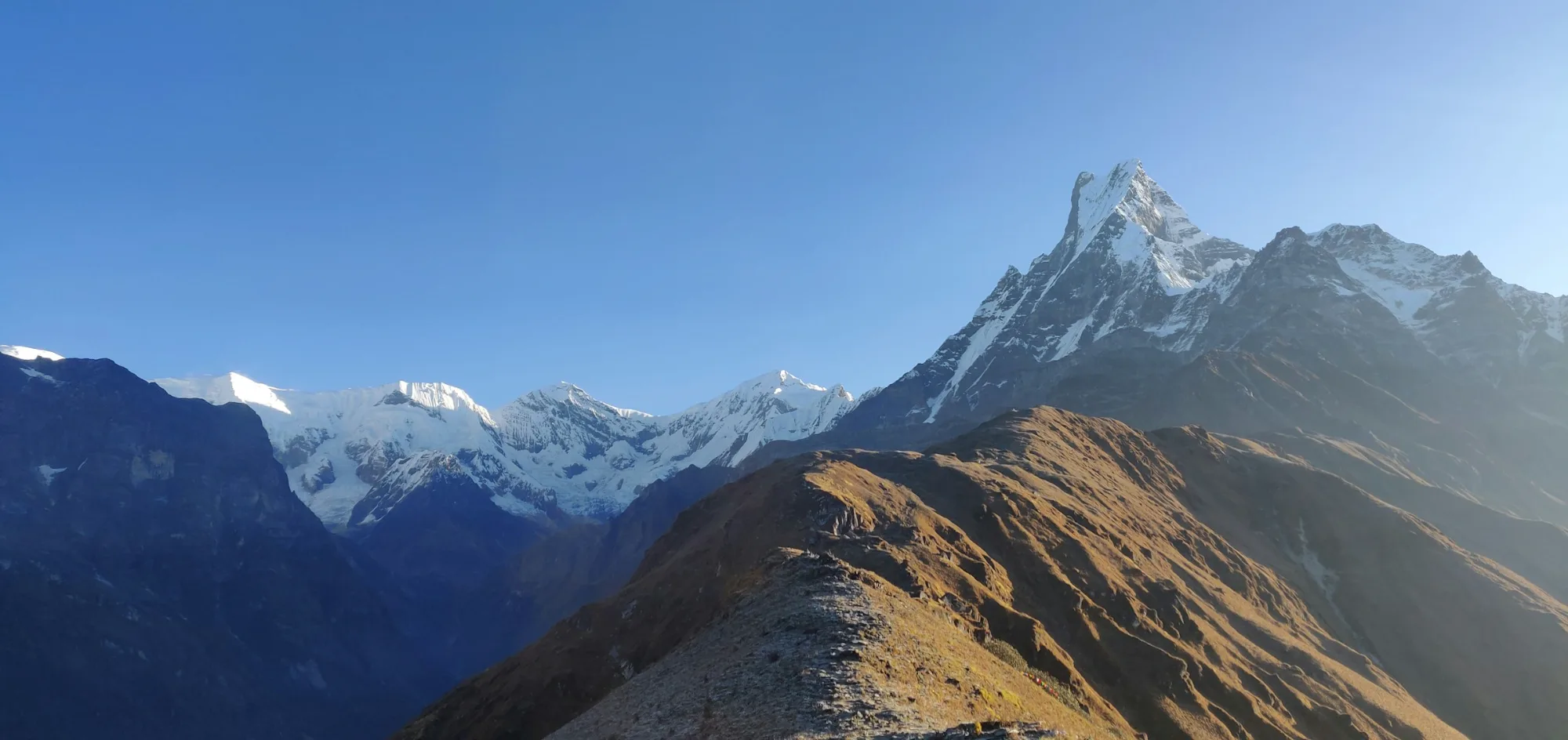
Everest base camp helicopter tour: operator notes on weather, weight and landing rules
An Everest base camp helicopter tour is a roughly five-hour morning round trip from Kathmandu with fuel stops at Lukla, overflights of Everest Base Camp and Kala Patthar (some private options add a short Kala Patthar landing where permitted) and breakfast at Hotel Everest View. Helicopters may not land at base camp itself, weight limits above Lukla mean groups are split into small lifts, and passengers with serious heart or lung conditions should not fly.
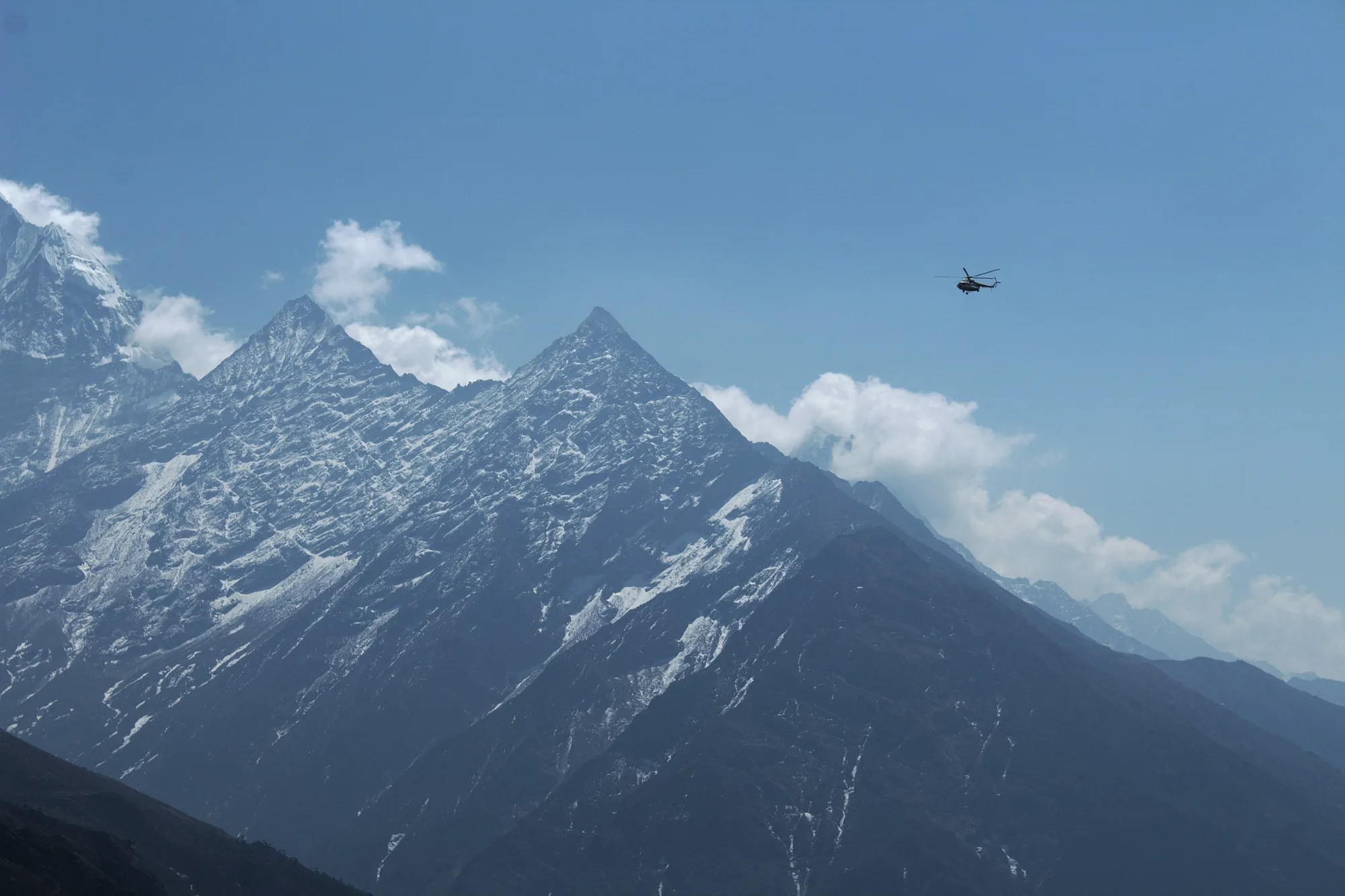
| Landing at Everest Base Camp | Not permitted; overflight onlySource: Kathmandu Post, 13 December 2024 |
|---|---|
| Lukla (Tenzing-Hillary Airport) elevation | 2,846 mSource: CAAN airport profile |
| Kala Patthar altitude | About 5,550 to 5,650 m (published figures of 5,545 m and 5,644 m both appear)Source: Kathmandu Post, 9 January 2025 |
| Hotel Everest View altitude | 3,880 mSource: Hotel Everest View |
| Passenger weight limit Lukla to Kala Patthar (one operator) | 250 kg totalSource: Air Dynasty Heli Services |
| Typical AMS onset after arrival at altitude | 2 to 12 hoursSource: CDC Yellow Book |
An Everest base camp helicopter tour is a morning round trip from Kathmandu. The helicopter refuels at Lukla, flies over Everest Base Camp and Kala Patthar (some private options add a short landing in the Kala Patthar area where permitted), and usually stops for breakfast at Hotel Everest View before returning. It is short, it depends entirely on the weather, and it is tightly limited by weight once the aircraft is above Lukla. These notes cover what agents need to sell it honestly, with altitudes, rules and recent news checked against official, operator and press sources in November 2026. We do not quote tour prices here.
How the Everest helicopter tour works
Most operators run the same basic programme, with the order of stops adjusted on the day to suit cloud and wind. The standard shared itinerary published by Air Dynasty Heli Services, one of the operators on this route, looks like this:
- Check-in at Kathmandu domestic terminal around 6:30 am, after an early hotel pickup, and take-off at about 7:00 am.
- Fuel stop at Lukla (Tenzing-Hillary Airport, 2,846 m according to the CAAN airport profile), with roughly 15 minutes on the ground.
- Flight up the Khumbu valley past Namche Bazaar, Tengboche and Pheriche towards Gorak Shep.
- Overflights of Everest Base Camp and Kala Patthar, without landing, for views of Everest and the Khumbu Icefall.
- Breakfast at Hotel Everest View near Syangboche, which has its own helipad, then a second fuel stop at Lukla and the return to Kathmandu.
A landing in the Kala Patthar area is sold separately by Air Dynasty as a private option, with about 10 to 20 minutes on the ground and the engine kept running. Helicopters do not land at Everest Base Camp itself. Operator web copy can be out of date: the same page still mentions base camp landings elsewhere, so confirm the landing plan in writing with the operator before you sell it.
Allow about five hours hotel to hotel; Air Dynasty's itinerary runs from 5:30 to 11:00 am. Pilots may change the order of stops, taking the high section first while the air is calm and the peaks are clear. Describe the stops to clients as a sequence the crew decides on the morning, not a timetable.
| Point on the route | Altitude | Role in the tour | Source |
|---|---|---|---|
| Lukla (Tenzing-Hillary Airport) | 2,846 m | Refuelling stop, outbound and return; passenger split for the high shuttle | CAAN airport profile |
| Hotel Everest View, Syangboche | 3,880 m | Breakfast stop with hotel helipad | Hotel Everest View |
| Everest Base Camp | 5,364 m | Overflight only, no landing | Kathmandu Post, 9 January 2025 |
| Kala Patthar | About 5,550 to 5,650 m | Overflight, or a short landing on private options where permitted | Kathmandu Post, 13 December 2024 and 9 January 2025 |
Published altitudes vary. For Kala Patthar the gap is up to about 100 m: the Kathmandu Post has given both 5,545 m and 5,644 m, and Air Dynasty uses 5,644 m. Hotel Everest View gives 3,880 m on its own site, while Air Dynasty quotes 3,950 m. Rounded figures are safer in client documents than precise ones.
Shared or private charter
Operators sell the tour in two ways, and the choice changes the client experience more than the brochure suggests.
- Shared (group joining) seats. Seats are sold individually and the operator fills the aircraft with other passengers. The timetable is fixed, the group cannot choose its companions, and above Lukla passengers are shuttled up in smaller lifts. This suits solo travellers and couples who are relaxed about timing.
- Private charter. The client books the whole aircraft. Within the weather window the group has more say over timing, can take a longer breakfast, and can decide on the day who makes the high landing. Air Dynasty lists its private Kala Patthar landing option with a minimum and maximum of two passengers, which reflects the weight limits below.
For families, photographers and anyone with a health question, private is usually the better fit. It gives the crew room to adapt without affecting strangers on the same flight.
Weight, seats and landing rules
Why operators ask for passenger weight
A helicopter produces less lift and less engine margin as the air thins. The single-engine types used on this route, such as the Airbus AS350 B3e and H125 listed by Air Dynasty, seat five passengers plus a pilot from Kathmandu, but cannot carry that load to Kala Patthar altitudes. Air Dynasty publishes a total passenger limit of 500 kg from Kathmandu to Lukla, reduced to 250 kg from Lukla to Kala Patthar or base camp, so a group may be split across two lifts. The Kathmandu Post reported the same pattern: up to four passengers to Lukla in a light or medium helicopter, and only two from Lukla to Kala Patthar.
So the weight question is not a formality. Ask every passenger for an honest weight in kilograms, including warm clothing and a camera bag, and send it with the booking. Under-reported weights do not get anyone extra time at altitude: they mean seat changes, extra shuttles or a passenger left at Lukla on the morning. Operators such as Air Dynasty allow only small bags on board.
Can helicopters land at Everest Base Camp?
No. Sagarmatha National Park restricts landings at Everest Base Camp: helicopters may fly over it but may not land there, as reported by the Kathmandu Post in December 2024 and January 2025. Where a tour includes a sightseeing landing, it is made in the Kala Patthar area above Gorak Shep, which is also the better viewpoint for Everest itself. Rescue flights follow separate procedures, covered in our guide to how helicopter rescue works in Nepal.
Local rules: the 2024 to 2026 dispute
Helicopter use in the Khumbu has been contested, and agents should know the background before promising a landing.
- In December 2024 the Sagarmatha National Park office issued a circular banning sightseeing flights from 1 January 2025, and restricting cargo flights above Pangboche (Kathmandu Post).
- In January 2025 the park allowed flights again, subject to the park's permission and fees under its rules. Khumbu Pasanglhamu Rural Municipality called that decision unilateral and kept its opposition, and commercial operators halted flights from 1 January 2025 (Kathmandu Post).
- In April 2025 the rural municipality again announced a ban on commercial helicopter flights in the area (ekantipur).
Helicopters are operating in the Khumbu this autumn. On 3 November 2026 two helicopters collided while landing at Pheriche, killing one passenger, and the cause had not been reported when we checked (Kathmandu Post). We have not found a single current public document that lists approved sightseeing landing sites. A practical rule for agents: sell the high landing as "where permitted and where conditions allow, otherwise an overflight", and reconfirm the position with the operator each season.
Weather windows and seasons
This is a morning product. Departures are timed for first light because valley cloud and wind usually build as the day warms, and a flight may be held or turned back if cloud builds. Lukla's published operating hours give the outer limits: 6:00 am to 6:45 pm from 16 February to 15 November, and 6:30 am to 6:00 pm from 16 November to 15 February (CAAN).
Spring and autumn are the main flying seasons. Hotel Everest View, for example, says its seasonal Lukla to Syangboche helicopter shuttles run roughly from mid-March to early May and from early October to early December (Hotel Everest View). Clear winter mornings can also fly well, but days are short and cold at the landing site. The monsoon brings the most cloud and the most cancellations. Our Nepal weather by month guide and the comparison of the best season for Everest and Annapurna give the wider picture.
Operator tip: Never schedule the helicopter tour on the morning of an international departure. Put it on the second or third morning of the Kathmandu stay, so a weather cancellation can roll forward one or two days without touching flights home.
Who should not go
The tour takes passengers from Lukla at 2,846 m to the Kala Patthar area at about 5,550 to 5,650 m in one short flight, having started lower still in Kathmandu. The CDC places travellers who fly in and sleep above 3,400 m in a high-risk category for acute mountain sickness, and says symptoms usually start 2 to 12 hours after arrival (CDC Yellow Book). Its guidance does not address brief visits of the kind this tour makes, so do not present the short time at altitude as a safety guarantee. Air Dynasty notes that brief landings may cause mild altitude effects and that oxygen is carried.
The CDC lists these among its contraindications to high-altitude travel:
- Unstable angina or decompensated heart failure
- A heart attack or stroke within the 90 days before travel
- Severe COPD
- Severe pulmonary hypertension
- Unstable or poorly controlled asthma
- Sickle cell anaemia
- High-risk pregnancy
It advises caution for moderate COPD, sickle cell trait and coronary artery disease that has not been treated by revascularisation, and says such travellers usually need a consultation with a doctor experienced in high-altitude medicine. On pregnancy, high-risk pregnancy is a contraindication; for a low-risk pregnancy, the CDC notes there are no studies showing fetal harm from brief travel to altitude. That makes it a decision for the traveller's own doctor and the operator's policy, not for the agent. On children, the CDC says they are as susceptible as adults, and young children may only show irritability, loss of appetite or pallor. Collect a medical declaration from every passenger and flag anyone with a heart or lung history to the operator before the seat is confirmed. Our guide to altitude sickness and itinerary design covers itinerary planning around altitude more broadly.
Insurance, cancellations and weather days
Check that each passenger's travel insurance covers sightseeing helicopter flights and the altitude reached; many policies set an altitude limit in the wording, so read it rather than assume. Rescue cover is a separate question; see our notes on Nepal trekking insurance requirements.
Cancellation terms are set by the helicopter operator, not by us, and they differ. Air Dynasty, for example, offers a choice of refund or a free reschedule when weather cancels a flight. Pass the operator's terms to the client in writing at booking, and agree in advance what happens if the spare day is also lost.
For travel agents: how to package it
What to include
- Hotel pickup and return transfer in Kathmandu
- The flight, breakfast stop and any park or local fees the operator collects (confirm the current figures with us before quoting)
- Passenger weights and medical declarations collected at booking
- One spare morning in the Kathmandu programme
Who it suits
Travellers short on time, non-trekkers who want to see Everest at close range, photographers, and older travellers in good health who could not manage a two-week trek. It suits less well anyone with the conditions above, groups who want guaranteed seating together at altitude, and very young children.
The Everest base camp heli return
The other common product is a helicopter return for trekkers. Many trekkers now walk in to base camp and fly back, as the Kathmandu Post noted. An acclimatised trekker is in a much better position at 5,000 m than a passenger straight from Kathmandu, but the weight limits still apply, and main bags often travel separately. For the walk-in, our trekking programmes and the guide to Ramechhap airport and Lukla flights cover the fixed-wing side.
Upsells and add-ons
- Private charter instead of shared seats
- A longer breakfast stop at Hotel Everest View
- An overnight at Hotel Everest View, but only after a trek or a lower acclimatisation stay. The CDC cites advice to avoid ascending to a sleeping altitude of 2,750 m or more in a single day, so flying straight from Kathmandu to sleep at 3,880 m is not advisable.
How we can help
We are licensed by the Government of Nepal for travel, tour, trekking and mountaineering, and are a TAAN member and NMA member. We work with our own guides, transport and hotel contracts, and handle everything from FIT travellers to large groups, standard to luxury. Guides in any language are available on request with advance notice. Helicopter tours sit alongside the other activities in Nepal on our programme list.
Planning Everest helicopter tours for next season? Become a partner and talk to our Kathmandu operations desk about your programmes.
Frequently asked questions
Can helicopters land at Everest Base Camp?
No. Sagarmatha National Park restricts landings at Everest Base Camp, so helicopters fly over it. Some private options add a short landing in the Kala Patthar area where permitted and where conditions allow; confirm this in writing with the operator.
How long is an Everest helicopter tour?
Allow about five hours hotel to hotel, with check-in around 6:30 am and take-off at about 7:00 am, including fuel stops at Lukla and a breakfast stop. Where a Kala Patthar landing is included, time on the ground is short, about 10 to 20 minutes with the engine running.
Is the helicopter tour safe at altitude?
The CDC treats flying in to sleep above 3,400 m as high risk for altitude sickness and says symptoms usually take 2 to 12 hours to appear; its guidance does not address brief visits like this one. Its contraindications to high-altitude travel include unstable heart disease, a heart attack or stroke within 90 days, severe COPD, severe pulmonary hypertension, poorly controlled asthma, sickle cell anaemia and high-risk pregnancy.
Why do helicopter operators ask for passenger weight?
Thin air reduces lift and engine margin, so the load a helicopter can carry falls sharply above Lukla. One operator publishes a 250 kg passenger limit from Lukla to Kala Patthar, which is why groups are split into small lifts.
What is the best season for an Everest helicopter tour?
Spring and autumn give the most reliable mornings, with clear winter days also possible. Monsoon cloud causes the most cancellations, so always build in a spare day.
Can trekkers fly back from Everest Base Camp by helicopter?
Yes, a helicopter return after the trek is common, and acclimatised trekkers handle the altitude better than passengers flying straight from Kathmandu. The same weight limits apply, so main bags often travel separately.
Sources
- Kathmandu Post: A new year surprise, choppers banned for Everest sightseeing (13 December 2024)
- Kathmandu Post: Local and federal governments lock horns over Everest chopper ban (9 January 2025)
- ekantipur: The municipality again banned the flying of commercial helicopters in the Khumbu area (28 April 2025)
- Kathmandu Post: Indian tourist killed as two helicopters collide in Solukhumbu (3 November 2026)
- CAAN: Tenzing Hillary Airport profile
- Hotel Everest View
- Air Dynasty Heli Services: Everest Base Camp helicopter tour
- CDC Yellow Book: High-altitude travel and altitude illness