Helicopter rescue in Nepal: how it works and how operators prevent rescue fraud
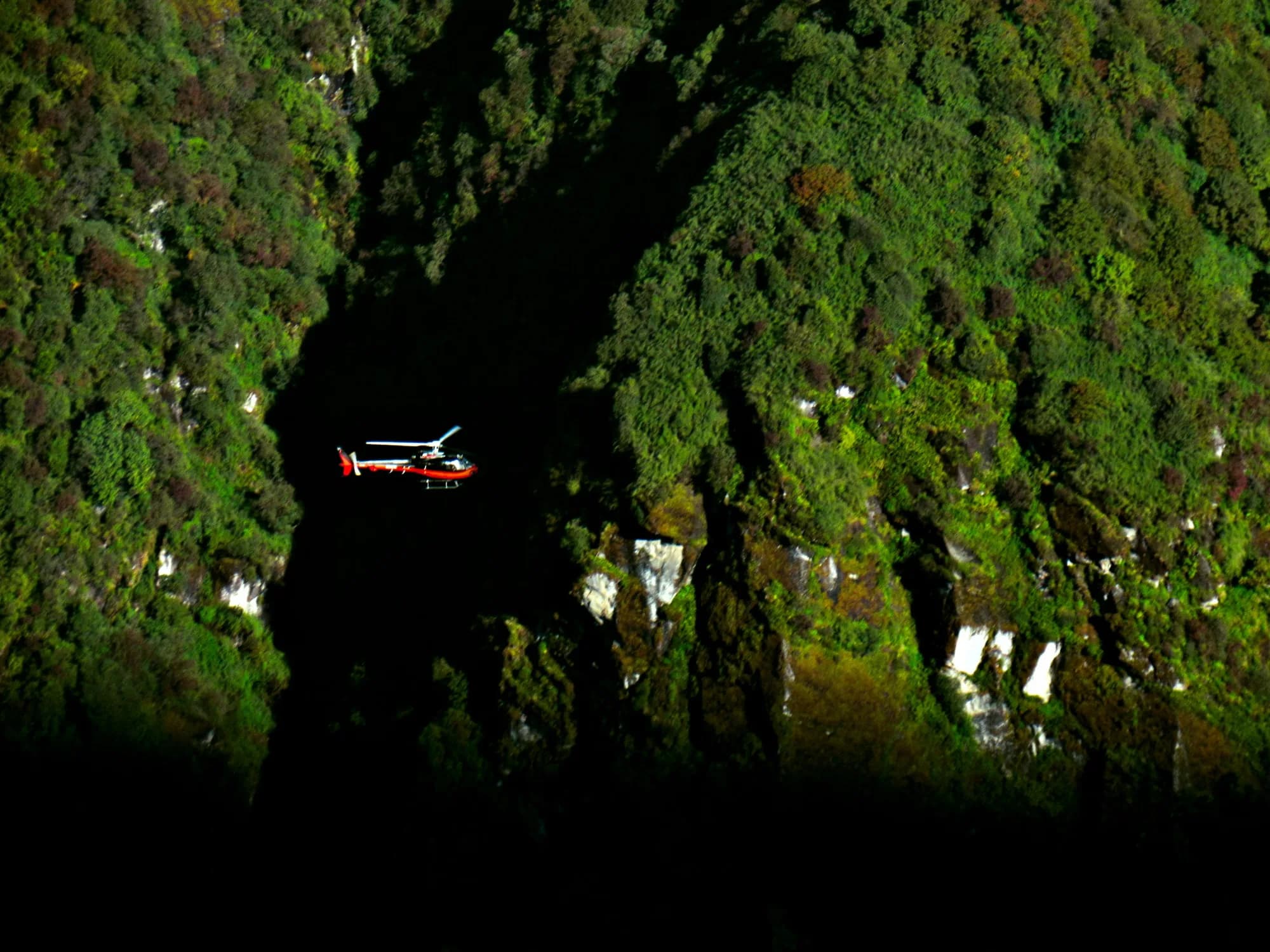
A helicopter rescue in Nepal starts with the guide, who calls the operator's Kathmandu desk; the operator then gets authorisation from the client's insurer before the flight to hospital, weather permitting. Without insurance, the US State Department says payment is expected in cash, or upfront by card, before the flight. Because Nepal has a documented history of fake rescues, agents should choose a partner with written evacuation criteria, a call log and transparent billing.
| Payment without insurance | Helicopter companies generally require evacuation insurance, insurer pre-approval or upfront card payment; without insurance, cash is expected before a medevacSource: US State Department, Nepal country information (updated 21 Jan 2025; checked 5 Nov 2026) |
|---|---|
| Medevac scams | Described as common in Nepal, particularly in the popular trekking regionsSource: US State Department, Nepal country information (checked 5 Nov 2026) |
| UK insurance advice | Insurance should include cover for mountain rescue services and helicopter costsSource: GOV.UK, Nepal safety and security (checked 5 Nov 2026) |
| 2018 government inquiry | 700-page report submitted 30 July 2018 after examining 10 helicopter companies, six hospitals and 36 agenciesSource: The Kathmandu Post, 27 January 2026 |
| 2026 police case | Police estimated more than USD 19.6 million in claims, mid-2022 to 2025; 32 people charged at Kathmandu District CourtSource: The Kathmandu Post, 23 March 2026 |
| Government response | Zero tolerance policy announced 6 April 2026, with a joint monitoring task force and planned insurer verificationSource: Ratopati, 6 April 2026 |
| Restricted areas | The facilitating trekking agency is fully responsible for emergency rescue and logistics (Department of Immigration notice on solo restricted-area trekking)Source: The Kathmandu Post, 22 March 2026 |
Few things in a Nepal trek matter more to an overseas agency than what happens when a client becomes seriously ill or injured far from a road. In most of the high trekking regions the honest answer is a helicopter, and the US State Department notes that many foreigners need or ask for helicopter evacuation from Nepal's mountain terrain. This article explains how a rescue works from the first call to the hospital, who pays and how insurers fit in, what the rescue fraud cases of 2018 and 2026 revealed, and the questions you should put to any ground partner before you send clients to altitude.
What triggers an evacuation?
Most evacuations from the trekking regions fall into three groups: altitude illness, injuries such as falls and fractures, and ordinary medical problems that become serious because the nearest hospital is days away on foot. The UK Foreign, Commonwealth and Development Office (FCDO) asks trekkers to be aware of hazards all year round, especially above 3,000 m, and lists altitude sickness among them. The US State Department warns that without acclimatisation, trekkers of any age, experience or fitness can develop acute mountain sickness, which can be deadly.
A helicopter is not the first answer to every symptom. For mild altitude symptoms the first response is usually rest, no further ascent and, if symptoms do not settle, descent on foot with the guide. The decision to fly should come from the condition of the patient, the weather and the terrain, never from the convenience of the itinerary.
| Situation | Usual first response | When a helicopter is usually justified |
|---|---|---|
| Mild altitude symptoms (headache, poor sleep) | Rest day, no further ascent, monitor | Rarely; only if symptoms worsen and descent on foot is not possible |
| Worsening altitude illness (confusion, loss of coordination, breathlessness at rest) | Immediate descent with the guide | When descent on foot is too slow, unsafe or impossible |
| Fracture or serious injury | First aid, keep the patient warm and still | When the patient cannot walk and a stretcher carry would be long or risky |
| Illness such as severe stomach infection | Fluids, rest, treatment from a lodge or local health post | When the patient cannot keep fluids down or is deteriorating |
| Minor ailment, tiredness, wish to end the trek | Walk out with the guide, or a scheduled flight | Not a rescue; a planned charter can be booked and paid for as a charter |
The last row matters for fraud prevention as much as for safety. A client who simply wants to finish early can take a helicopter, but that is a charter, booked and paid for as a charter. It is not a rescue and should never be billed to an insurer as one.
The rescue sequence, step by step
Every operator has its own process, but a well-run evacuation follows the same order. This is how the sequence should look when your client is on a trek run by a licensed ground operator with its own guides.
- The guide assesses and acts. The guide checks the patient, stops the ascent and starts descent if that is the safer option. Many problems are solved here, a few hundred metres lower.
- The guide calls the operations desk in Kathmandu. The call covers the patient's condition, exact location, weather and whether a landing site is available.
- The desk contacts the insurer's assistance company. The operator gives the policy number, a description of the condition and, where possible, a medical opinion. The US State Department notes that helicopter companies will generally require specific evacuation insurance, pre-approval from a health insurer, or payment upfront by credit card before they assist.
- The insurer authorises the flight. Once authorisation or a guarantee of payment is in place, the operator books the helicopter. If there is no insurance cover, the US State Department says payment will be expected in cash before the medevac can take place.
- The helicopter flies when conditions allow. Mountain flying depends on visibility and weather. A call made in cloud or late in the day can mean the patient is cared for at a lower lodge until the next safe window.
- Hospital admission. The patient is flown to hospital, often in Kathmandu. The operator meets the patient, handles admission and keeps the insurer informed.
- Your office is told. The operator updates your agency at each stage, so you can speak to the client's family and your own insurer with accurate information.
Restricted areas add a layer. The US State Department notes that restricted areas have special requirements for helicopter rescue flights, which may delay assistance. Under the Department of Immigration notice reported by The Kathmandu Post on 22 March 2026, which opened restricted area permits to solo trekkers with a licensed guide and a registered agency, the facilitating agency is fully responsible for emergency rescue and logistical arrangements. Our restricted area permits guide covers those routes.
Operator tip: Put the client's policy number and the insurer's 24-hour assistance number on the trip sheet the guide carries, not only in your office file. A common and avoidable delay in a genuine rescue is the operations desk waiting for someone to find a policy document in another time zone.
Who pays, and how insurers are involved
In almost every case the client's travel insurer pays, through its assistance company, provided the policy covers the activity, the altitude and helicopter evacuation. The FCDO advises travellers to make sure their insurance includes cover for mountain rescue services and helicopter costs. The US State Department strongly recommends supplemental insurance for medical evacuation and warns that evacuations can cost tens of thousands of dollars.
This is why insurance is a booking condition, not a suggestion. Our guide to the travel insurance cover to require from trekking clients covers altitude limits, exclusions and the documents to collect.
| Party | Role in a rescue | What to agree in advance |
|---|---|---|
| Client | Holds the insurance policy and gives consent to treatment | Policy covers trekking to the itinerary's high point and helicopter evacuation |
| Your agency | Holds the client contract and the relationship with the family | Who in your office is the out-of-hours contact |
| Ground operator | Guide on the trail, operations desk, liaison with insurer, helicopter and hospital | Escalation process, reporting times, how costs are authorised |
| Insurer's assistance company | Authorises and pays for evacuation and treatment | Contact numbers on the guide's trip sheet |
| Helicopter operator and hospital | Fly the patient and provide treatment | Itemised invoices sent to the insurer, one bill per patient |
Rescue fraud: what happened and what changed
Nepal's rescue system has a history that every agency selling treks should know, because it explains why insurers question claims and why your choice of ground partner matters.
2018. On 30 July 2018 a government fact-finding committee submitted a 700-page report to the tourism minister after looking into 10 helicopter companies, six hospitals and 36 travel, trekking and rescue agencies, as The Kathmandu Post reported in January 2026. The government said afterwards that it had removed intermediaries from emergency evacuations, made tour operators legally responsible for clients from start to end of a trip, and required helicopter companies, tour operators, hospitals and insurers to submit details of rescue flights, treatment and insurance bills to the Tourist Search and Rescue Committee, the Tourist Police and the Department of Tourism.
2026. The practice did not stop. In January 2026 the Central Investigation Bureau (CIB) of Nepal Police arrested six people from three rescue and charter companies, after an investigation covering mid-2022 to 2025. Police estimated the companies had claimed more than USD 19.6 million from insurers. On 23 March 2026 The Kathmandu Post reported that 32 people had been charged at Kathmandu District Court with organised crime and offences against the state. Those charged included people linked to helicopter companies, hospitals and doctors, rescue and assistance firms, and trekking agencies. Investigators alleged staged or inflated evacuations, forged flight manifests and separate bills for patients carried on the same flight. These are charges, not court findings, and the case was before the court at the time of reporting.
The government response. On 6 April 2026 the Ministry of Culture, Tourism and Civil Aviation announced a zero tolerance policy, saying it was preparing to investigate, blacklist and publicly name those involved. It described a joint monitoring task force of the ministry, the Civil Aviation Authority of Nepal, Nepal Police and the Nepal Tourism Board, verification channels with international insurers, and a longer-term rescue management system linking trekker registration, rescue requests and insurance verification.
The travel advisories reflect the same risk. The US State Department says medevac scams are common in Nepal, particularly in the popular trekking regions, and that some trekking companies and medical providers may pressure trekkers with mild altitude symptoms. The FCDO notes isolated reports of some trekking guides taking inexperienced trekkers to high altitudes too quickly and then calling in expensive helicopter evacuations from which the guides take a cut.
What an honest rescue protocol looks like
Fraud hurts your clients twice: once when they are flown out of a trip they could have finished, and again when premiums rise or claims are questioned. A sound protocol makes the right decision easy to check afterwards. These are the elements to look for in any ground partner:
- Clear medical decision rules. Guides trained to recognise altitude illness, with descent on foot as the default for mild symptoms and a written threshold for calling a helicopter.
- Insurer first. The assistance company is contacted before the flight is booked, except where a delay would put the patient's life at risk.
- A dated call log. Times of each call, the patient's condition and who authorised what, shared with your agency and the insurer.
- Transparent billing. One itemised invoice per patient, flight details that match the manifest, and no commissions from helicopter operators or hospitals.
- Licensed guides and a registered agency. The guide rule on most trekking routes means your client's guide should come through a registered company; our guide to the mandatory trekking guide rule explains where it applies.
- Charters kept separate. A client who wants to fly out for convenience pays for a charter, and the operator does not present it as a rescue.
Questions to ask your ground partner
Ask these before the first booking, and expect specific answers. Our checklist on how to choose a Nepal tour operator covers the wider due diligence, and our note on verifying TAAN membership explains how to check an agency's standing.
| Question | A good answer | A warning sign |
|---|---|---|
| Who decides to call a helicopter? | The guide and the operations desk, against written criteria, with the insurer consulted | "The guide decides" with no criteria or record |
| How do you contact the insurer? | Through the assistance company, before the flight unless life is at risk | "We fly first and sort out the insurance later" |
| What will my office receive? | Updates at each stage and a written incident report | A bill weeks later and no report |
| How are invoices issued? | One itemised invoice per patient, matching the flight record | Vague or bundled invoices, or reluctance to share them |
| Do you receive commissions from helicopter operators or hospitals? | A clear no | Hesitation, or "it is normal in Nepal" |
| How are guides trained for altitude illness? | Named training, a set ascent profile and acclimatisation days | Itineraries that gain height too fast to save a day |
For travel agents: how to package it
- What to include: a licensed guide for every trek, acclimatisation days built into the itinerary, and a pre-departure note to clients that explains when a helicopter is and is not used.
- Insurance as a condition: collect the policy document at booking, check the altitude limit and helicopter cover, and pass the policy number and assistance line to your ground partner.
- Buffers: add at least one spare day at the end of any high-altitude itinerary, so a slower ascent or a weather delay does not push anyone to rush. Flight-dependent routes need the same, as our Ramechhap and Lukla flights guide explains.
- Who it suits: every trekking and climbing product above 3,000 m, and especially first-time trekkers, older travellers and groups with mixed fitness.
- Upsells: an extra acclimatisation day, a planned scenic helicopter return booked and priced as a charter, or a lower-altitude alternative route for clients who prefer to stay below the highest passes.
For the wider risk picture you can share with clients, see our briefing on Nepal travel safety and current advisories, and for entry and permit rules see our permits and visas page.
If you want a ground partner whose rescue process you can see and check before your first group travels, apply to become a partner and ask us to walk you through how we handle emergencies.
Frequently asked questions
How long does a helicopter rescue take in Nepal?
It depends on the location, the weather, daylight and how quickly the insurer authorises the flight. On a main route in clear weather it can happen the same day, but cloud or a late call can mean the patient is cared for at a lower lodge until the next safe flying window.
Who pays for helicopter rescue in Nepal?
Normally the client's travel insurer, through its assistance company, if the policy covers the activity, the altitude and helicopter evacuation. The US State Department says that without insurance, payment is expected in cash, or upfront by card, before the flight.
What was the Nepal rescue fraud scandal?
A 2018 government inquiry and a police investigation covering claims from mid-2022 to 2025 alleged staged or inflated helicopter rescues billed to insurers. In March 2026, 32 people were charged at Kathmandu District Court in a case police estimated at more than USD 19.6 million in claims; the charges have not yet been decided in court.
Should a guide call a helicopter for mild altitude sickness?
Usually not. Mild symptoms are normally managed with rest, no further ascent and descent on foot if they do not settle; a helicopter is for cases where descent on foot is too slow, unsafe or impossible.
Is rescue from a restricted area different?
Yes. The US State Department notes that restricted areas have special requirements for rescue flights that may delay assistance, and under a March 2026 Department of Immigration notice the facilitating agency is responsible for emergency rescue and logistics.
Sources
- US State Department: Nepal international travel information
- GOV.UK: Nepal safety and security (FCDO)
- The Kathmandu Post: Seven years on, fake rescue racket still flies in Nepal's Himalayas (27 January 2026)
- The Kathmandu Post: Nepal charges 32 in fake rescue scam (23 March 2026)
- Ratopati: Government to adopt zero tolerance policy on rescue irregularities (6 April 2026)
- The Kathmandu Post: Immigration eases rules for solo trekkers in restricted areas (22 March 2026)