Restricted area permits in Nepal 2026: Mustang, Manaslu, Dolpo, Nar Phu and more
A restricted area permit is a Department of Immigration permit for border areas such as Upper Mustang, Manaslu, Nar Phu and Dolpo. It can only be obtained through a registered trekking agency with a licensed guide; since March 2026 a permit can be issued for a single trekker, and Upper Mustang now costs USD 50 per day instead of USD 500 for 10 days.
| Restricted areas | 15 areas in 13 districts listed in the official permit tableSource: Department of Tourism, trekking routes (source: Department of Immigration) |
|---|---|
| Who can apply | Only authorised trekking agencies, on behalf of trekkersSource: Department of Immigration, Trekking Permit |
| Upper Mustang fee | USD 50 per person per day (replaced USD 500 for the first 10 days), checked 3 Nov 2026Source: Nepal Tourism Board, Trekking Permit |
| Manaslu fee | Sep to Nov: USD 100 first week, then USD 15 per day. Dec to Aug: USD 75 first week, then USD 10 per day. Checked 3 Nov 2026Source: Department of Tourism and Nepal Tourism Board permit tables |
| Solo trekkers | Allowed since March 2026 with a registered agency and licensed guide; maximum seven trekkers per guideSource: The Himalayan Times, 23 March 2026 |
| ACAP and MCAP fee | NPR 3,000 foreigners, NPR 1,000 SAARC nationals, tax included; checked 3 Nov 2026Source: National Trust for Nature Conservation, e-permit support |
Restricted areas are where Nepal trekking becomes a licensed agency's business by law. A client cannot apply for an Upper Mustang, Manaslu or Nar Phu permit on their own: the application goes through a government-registered trekking agency, a licensed guide is assigned, and the permit names the area and the dates. The rules also moved twice in the past year, with a new Upper Mustang fee in November 2025 and solo trekkers allowed from March 2026. This guide sets out the current position for agents, area by area, with the official fee basis and what to plan around.
What makes an area restricted
A restricted area is a part of Nepal, mostly along the northern border, where foreigners may only trek with a special permit issued by the Department of Immigration. The areas are set out ward by ward under Nepal's immigration rules. The Department of Tourism's permit table, which credits the Department of Immigration as its source, currently lists 15 areas in 13 districts, from Taplejung in the far east to Darchula in the far west.
The restrictions are generally explained by border sensitivity and the protection of small, traditional communities. For your clients it means three things: they must travel through a registered agency, they must have a licensed guide, and they must stay inside the area and dates on the permit. The Nepal Tourism Board's permit page states that trekking outside the specified area or route is treated as a violation and that the permit must be shown to immigration staff or police on request.
Restricted-area permits come on top of the usual permits. For the full permit picture by region, start with our Nepal trekking permits guide and the permits and visas page.
Rules that apply everywhere: agency, guide and group size
- Agency only. The Department of Immigration's trekking permit page states that permits are issued only through authorised trekking agencies, on behalf of the trekkers.
- Licensed guide. A licensed guide must be assigned to every restricted-area trek. Our explainer on Nepal's mandatory trekking guide rule covers how this fits with the wider guide requirement.
- Solo trekkers now allowed. Until March 2026 a restricted-area permit needed a group of at least two. The Himalayan Times reported on 23 March 2026 that the Department of Immigration now issues permits to a single trekker, still through an agency and with a guide, and that the agency remains responsible for rescue. The Department's own web page still shows the older two-person wording, so expect to see both versions quoted for a while.
- Seven trekkers per guide. The same decision set a maximum of seven trekkers per guide, as reported at the time.
- Visa validity. The Department of Immigration does not issue a trekking permit beyond the expiry date of the trekker's visa.
- Fees in US dollars. Fees are set in US dollars and paid in Nepali rupees at the applicable rate.
Area by area: Upper Mustang, Manaslu, Tsum, Nar Phu, Dolpo, Kanchenjunga, Humla
The table below shows the fee basis from the official tables we opened on the date at the top of this article. Fees are per person. Where the Department of Tourism and Nepal Tourism Board tables disagree, we say so rather than pick one.
| Area (district) | Fee basis (USD, per person) | Also needed |
|---|---|---|
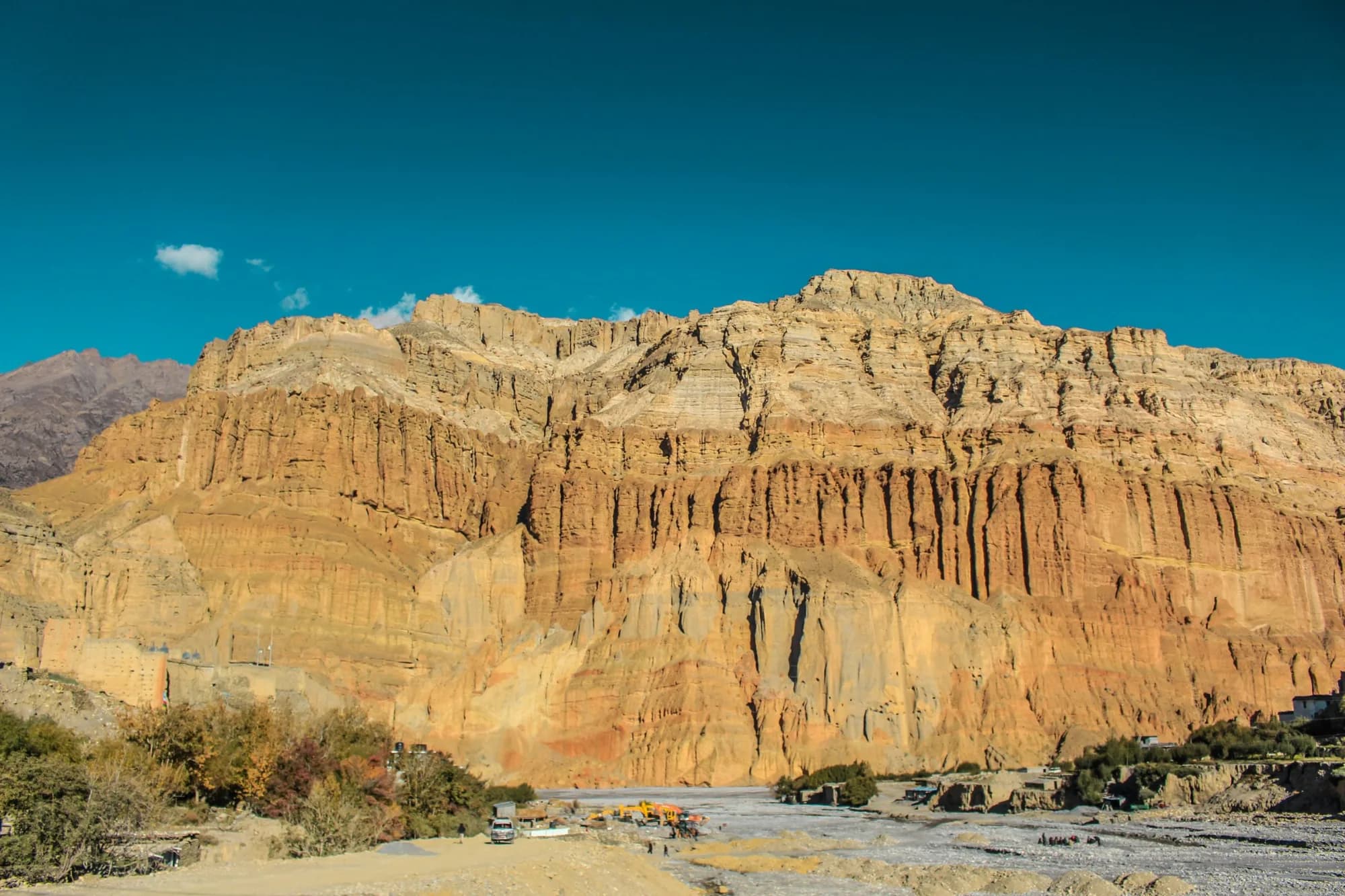
| Upper Mustang (Mustang) | 50 per day, under the November 2025 Cabinet decision; the Nepal Tourism Board table shows this rate | Annapurna Conservation Area permit |
| Manaslu (Gorkha, Chumnubri wards 1 to 4) | September to November: 100 for the first week, then 15 per day. December to August: 75 for the first week, then 10 per day | Manaslu Conservation Area permit; Annapurna Conservation Area permit if exiting via Manang |
| Tsum Valley (Gorkha) | September to November: 40 for the first week. December to August: 30 for the first week. Then 7 per day in both seasons | Manaslu Conservation Area permit |
| Nar and Phu (Manang) | September to November: 100 for the first week. December to August: 75 for the first week. Then 15 per day in both seasons | Annapurna Conservation Area permit |
| Upper Dolpo (Dolpa) | Official tables currently differ: the Department of Tourism shows 500 for the first 10 days, the Nepal Tourism Board shows 50 per day. Confirm with us before quoting | Shey Phoksundo National Park entry |
| Lower Dolpo (Dolpa) | 20 for the first week; the two tables differ on the rate after that, so confirm with us for longer trips | Shey Phoksundo National Park entry where the route enters the park |
| Kanchenjunga (Taplejung) | 20 per week for the first four weeks, then 25 per week | Kanchenjunga Conservation Area permit |
| Humla (Simikot, Namkha, Chankheli wards) | 50 for the first week, then 10 per day | Local permits depending on route |
Other restricted areas on the list include parts of Sankhuwasabha (the Makalu side), ward 5 of Khumbu Pasang Lhamu in Solukhumbu, Dolakha (Gaurishankar and Bigu, including parts of Rolwaling), Rasuwa (Gosaikunda), Mugu, Bajhang and Darchula. These are lower-volume routes with their own fee bases; send us the itinerary and we will confirm the full permit set.
The Annapurna, Manaslu and Gaurishankar conservation area permits are issued by the National Trust for Nature Conservation. Its e-permit support page lists the fee as NPR 3,000 for foreigners and NPR 1,000 for SAARC nationals, tax included. National park and other conservation area fees vary, so please confirm the current fee with us before quoting a separate permits line.
Upper Mustang: what changed
For many years Upper Mustang cost USD 500 for the first 10 days, then USD 50 per day after that. The Kathmandu Post reported on 20 November 2025 that the government scrapped the USD 500 package and set a fee of USD 50 per day, so the permit now follows the actual number of days in the area. Some official pages, including the Department of Tourism table, still show the old basis, which is why agents see both figures online. The practical effect: Upper Mustang stays shorter than 10 days, including jeep-supported itineraries to Lo Manthang, are now cheaper in permit terms, while stays of 10 days or more cost the same as before.
Expedition climbers are a special case. The Department of Immigration page states that climbers holding an expedition permit need a trekking permit for the restricted area but pay no fee for it, and the Department of Tourism notes that in Upper Mustang and Upper Dolpo a climbing team whose royalty is lower than the trekking permit fee pays the difference. Our mountaineering guide for expedition operators covers climbing permits.
Lead times and documents
The Department of Immigration moved restricted-area permits online in February 2024, which, as the Kathmandu Post reported, means trekkers no longer need to appear in person and fees can be paid through Nepali digital payment services. Since the March 2026 change, The Himalayan Times reported that applications can be made before arrival using the visa application submission ID rather than an issued Nepal visa.
What we need from you for each client:
- A clear passport scan, with names exactly as they appear on flight tickets.
- Visa details or the online visa application submission ID.
- Exact dates in the restricted area, because the fee and the permit are both tied to those dates.
- The full route, including any second restricted area or side valley.
The permit itself is not the slow part. What takes time is everything around it: guides with restricted-area experience in peak months, flights to Simikot, Juphal or Taplejung-side airstrips, and jeep or lodge capacity in Mustang during autumn. Permits can also be paused. In late October 2026 the Department of Immigration stopped issuing restricted-area permits for three days because of a heavy snowfall and avalanche forecast, as The Himalayan Times reported, so build the restricted section with slack. Our planning timeline for agents shows when to lock each element.
Operator tip: Fees for Manaslu, Tsum and Nar Phu change on 1 December and again on 1 September. For a trek that starts in late November and runs into December, give us the exact dates in the area rather than a departure week, so the right seasonal rate is applied and the quote does not need correcting later.
Combining restricted areas in one itinerary
Each restricted area has its own permit, so a combined trek means several permits with separate date ranges. Common combinations:
- Manaslu and Tsum Valley: two restricted permits and the Manaslu Conservation Area permit. Tsum is usually walked as a side valley before the Manaslu circuit continues to the Larkya La.
- Manaslu and Nar Phu: after crossing the Larkya La into Manang, a second restricted permit for Nar and Phu, plus the Annapurna Conservation Area permit.
- Nar Phu and the Annapurna Circuit: a short restricted section added to the circuit, which is a good way to give returning clients a quieter valley.
- Upper Mustang with a longer Annapurna trip: with the per-day fee, adding a few days in Upper Mustang no longer means paying for a full 10-day block.
Seasons matter too: the high passes on these routes are affected by winter snow, and the trans-Himalayan valleys of Mustang and Dolpo behave differently from the south-facing regions in the monsoon. Our Nepal weather by month guide shows what to expect in each region.
For travel agents: how to package it
What to include
- All permits in one line in the net rate: restricted-area permit, conservation area or park permit, and TIMS or local fees where they apply.
- A licensed guide with restricted-area experience, and porters or pack animals sized to the group.
- Transport that matches the permit dates, including jeeps in Mustang and any internal flights.
Buffers
- One spare day at the end of any restricted trek that relies on a flight or a long jeep road.
- A fallback plan if permits are paused for weather, such as a different start date or an unrestricted alternative.
Who it suits
- Returning Nepal clients who have done Everest or Annapurna and want a quieter valley.
- Solo travellers who were previously turned away for lack of a partner.
- Culture-focused groups heading to Mustang or Dolpo for Tibetan Buddhist heritage.
Upsells
- A Tiji or other festival date in Upper Mustang, a private guide, or a helicopter exit priced separately on request.
- A pre-trek Kathmandu heritage day and a Pokhara rest day, built from our trekking programmes.
Restricted areas reward early, accurate paperwork, which is the part we handle as a licensed agency. To receive net rates and sample itineraries with every permit included, become a partner and our operations desk will take it from there.
Frequently asked questions
Can one person get a restricted area permit?
Yes. Since March 2026 the Department of Immigration issues restricted-area permits to single trekkers, as long as the trek is arranged by a registered agency with a licensed guide.
How long does a restricted area permit take?
The application is online and the permit itself is not usually the slow part. Guides, flights and lodges in peak months take longer, so send passport scans and exact dates at booking.
Which areas need a restricted permit in 2026?
The official table lists 15 areas in 13 districts, including Upper Mustang, Upper and Lower Dolpo, Manaslu, Tsum Valley, Nar and Phu, Kanchenjunga and Humla.
How much is the Upper Mustang permit now?
USD 50 per person per day, following the November 2025 Cabinet decision that replaced the USD 500 fee for the first 10 days.
Do restricted areas also need other permits?
Yes. Most also need a conservation area or national park permit, such as the Annapurna or Manaslu Conservation Area permit, arranged alongside the restricted-area permit.
Sources
- Department of Immigration: Trekking Permit
- Department of Tourism: Trekking routes and restricted area fees
- Nepal Tourism Board: Trekking permit
- The Kathmandu Post: Nepal scraps $500 Upper Mustang trekking fee for foreigners, sets $50 daily (20 November 2025)
- The Himalayan Times: Solo trekkers allowed in restricted areas with new permit rules (23 March 2026)
- The Kathmandu Post: Nepal trekking permit goes digital (26 February 2024)
- National Trust for Nature Conservation: e-permit support
- The Himalayan Times: Nepal suspends restricted area trekking permits amid snowstorm, avalanche risk (28 October 2026)