Nepal's mandatory trekking guide rule: what it means for your clients
Yes, on most routes. Since the Nepal Tourism Board's revised TIMS provision took effect on 31 March 2023, foreign trekkers in 14 listed regions must be accompanied by a licensed guide and carry a TIMS card issued through a registered agency. The Everest region's municipality runs its own trek card and has not strictly enforced the guide rule, while restricted areas have always required a guide.
| Rule in force | Licensed trekking guide and agency-issued TIMS card required in specified protected areas, effective from 31 March 2023Source: Nepal Tourism Board, TIMS Card |
|---|---|
| Regions covered | 14 regions listed by the NTB, including Annapurna, Langtang, Manaslu, Mustang, Everest, Kanchenjunga, Dolpo and HumlaSource: Nepal Tourism Board, TIMS Card |
| TIMS fee | NPR 2,000 per trekker; NPR 1,000 for SAARC citizens; paid online by the agencySource: Nepal Tourism Board, TIMS Card |
| Restricted areas | Single trekkers allowed since March 2026, with a licensed guide, a registered agency and no more than seven trekkers per guideSource: The Kathmandu Post, 22 March 2026 |
| Guide licence | Issued by the Department of Tourism; requires a guide-training certificate from NATHM or the Mountain Training Academy; renewed every five yearsSource: Hotel, Lodge, Restaurant and Resort, Bar and Tour Guide Rules, 2038 (Law Commission) |
| Everest region | Municipality issues its own permits and has not strictly enforced the guide rule (reported October 2026)Source: ExplorersWeb, 28 October 2026 |
Since spring 2023, most trekking routes in Nepal can no longer be walked by a foreign visitor alone. The Nepal Tourism Board (NTB) rule that brought this in is short, but agents still get conflicting answers from clients, guidebooks and forums, mostly because the Everest region and the restricted areas work differently from the rest of the country. This guide sets out what the rule says, where it is applied, what a licensed guide actually is, and how the rule shapes the trips you sell to independent and solo clients.
The rule in one paragraph
Under the NTB's revised TIMS provision, which the NTB dates as effective from 31 March 2023 and which the Nepali press reported as applying from 1 April 2023, trekkers in specified protected areas must be accompanied by a licensed trekking guide and must carry a TIMS card issued through a government-registered trekking agency. The old green TIMS card that independent trekkers bought for themselves in Kathmandu or Pokhara was withdrawn. In practice this means a foreign trekker on a listed route needs two things that only a registered agency can arrange: the card and the guide.
The rule sits inside the TIMS system, so the clearest companion read is our TIMS card explainer for tour operators, which covers the card itself, the fee and how the agency issues it.
Which regions does the rule cover?
The NTB's TIMS page, checked on the date shown at the top of this article, lists 14 regions and names individual routes within them, from Poon Hill and Annapurna Base Camp to Mardi Himal and Khopra. The Kathmandu Post described the scope in 2023 as 14 areas and 44 trails. The table below groups the regions with the practical notes we give partners.
| Region (NTB list) | Guide and agency TIMS card | What we tell agents |
|---|---|---|
| Annapurna | Required | Checked through the conservation area check-posts; the busiest guided region |
| Langtang and Helambu | Required | Popular short treks from Kathmandu; easy to sell to first-timers with a guide included |
| Manaslu and Mustang | Required | Both include restricted sections, where a guide is required under immigration rules as well |
| Everest | Listed by NTB | Local municipality runs its own trek card; see the Everest section below |
| Kanchenjunga, Makalu Barun, Rolwaling | Required | Remote, camping or basic lodge routes where a guide is sensible anyway |
| Dhaulagiri, Dolpo, Humla | Required | Parts of Dolpo and Humla are restricted areas |
| Ganesh Himal-Ruby Valley, Panchpokhari Bhairabkunda | Required | Low-traffic routes; lodge and guide availability need checking early |
For the permits that sit alongside the TIMS card on each route, use our Nepal trekking permits guide and the permits and visas page.
Where it applies and where enforcement differs
Nepal has three different situations, and it helps to keep them apart when a client asks whether they can trek alone.
Listed routes outside Everest
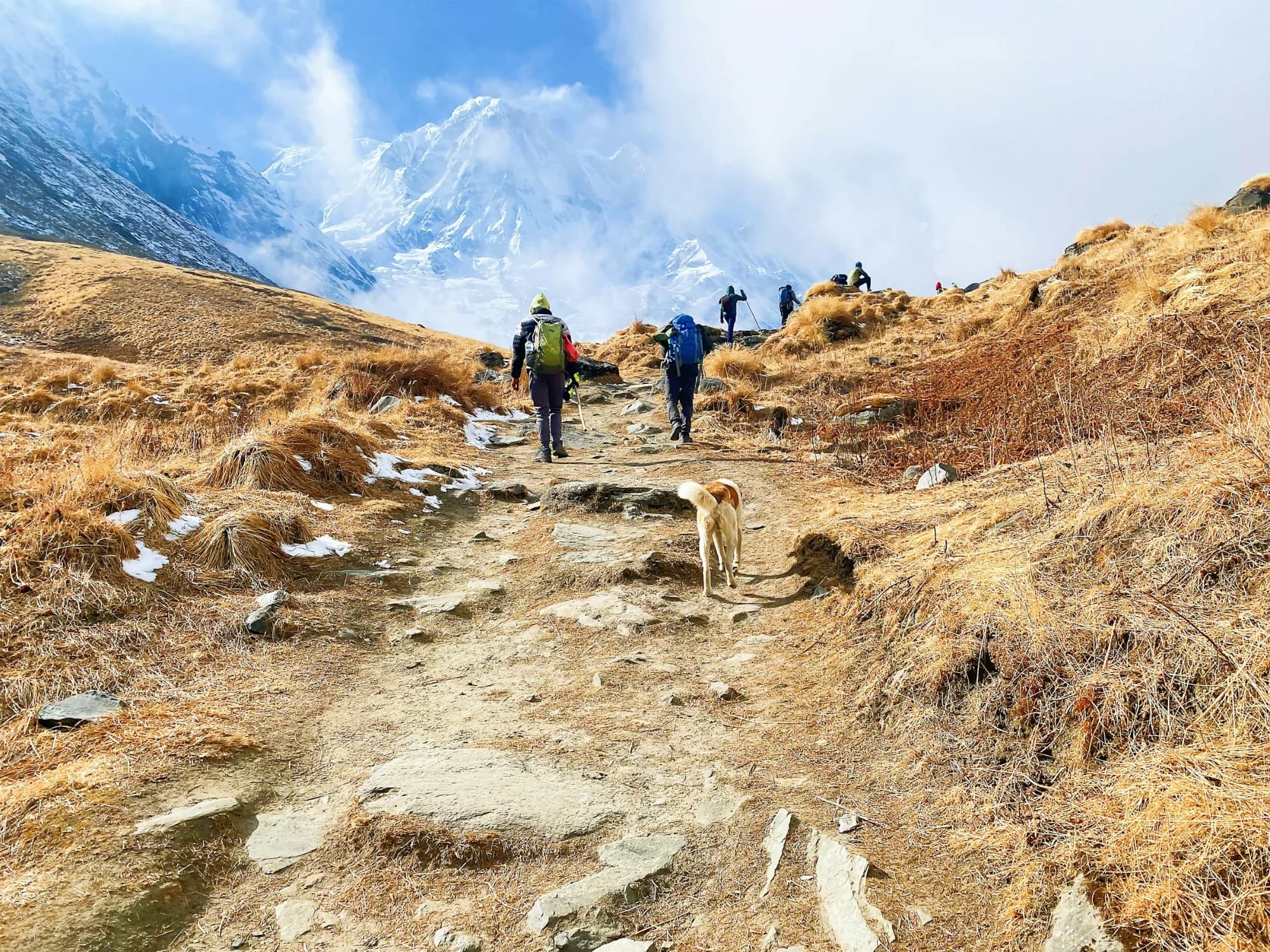
On the Annapurna, Langtang, Manaslu and the other listed regions, the NTB rule is the reference point. The guide and the agency-issued TIMS card are both expected, and each trekker is issued a TIMS eCard with a QR code. When the rule was introduced, The Himalayan Times reported penalties of Rs 12,000 for a trekker found on a listed route without a guide or TIMS card, and Rs 10,000 per trekker for a company running a trek without the cards. Enforcement has not been uniform: the Kathmandu Post reported in February 2025 that the Annapurna Circuit still recorded 30,866 trekkers in 2024 and that the so-called solo ban had not deterred visitors. For an agent, uneven enforcement is not a planning tool. A client stopped at a check-post without a guide loses time and goodwill, and a company that ignores the rule is not one you want behind your brand.
The Everest (Khumbu) region
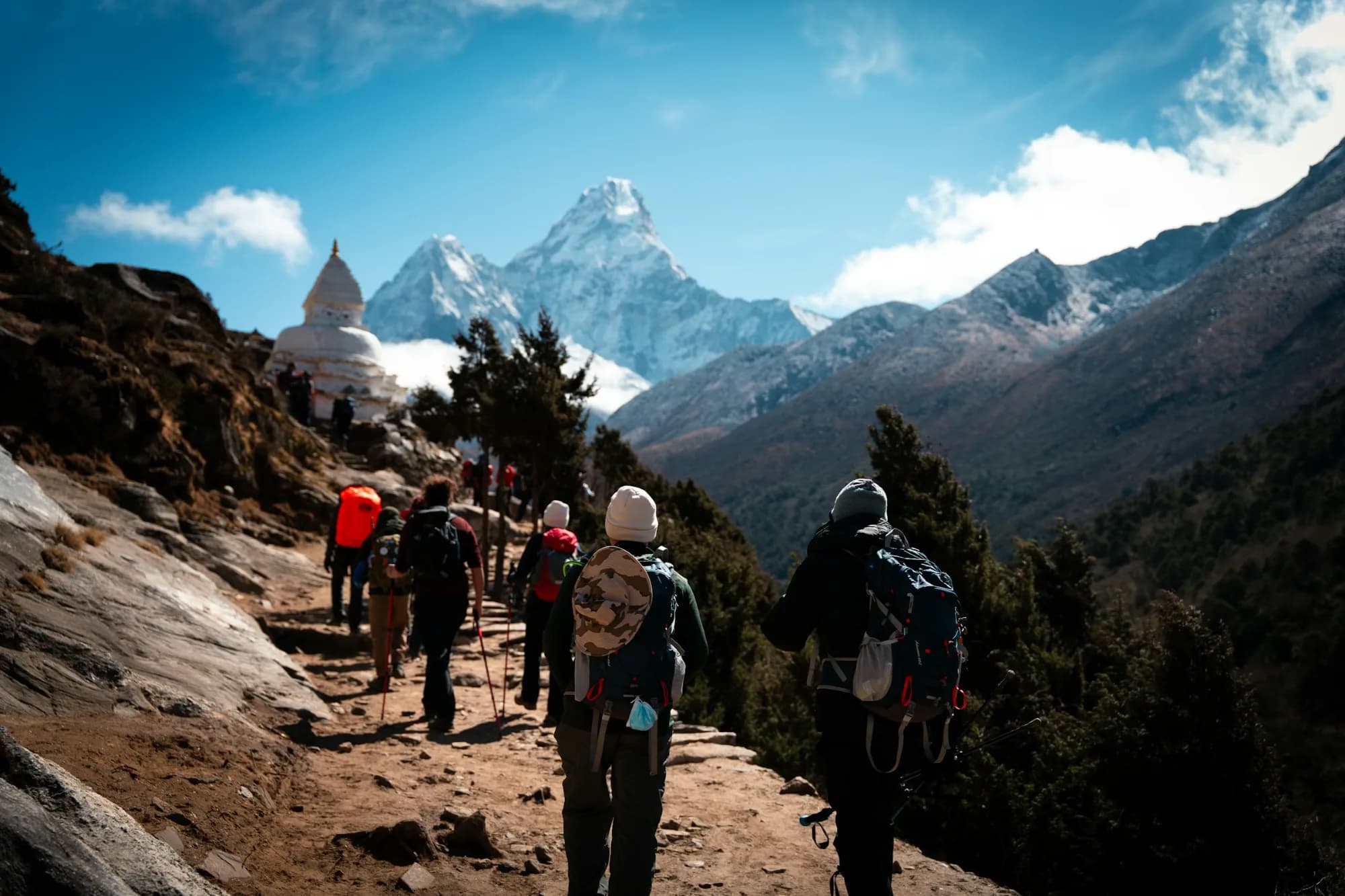
Khumbu Pasang Lhamu Rural Municipality, which covers the Everest area, has charged its own trek card fee since October 2017 and says TIMS is not needed there. In March 2023 it issued a notice saying a guide was not compulsory within its area, and the Kathmandu Post reported that the Everest region was an exception to the new rule. We found no report that the municipality has since adopted the guide rule. ExplorersWeb reported on 28 October 2026 that the NTB rule covers Khumbu on paper, but that the municipality issues its own permits, has not strictly enforced the guide requirement, and that independent trekking remains common there.
For agents this is largely academic: we recommend a licensed guide in Khumbu as everywhere else, because the guide is also the person managing the Lukla flight, the acclimatisation days and any evacuation. Our Everest or Annapurna comparison covers how the two regions differ for clients.
Restricted areas
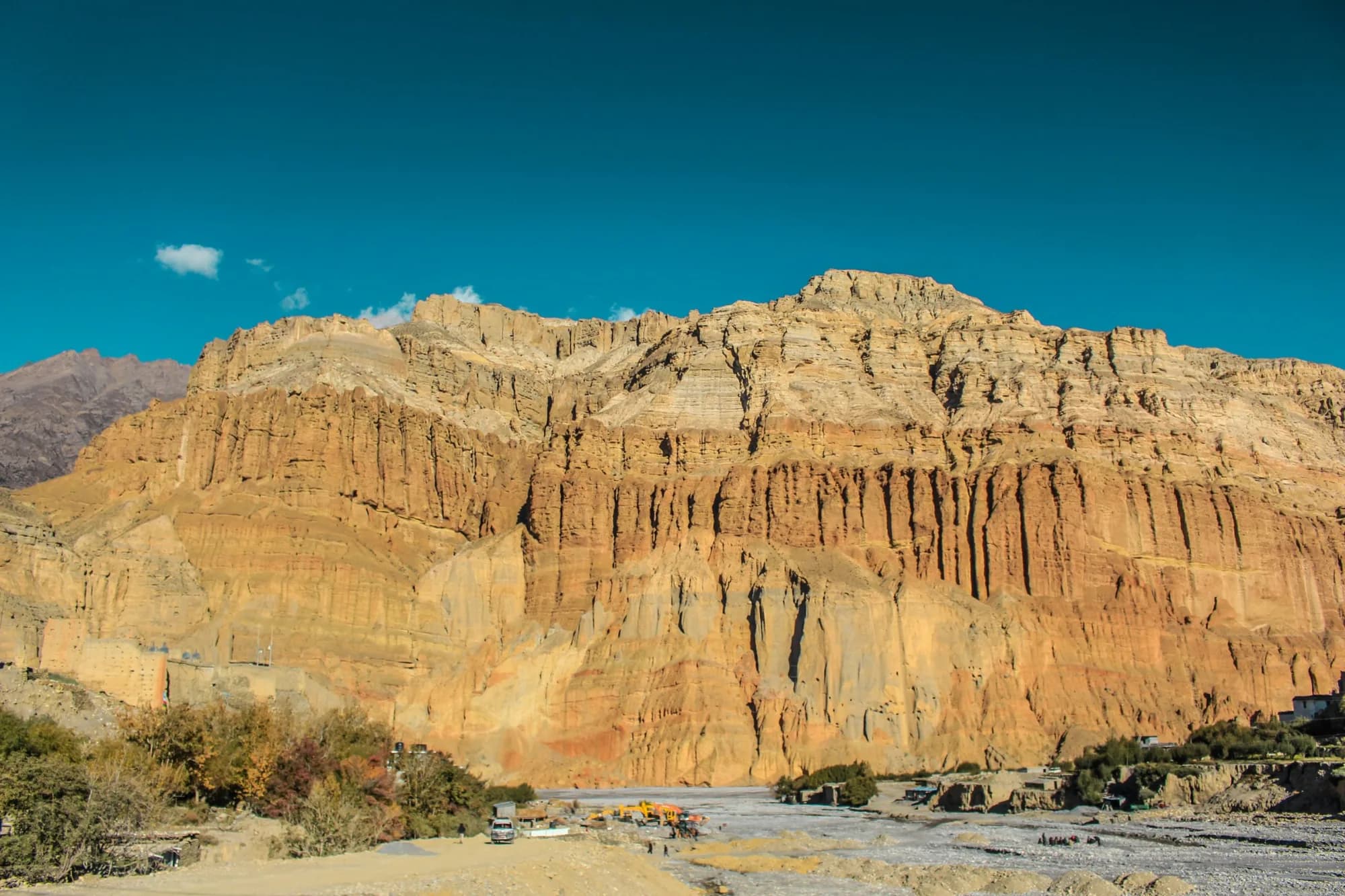
Restricted areas such as Upper Mustang, Upper Dolpo, the restricted parts of Manaslu and Tsum, and Nar and Phu sit under Department of Immigration rules, which have always required a registered agency and a licensed guide. In March 2026 the Department of Immigration changed one part of this: a single trekker can now obtain a restricted-area permit, where previously at least two were needed. The Kathmandu Post reported on 22 March 2026 that the guide remains mandatory, the agency remains responsible for rescue, and one guide may lead no more than seven trekkers.
Exemptions reported when the rule came in
The NTB page does not publish a list of exemptions. When the rule was introduced, the Nepali press reported the following, and we still treat them as the working position until a written notice says otherwise:
- Children under 10: reported by both the Kathmandu Post and The Himalayan Times as not needing a TIMS card.
- Mountaineers with an expedition permit: reported as exempt from TIMS.
- Helicopter visitors: the reports differ. The Himalayan Times described tourists travelling by helicopter as exempt, while the Kathmandu Post reported that sightseeing flights are exempt but a one-way helicopter trip into a trekking region still needs a TIMS card and a guide.
If any of these situations applies to your client, ask us to confirm the current position in writing before you build the quote.
Licensed guides: what the licence covers
A trekking guide in Nepal is licensed by the Department of Tourism under the Tourism Act 2035 and the Hotel, Lodge, Restaurant and Resort, Bar and Tour Guide Rules, 2038. The rules require an applicant to hold a guide-training certificate from the Nepal Academy of Tourism and Hotel Management (NATHM) or the Mountain Training Academy, and a licence has to be renewed every five years.
What the licence means for your client:
- The guide has completed the guide training the rules require.
- The guide is registered with the authorities, which is what the TIMS system checks.
- The guide is employed or contracted through a registered agency, which carries responsibility for the trek and, in restricted areas, for rescue.
The licence does not certify a language. The licence form records the language of guiding, but there is no rule requiring a particular language, so language ability is something the agency matches to the client. It is also worth separating a trekking guide from a porter: a porter carries loads and is not a substitute for the licensed guide the rule requires.
When you are checking who will actually supply the guide, our notes on verifying a Nepal trekking agency through TAAN and choosing a Nepal tour operator list the documents to ask for.
What it changes for FIT and solo clients
The rule changed the economics of independent trekking more than the experience. Before 2023 a solo walker on the Annapurna Circuit could buy a card, carry a pack and pay only lodge costs. Now the guide's wages, meals, lodging, insurance and transport are part of every trek on a listed route, and for one person that cost is not shared. In practice:
| Client type | Effect of the rule | How to present it |
|---|---|---|
| Solo traveller | Carries the full cost of a guide; restricted areas now open to them since March 2026 | Sell the guide as safety, logistics and local knowledge, not as a compliance fee |
| Couple or friends | Guide cost shared by two | Offer a guide plus one shared porter, which keeps packs light without a second guide |
| Small group of 3 to 7 | One guide covers the group; cost per head falls | Fits the seven-per-guide cap that applies in restricted areas |
| Larger group | More than one guide, plus assistants and porters | Plan staffing by route and fitness, not only by the legal minimum |
For the full staffing picture on larger departures, see our planning guide for Nepal group tours.
Operator tip: Clients who push back on the guide usually object to the idea of being supervised, not to the cost. Brief them that the guide handles permits, check-posts, lodge bookings and altitude decisions, and that the pace stays theirs.
How we assign guides, including languages on request
We use our own licensed guides and assign them before the TIMS cards are issued, because the card is tied to a named guide and route. Our process for partner bookings:
- Route and client profile. We match the guide to the route, the season and the group's fitness and experience.
- Language. Guides in any language can be arranged on request with advance notice, so tell us at the enquiry stage rather than after confirmation.
- Permits. We issue the TIMS cards, conservation area or park permits and any restricted-area permit through our registered agency, with passport details checked against the booking.
Because a change of guide or route means updating the registration, we ask for final names and passport scans well before arrival. In winter, when some higher routes close or become harder, we will suggest alternatives; our winter trekking guide lists which treks work from December to February.
For travel agents: how to package it
What to include
- A licensed guide for the full trek on every listed route, shown in the inclusions rather than as an optional extra.
- All permits in one line: TIMS where it applies, the park or conservation area permit, local fees and any restricted-area permit.
- Guide wages, meals, lodging, insurance and transport, so the client never pays the guide's costs on the trail.
- Porters where the route and client need them, with weight limits agreed in advance.
Buffers and timing
- Collect passport scans at booking; the TIMS card and any restricted permit are issued against them.
- Request guides in languages other than English at the enquiry stage, especially for autumn and spring departures when guides are in demand.
- Keep a spare day after any trek that relies on a mountain flight.
Who it suits
- First-time trekkers and solo travellers, who gain the most from having permits, check-posts and logistics handled for them.
- Returning clients ready for restricted routes, now open to solo travellers with a guide.
Upsells
- A private guide for couples who want their own pace.
- A Kathmandu Valley heritage day or Pokhara stay before or after the trek, built from our trekking and touring programmes.
The rule is easier to sell than it first sounds: the guide is part of what makes a Nepal trek safe and simple to operate. If you want net rates with guides, permits and staffing already built in, become a partner and our operations desk will send sample itineraries.
Frequently asked questions
Can tourists trek alone in Nepal?
Not on the 14 regions listed by the Nepal Tourism Board, where a licensed guide and an agency-issued TIMS card are required. The Everest region's municipality has not strictly enforced the guide rule, but we recommend a licensed guide on every trek.
Does the Everest region require a guide?
The NTB lists Everest among its 14 regions, but the local municipality said in 2023 that a guide was not compulsory in its area and runs its own trek card. We still recommend a licensed guide for every Everest trek.
Can a guide speak my clients' language?
Yes. Guides in any language can be arranged on request with advance notice, so tell us at the enquiry stage.
Can a solo traveller trek in a restricted area?
Yes, since March 2026 the Department of Immigration issues restricted-area permits to single trekkers, provided the trek is booked through a registered agency with a licensed guide.
Is a porter the same as a guide?
No. A porter carries loads; the rule requires a licensed trekking guide, and porters are added on top where the route or group needs them.
Sources
- Nepal Tourism Board: TIMS Card
- The Kathmandu Post: Nepal Tourism Board has issued new guidelines for trekkers (31 March 2023)
- The Himalayan Times: Tourists required to obtain TIMS card, hire guide for 14 trekking regions
- The Kathmandu Post: Nepal ends solo trekking era, Everest region is an exception (14 March 2023)
- The Kathmandu Post: Solo ban fails to deter trekkers from Annapurna Circuit (11 February 2025)
- The Kathmandu Post: Immigration eases rules for solo trekkers in restricted areas (22 March 2026)
- ExplorersWeb: Solo trekker flouts Khumbu rules (28 October 2026)
- Law Commission: Hotel, Lodge, Restaurant and Resort, Bar and Tour Guide Rules, 2038