Nepal group tours: planning for 10 to 40 travellers
Nepal group tours work well from 10 to 40 travellers, but the logistics change at each size step. Lukla flights use aircraft of around 18 seats, so groups split across several flights; Kathmandu to Pokhara flights on Buddha Air use 47 or 72 seat aircraft; and on most treks outside the Everest (Khumbu) region trekkers must have a licensed guide. Start nine to twelve months ahead for October, November and spring dates.
| Lukla aircraft seats | 18 passengers on the Summit Air Let L-410Source: Summit Air fleet page (checked 31 Oct 2026) |
|---|---|
| Kathmandu to Pokhara aircraft | Buddha Air ATR 72-500 (72 seats) and ATR 42-320 (47 seats)Source: Buddha Air company profile 2025 (checked 31 Oct 2026) |
| Small-aircraft baggage | 10 kg checked plus 5 kg hand carry on USD faresSource: Tara Air terms and conditions (checked 31 Oct 2026) |
| Licensed guide rule | Required for solo and independent trekkers from 1 April 2023; Khumbu (Everest region) not coveredSource: The Kathmandu Post, 14 Mar 2023 |
| Restricted areas | Solo permits allowed from March 2026, still with a licensed guide; maximum 7 trekkers per guideSource: The Kathmandu Post, 22 Mar 2026 |
| Tourist visa on arrival | USD 30 (15 days), USD 50 (30 days), USD 125 (90 days)Source: Embassy of Nepal, Bangkok (checked 31 Oct 2026) |
Nepal handles groups well, from a family of ten to a coach-sized incentive group or a school party of forty. What it does not do is scale in a straight line. Mountain roads, small aircraft, teahouse capacity and permit rules all change the plan as numbers grow. This guide covers what we look at when a partner agency sends us a group enquiry, with the rules and seat counts checked against official and airline sources on 31 October 2026.
What changes once a group passes 10
A group of up to about ten behaves like a large private party. Past that point, four things change.
- Transport stops being one vehicle. Van, minibus and coach choices start to matter, and on some roads a coach is not the right answer even if it fits everyone.
- Hotels want a block contract. Room types, release dates and payment terms are agreed for the group as a whole.
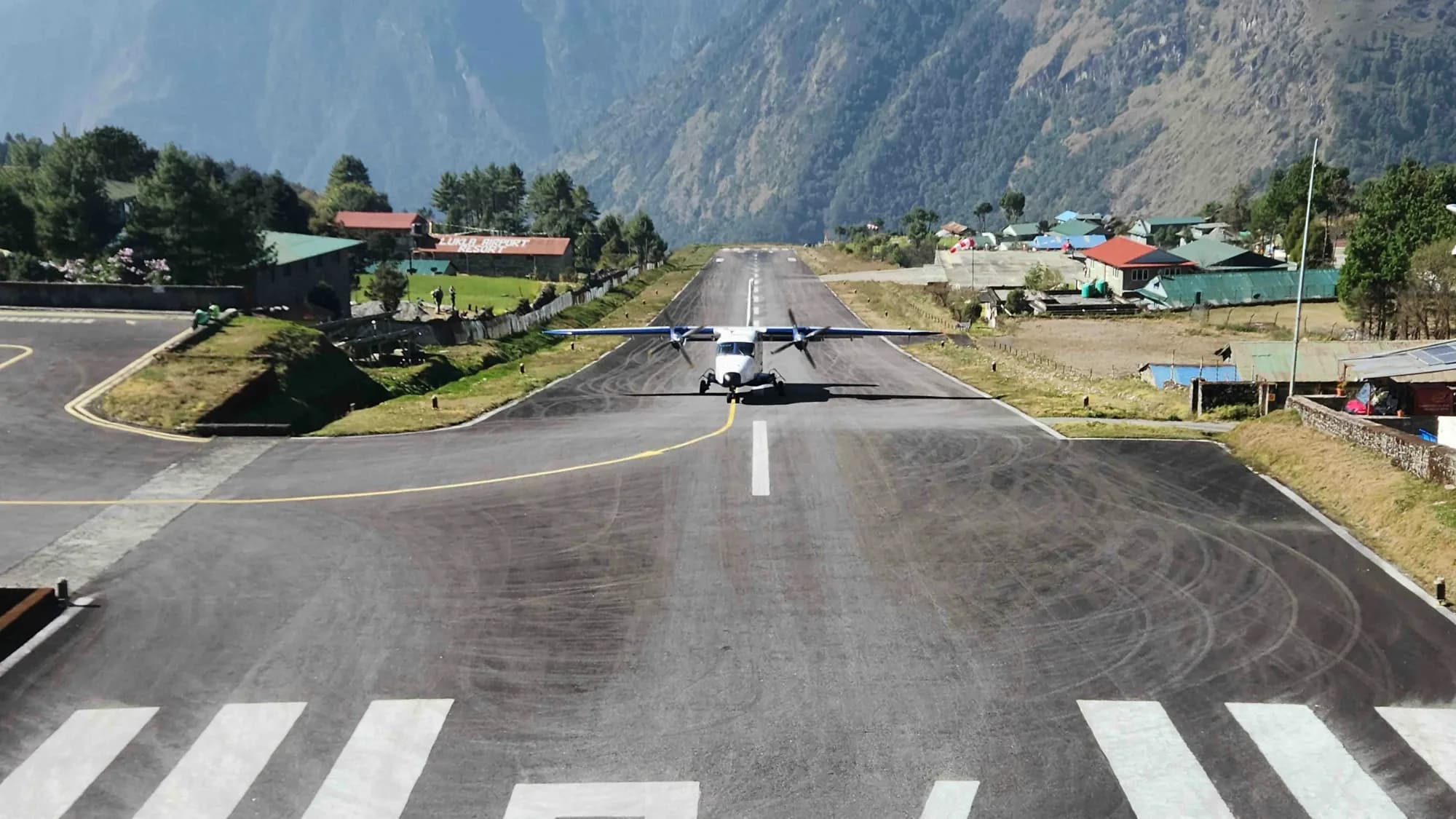
- Flights split. Mountain flights use small aircraft, so a group of twenty to Lukla is several flights, not one.
- Staffing becomes a structure. A tour leader, local guides, assistant guides and porters, with clear roles for who leads, who sweeps and who handles the hotel desk.
Group type changes the plan as much as group size. A school party needs supervision ratios, safeguarding and simple rooms close together. An incentive group needs a reliable timetable, a welcome event and hotels that can host a private dinner. A special interest group, such as photographers or a Buddhist study tour, needs a guide with the right knowledge and an itinerary that allows long stops. We ask about the purpose of the trip at the first enquiry, because it decides the vehicle plan, the hotel choice and the staffing.
We handle everything from FIT travellers to large groups, from standard to luxury, so the same planning logic applies whether the group stays in three-star city hotels or in high-end lodges.
Transport: coach sizes and road realities
Group transport in Nepal is built around three vehicle types. Seat layouts vary between vehicles registered in Nepal, so we confirm the actual seats and luggage space for each booking rather than relying on a model name.
| Vehicle | How we use it for groups | Watch out for |
|---|---|---|
| Van (HiAce type) | Small groups and sub-groups, airport transfers, hill roads and trailheads | Limited luggage space once every seat is filled |
| Minibus (Coaster type) | Mid-sized groups for Kathmandu Valley touring, Pokhara and Chitwan | Fewer comfortable seats than the nominal count on long drives |
| Full-size tourist coach | Larger groups on main highways | Cannot enter old town lanes or many trailhead roads |
Seat count is not the only test. A minibus full to the last seat will not carry everyone and their suitcases comfortably on a long drive, so we plan around one seat per traveller plus space for bags, and add a luggage vehicle when needed.
Road realities matter more than the vehicle. The main road from Kathmandu to Pokhara and towards Chitwan runs through the Naubise to Mugling corridor, where a road widening project has been under way. Ratopati reported in July 2026 that the Naubise to Malekhu section was 60 percent complete, and ekantipur reported blacktopping on the Naubise to Dharke stretch in June. Works and traffic make journey times hard to promise, so we quote a range and keep the day light. For many groups the short flight to Pokhara is the better choice, and we compare the options in detail with each partner.
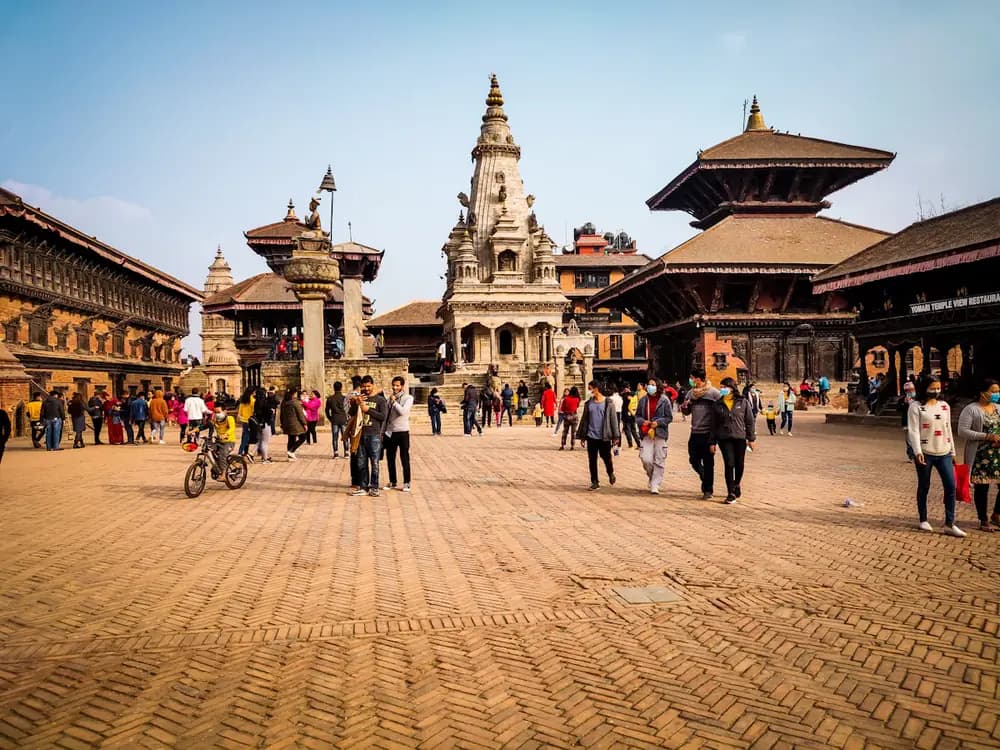
In the Kathmandu Valley, narrow lanes in the old towns mean coaches stop at the edge and the group walks in. That is part of the experience in places like Bhaktapur, but it needs a guide-to-guest ratio that keeps everyone together.
Hotel blocks and room types
Hotel contracting is where group planning succeeds or fails, especially in October and November and in spring, when Kathmandu and Pokhara hotels fill with trekkers and tour groups.
- Room mix. Agree the mix of twin, double and single rooms early. Many Nepal hotels have more twins than doubles, and single supplements add up quickly in a large group.
- Release dates. Hotel blocks carry release dates after which unused rooms go back on sale. We align these with your own client deadlines so you are not holding rooms you cannot fill.
- Festivals. Dashain and Tihar fall in the autumn high season. Many local staff travel home, some businesses close, and domestic travel peaks. Our Tihar guide for tour operators explains what clients see and what slows down.
- Lodges and teahouses. On trek, teahouses are small. A group of twenty may need two lodges in the same village on busy nights, or a camping set-up in quieter regions.
- Dietary and access needs. Collect these with the rooming list, not on arrival. Vegetarian food is easy in Nepal; strict allergies and step-free access need advance checks with each property.
We hold our own hotel contracts, which lets us negotiate blocks directly and move a group between comparable properties if a hotel overbooks.
Operator tip: Ask for the rooming list two weeks earlier than you think you need it. Most last-minute problems on Nepal group tours come from late single rooms, late dietary notes and late name changes on domestic flight tickets, all of which are cheap to fix early and expensive to fix late.
Guide and porter ratios on treks
Trekking rules have changed in recent years, and they shape how a group is staffed.
- Licensed guide rule. Since 1 April 2023, solo and independent trekkers must hire a licensed guide, following a decision by the Nepal Tourism Board and trade bodies, as the Kathmandu Post reported. The Khumbu Pasang Lhamu Rural Municipality in the Everest region did not adopt the rule and charges its own Rs 2,000 trek card. For groups booked through an agency, a licensed guide is standard practice in every region.
- Restricted areas. Regions such as Upper Mustang, Dolpa, Manaslu and Nar Phu need a restricted area permit, issued by the Department of Immigration and applied for through a registered trekking agency. A notice in March 2026 allowed solo trekkers to get these permits, still with a licensed guide, and set a maximum of seven trekkers per guide, according to the Kathmandu Post.
- Our working ratio. On teahouse treks we plan one guide for every six to eight trekkers, and never more than seven per guide in restricted areas, plus an assistant guide at the back of the group, so that a slower walker or a sick trekker can be looked after without stopping everyone. Porter numbers follow the luggage, with a fair weight per porter.
Large trekking groups also need a plan for altitude. With twenty people, someone is likely to be unwell, and the itinerary must allow one person to descend with a guide while the rest continue. For the full permit picture by region, see our Nepal trekking permits guide and our note on the TIMS card rules.
Flights: seat limits and splitting groups
Domestic flights are the tightest constraint on any group programme that goes into the mountains.
| Route | Aircraft in use | Passenger seats | What it means for a group of 20 |
|---|---|---|---|
| Lukla (from Kathmandu or Ramechhap) | Aircraft include the Summit Air Let L-410 and the Tara Air DHC-6 Twin Otter; Sita Air also flies the route | 18 on the L-410 (Summit Air fleet page); about 18 on the Twin Otter | At least two flights, often three with staff and cargo |
| Kathmandu to Pokhara | Buddha Air ATR 72-500 and ATR 42-320 | 72 and 47 (Buddha Air company profile 2025) | Usually one flight; a group of 40 may be split on the smaller aircraft |
Baggage limits on small aircraft are strict. Tara Air's terms state 10 kg of checked baggage plus 5 kg of hand carry on USD fares, with a lower allowance for children under 12. A group needs clear packing instructions, and spare luggage is stored in Kathmandu.
In the busy seasons many Lukla flights depart from Ramechhap (Manthali) instead of Kathmandu, which means a long early-morning drive before the flight. Ekantipur reported that Manthali to Lukla flights were increased from late September 2026. Our guide to Ramechhap and Lukla flights sets out the routing, timings and the buffer days we build in.
When we split a group across flights, we keep the tour leader on the first aircraft and a senior guide on the last, so that both ends of the group are covered if weather stops flights halfway through the morning. Names on domestic tickets must match passports exactly, so we lock the passenger list early, because late name changes depend on each airline's rules. Where a group cannot all fly on the same morning, we plan the first night in the mountains so that the two halves meet before the trek begins.
Seasons, health and insurance for larger groups
The season decides more than the weather. October, November and spring are the busiest months for hotels, flights and trails, which is when blocks and seats are hardest to hold. December to February is quieter and cheaper on the ground, with clear skies but cold nights, and it suits cultural groups and lower treks well. Our note on which treks work in winter covers the options, and our comparison of Everest and Annapurna by season helps when a group wants mountain views without a long trek.
Health planning scales with the group. With twenty or more people, minor stomach upsets, colds and altitude symptoms are close to certain over two weeks, so we plan for them rather than hope to avoid them.
- Insurance. Every traveller should hold travel insurance that covers the activities and the highest altitude on the itinerary, including helicopter evacuation for trekking groups. Collect policy numbers and emergency contacts with the rooming list.
- Medical information. Ask for relevant medical conditions and medication in confidence before travel, so the tour leader and our guides know who may need extra support.
- Pace and altitude. On treks, a group walks at the pace of its slowest member. We plan sleeping altitudes conservatively and keep a spare day in the mountains so that a sick trekker does not force the whole group to rush.
- Splitting the group. Large groups often contain mixed abilities. A common pattern is a main group on a short trek and a second group on a cultural programme, rejoining in Pokhara or Kathmandu.
Visas and documents for a group
Most nationalities can get a tourist visa on arrival at Kathmandu airport, which is simple for individuals and slow for a large group arriving on one flight.
| Tourist visa on arrival | Fee |
|---|---|
| 15 days | USD 30 |
| 30 days | USD 50 |
| 90 days | USD 125 |
Source: Embassy of Nepal, Bangkok, visa page, checked 31 October 2026. SAARC nationals (Afghanistan aside) get a free 30-day visa on their first visit in a visa year. Fees can change, so confirm them with us before quoting.
For groups we ask each traveller to carry the visa fee in cash and to send passport copies and photos ahead for trekking permits, and we brief the tour leader on the arrival queue so the group regroups after immigration. Indian nationals do not need a visa for Nepal, but they need the right identity document for entry.
Timeline for a group booking
The timeline below is what we work to for a group of 15 to 40 travelling in the October and November or March to May high seasons.
| When | What to do |
|---|---|
| 9 to 12 months before | Agree dates and outline itinerary; avoid clashes with Dashain and Tihar if the group wants quiet cities; request hotel blocks. |
| 6 months before | Confirm hotel blocks and room mix; hold domestic flight seats; agree trek staffing. |
| 3 months before | Collect passport copies for permits and flights; confirm insurance requirements with each traveller. |
| 6 to 8 weeks before | Final rooming list, dietary and access needs, flight names; release unused rooms. |
| 2 weeks before | Final numbers and arrival details; we send the day-by-day trip notes. |
| On arrival | Airport meet, group briefing, a shared message group with your office and our operations team. |
For a wider view of lead times by product, our planning timeline for Nepal covers individual and group bookings side by side.
For travel agents: how to package it
- What to include: airport transfers, all ground transport sized for luggage, hotel blocks with breakfast, guides for touring and trekking, permits and entry fees as government fees with their dates, domestic flights with baggage rules, and a named tour leader.
- Buffers: one spare day for any programme with a Lukla flight, and a half-day margin on long road days. Avoid tight same-day connections between a domestic flight and an international departure.
- Who it suits: cultural groups and families do well with Kathmandu Valley, Pokhara and Chitwan; active groups add a short trek such as the Annapurna foothills; special interest groups add a festival, a monastery stay or a mountain flight.
- Upsells: a private heritage walk, a cultural dinner, a Chitwan jungle extension, a helicopter sightseeing option in the Everest region, or an upgrade to boutique hotels for the final nights.
- Pricing honesty: show government fees separately with their date, and tell clients that festival dates and flight schedules can shift the itinerary.
If you are comparing ground partners, our checklist for choosing a Nepal tour operator lists what to verify. Expert DMC Nepal is licensed by the Government of Nepal for travel, tour, trekking and mountaineering, is an NMA member and a TAAN member, and runs its own guides, transport and hotel contracts. Guides in any language can be arranged on request with advance notice.
You can browse our group-friendly programmes on the tours page. Travel agents and tour operators can start a partnership with us here.
Frequently asked questions
How far ahead should a group book Nepal?
For October, November and spring departures, start nine to twelve months ahead and confirm hotel blocks and domestic flights about six months before travel. Shoulder and winter dates can work with shorter notice.
What group size works on Nepal treks?
Groups of up to about 16 work well on teahouse treks if the staffing is right. Larger groups are possible but may need two lodges per night or a camping set-up, and outside the Everest region each trekker needs to be covered by a licensed guide.
Can large groups fly to Lukla together?
Not on one aircraft. Lukla flights use planes of around 18 seats, so a group of 20 or more is split across two or three flights, ideally on the same morning with a guide on each.
Is road or air better from Kathmandu to Pokhara for a group?
Both work. The flight is short and Buddha Air's Pokhara aircraft carry 47 or 72 passengers, so most groups fit on one flight. The road journey is scenic but long, and road widening works make timings less predictable.
Do Indian groups need a visa for Nepal?
Indian nationals do not need a visa, but each traveller must carry an accepted identity document. Confirm the documents with us before travel, especially for children.
Sources
- Summit Air: Fleet
- Buddha Air: Company Profile 2025
- Tara Air: Terms and conditions
- The Kathmandu Post: Nepal ends solo trekking era, Everest region is an exception
- The Kathmandu Post: Immigration eases rules for solo trekkers in restricted areas
- Embassy of Nepal, Bangkok: Visa information
- ekantipur: More Manthali to Lukla flights added
- Ratopati: Physical progress of Naubise to Malekhu road expansion 60 percent