Nepal weather by month: what to expect in each region
Nepal has a mainly dry season from October to April, with pre-monsoon showers building in May, and a monsoon from mid-June to early October, when most of the year's rain falls. Kathmandu is mild by day all year, with cold nights in December and January, while temperatures fall by roughly 6 °C for every 1,000 m you climb, so trekking regions are far colder than the valleys.
| Normal monsoon onset (eastern Nepal) | 13 JuneSource: Department of Hydrology and Meteorology |
|---|---|
| Normal monsoon withdrawal | 2 October (about 112 days of monsoon)Source: Department of Hydrology and Meteorology |
| 2026 monsoon withdrawal | Completed mid-October, about 12 days later than averageSource: The Himalayan Times |
| Kathmandu January average | High 19 °C, low 3 °C (1991 to 2020)Source: WMO climate normals, DHM station |
| Pokhara July rainfall | About 941 mm (1991 to 2020)Source: WMO climate normals, DHM station |
| Temperature drop with altitude | About 0.6 °C per 100 m (Koshi basin)Source: Salerno et al., The Cryosphere, 2015 |
| Pyramid observatory, about 5,035 m | Mean annual temperature about minus 2.5 °C; about 88% of precipitation June to SeptemberSource: Salerno et al., Earth System Science Data, 2025 |
Weather decides more Nepal itineraries than any other single factor. It sets which treks are open, how reliable mountain flights are, how hot the jungle lodges get and how much buffer a programme needs. This guide gives travel agents and tour operators the numbers behind each month, region by region, and turns them into practical selling advice. For the short version of when to go, see our best time to visit Nepal page.
The temperature and rainfall figures below are 1991 to 2020 climate normals from Department of Hydrology and Meteorology (DHM) stations, published through the World Meteorological Organization for Kathmandu and Pokhara, plus research data for the Pyramid observatory near Everest Base Camp. They are rounded to whole numbers. Normals are long-term averages: any single week can be warmer, colder, wetter or drier.
Nepal's seasons in one table
Nepal's climate is shaped by two things: the South Asian monsoon and altitude. The monsoon brings most of the year's rain between June and September. Altitude means that on the same day a client can be sweating in Chitwan and wearing a down jacket above Namche.
| Season | Months | Valleys (Kathmandu, Pokhara) | High trekking regions | Typical products |
|---|---|---|---|---|
| Post-monsoon autumn | October to November | Dry, clear, warm days, cool nights | Clear views, cold nights, stable trekking weather | Classic treks, expeditions, touring |
| Winter | December to February | Dry, mild days, cold mornings | Very cold, snow possible on high passes | Lower treks, touring, Chitwan |
| Pre-monsoon spring | March to May | Warm to hot, hazier, afternoon showers increase in May | Warmer days, rhododendron season, climbing season | Treks, spring expeditions, touring |
| Monsoon | June to September | Warm, humid, heavy rain, especially in Pokhara | Cloud and rain on the south side, drier behind the main range | Rain-shadow treks, cultural touring |
Kathmandu and Pokhara month by month
Kathmandu sits at about 1,340 m (Tribhuvan International Airport) and Pokhara's old airport at 822 m. Both have warm days for most of the year, but Pokhara is far wetter: its annual rainfall is roughly two and a half times Kathmandu's, and in July alone it receives close to a metre of rain.
| Month | Kathmandu high / low (°C) | Kathmandu rain (mm) | Pokhara high / low (°C) | Pokhara rain (mm) |
|---|---|---|---|---|
| January | 19 / 3 | 15 | 20 / 7 | 22 |
| February | 22 / 5 | 24 | 23 / 10 | 35 |
| March | 26 / 9 | 38 | 27 / 13 | 64 |
| April | 29 / 12 | 63 | 30 / 16 | 142 |
| May | 29 / 16 | 129 | 30 / 19 | 355 |
| June | 30 / 19 | 241 | 31 / 21 | 648 |
| July | 29 / 20 | 384 | 30 / 22 | 941 |
| August | 29 / 20 | 343 | 31 / 22 | 839 |
| September | 29 / 19 | 208 | 30 / 21 | 635 |
| October | 27 / 14 | 43 | 28 / 17 | 159 |
| November | 24 / 8 | 6 | 24 / 12 | 17 |
| December | 20 / 4 | 8 | 21 / 8 | 12 |
| Year | 26 / 13 | about 1,500 | 27 / 16 | about 3,870 |
Two patterns matter for planning. First, November and December are the driest months in both cities, which is why autumn touring and late-season treks run so smoothly. Second, nights are coldest in December and January: a January afternoon in Kathmandu can feel like spring, but early starts for sightseeing or flights are cold, and many older hotels have limited heating.
October to November
This is Nepal's busiest season for a reason. The monsoon has withdrawn, the air is washed clean and mountain views are at their most reliable. Kathmandu rainfall drops from 43 mm in October to 6 mm in November, and daytime highs in the valleys stay in the mid to upper 20s.
The start of the season is not fixed. DHM's long-term normal withdrawal date for the monsoon is 2 October, but in 2026 the monsoon did not complete its withdrawal until mid-October, about 12 days later than average, according to DHM figures reported by the Himalayan Times. Late withdrawals mean early-October departures can still meet cloud and showers, so we advise agents not to promise guaranteed views for the first days of October.
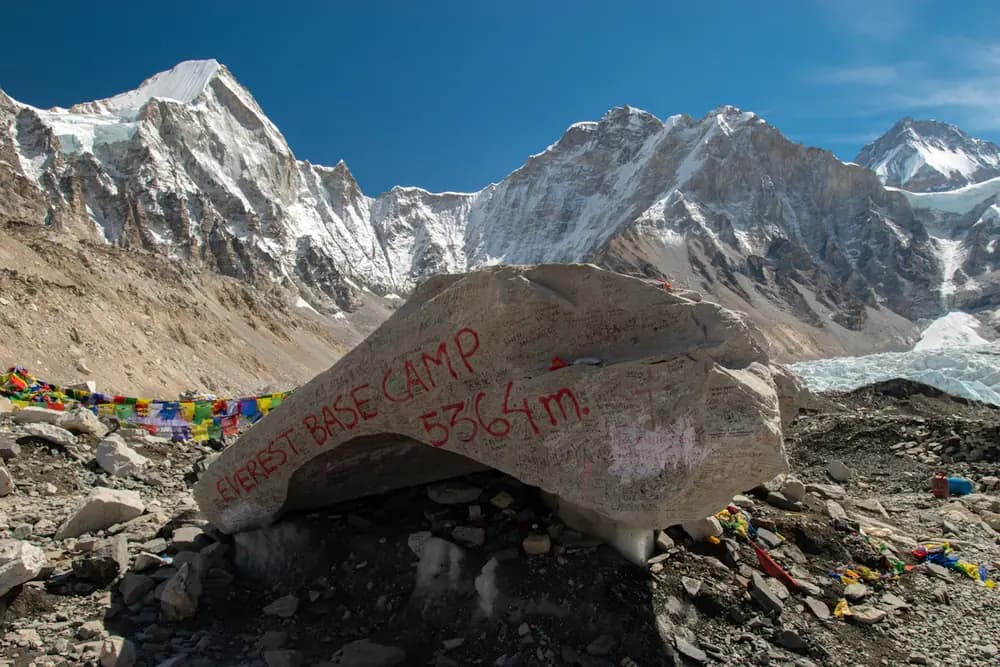
Up high, autumn nights are cold and get colder through November. The Pyramid research observatory near Everest Base Camp, whose weather station stands at about 5,035 m, records a mean annual air temperature of about minus 2.5 °C, so clients should expect hard frosts at the highest lodges even in the best weather. Demand is at its peak in this window, which affects flights and beds as much as weather: our Ramechhap and Lukla flights guide explains how Everest-region flights work in the busy months, and our Tihar guide for tour operators covers the festival period that often falls in this window.
December to February
Winter is dry and often clear, and it is underrated in the trade. Kathmandu averages a high of 19 °C and a low of 3 °C in January, with only 15 mm of rain in the month. Pokhara is slightly warmer, with January lows around 7 °C.
The constraints are cold and snow at altitude. Jomsom, at about 2,700 m in the Mustang rain shadow, averages a January high of 10 °C and a low of minus 2 °C. Higher still, nights are well below freezing and snow can close high passes for days at a time. Lower and mid-altitude treks generally work well, while high passes and high camps need flexible planning. Our article on which treks work from December to February goes through the options route by route.
Winter also brings morning fog to the Terai plains and, on some days, to Kathmandu. Fog typically affects early flights rather than whole days, but it is a reason to avoid tight same-day connections between a domestic flight and an international departure.
March to May
Spring is the second main trekking season and the main season for most expeditions. Days warm quickly: Kathmandu's average high reaches 29 °C in April, and the lowland Terai is much hotter. In Chitwan (Bharatpur station) the average April high is 35 °C and the May high 36 °C, so jungle safaris are best scheduled early in the morning and late in the afternoon.
Visibility is usually hazier than in autumn, and showers build through the season. Kathmandu's rainfall doubles from April (63 mm) to May (129 mm), and Pokhara's jumps from 142 mm to 355 mm as pre-monsoon thunderstorms increase. In the mountains, warmer days and longer daylight make this a comfortable time to trek, and the rhododendron forests of the middle hills flower in this season. For a side-by-side view of the two main trekking regions across spring and autumn, read Everest or Annapurna: which should you sell first.
Operator tip: For late-May departures, plan the day around the weather rather than the other way round. Mountain views are usually best early, and afternoon cloud and showers are common as the monsoon approaches. Build treks with early starts and schedule flights to the mountains for the first slots of the day, when cancellations are least likely.
June to September
DHM's normal monsoon onset date in eastern Nepal is 13 June and its normal withdrawal date is 2 October, a season of about 112 days. Onset usually reaches the west of the country later than the east, and actual dates vary from year to year.
The monsoon brings most of the year's rain. In Kathmandu, June to September together account for about 1,180 mm of the roughly 1,500 mm annual total, and in Pokhara July and August each bring well over 800 mm. On the high mountain side the share is larger still: at the Pyramid observatory near Everest Base Camp, about 88 percent of annual precipitation falls between June and September, according to a 2025 study of the station's records from 1994 to 2023.
For operators, the monsoon is less about constant rain than about reliability. Mornings are often clear, with rain building later in the day, but cloud hides the peaks, leeches appear on forest trails, landslides can block roads and mountain flights are more often delayed. The exception is the rain shadow north of the main Himalaya. Jomsom receives only about 290 mm of rain in a whole year, and its wettest month, July, averages under 50 mm. That is why Upper Mustang and other trans-Himalayan areas are the usual summer trekking recommendation.
How altitude changes the picture
The single most useful rule for reading Nepal weather is the lapse rate. Research in the Koshi basin, which includes the Everest region, measured air temperature falling by about 0.6 °C for every 100 m of height gain, or roughly 6 °C per 1,000 m, with a slightly steeper rate before the monsoon.
| Location | Approximate altitude | What the numbers show | Source station |
|---|---|---|---|
| Chitwan | about 200 m | January high 22 °C; May high 36 °C | Bharatpur (Rampur) |
| Pokhara | about 820 m | January low 7 °C; July rain 941 mm | Pokhara Airport |
| Kathmandu | about 1,340 m | January low 3 °C; annual rain about 1,500 mm | Tribhuvan International Airport |
| Jomsom (Mustang) | about 2,700 m | January low minus 2 °C; annual rain about 290 mm | Jomsom |
| Near Everest Base Camp | about 5,035 m | Mean annual temperature about minus 2.5 °C | Pyramid observatory |
Using the rule, a client who flies from Kathmandu to a lodge about 2,000 m higher should expect it to be roughly 12 °C colder. Wind chill and clear-sky nights make it feel colder still. Our packing lists are written with these ranges in mind and can be forwarded to clients.
Normals versus the weather on the day
Climate normals are the right tool for choosing a month, but they are the wrong tool for running a departure. A dry month can still bring a two-day storm, and a late or early monsoon shifts the edges of every season. For live departures we work from short-range forecasts and from what our guides and lodges report on the ground, and we share any change with your office as soon as it affects the plan.
How we use forecasts on live trips
- Mountain flights: the decision to fly is made by the airline on the morning, based on conditions at both ends. We cannot override it, so we plan buffers rather than promise times.
- High passes and high camps: guides decide on the day whether a crossing is safe. If snow or wind closes a pass, the itinerary changes, and the client should know before departure that this can happen.
- Roads in the monsoon: landslides can block a road for hours or days. We check routes the evening before long drives and reroute where we can.
The monsoon season dates in this article come from DHM, which publishes its long-term onset and withdrawal record. When you set client expectations, quote seasons as ranges rather than fixed dates, and tell clients that the first and last fortnight of any season can behave like the season next to it.
What to sell in each month
| Month | Weather in brief | Strong products | Watch out for |
|---|---|---|---|
| January | Dry, clear, cold nights | Lower treks, Kathmandu Valley, Chitwan | Snow on high passes, morning fog |
| February | Dry, warming | Lower and mid treks, touring | Cold at high lodges |
| March | Warm, mostly dry | Classic treks, touring | Haze on some days |
| April | Warm, some showers | Classic treks, expeditions, rhododendron routes | Heat in Chitwan, busy trails |
| May | Hot lowlands, showers build | High treks, expeditions | Afternoon storms, Terai heat |
| June | Monsoon arrives | Rain-shadow treks, touring | Road and flight disruption |
| July | Peak monsoon | Upper Mustang, cultural touring | Landslides, leeches, cloud |
| August | Peak monsoon | Upper Mustang, cultural touring | Landslides, leeches, cloud |
| September | Monsoon easing | Late-month treks with buffers | Late rain, early-autumn crowds |
| October | Clearing, then dry | All classic treks, expeditions, touring | Late monsoon withdrawal, festival dates |
| November | Dry, clear, cold nights | All classic treks, touring | Peak demand for flights and beds |
| December | Dry, cold nights | Lower treks, touring, Chitwan | Short days, snow risk up high |
Use this table as a starting point, then adjust for the client's altitude, fitness and tolerance for heat or cold. Festival dates move each year and can affect hotels, roads and staff as much as weather does. Check them before fixing an autumn group, and use our planning timeline for agents to see when to book what.
For travel agents: how to package it
- What to include: a short weather note in every client dossier for the actual travel month and altitude band, not a generic Nepal average. Clients who expect cold nights pack properly and complain less.
- Buffers: one spare day on any itinerary with a mountain flight in any season, and two in the monsoon months or the first half of October when a late monsoon is possible.
- Who it suits: October to November and March to May suit first-time trekkers and photography groups; December to February suits cultural touring and lower treks for clients who dislike crowds; June to September suits rain-shadow trekking and flexible travellers.
- Upsells: in winter, a Chitwan extension adds warmth and wildlife; in spring, a Pokhara stay with an early-morning mountain view; in the monsoon, an Upper Mustang trek or a longer Kathmandu Valley heritage programme. Our trekking and tours pages show the programmes we run.
Expert DMC Nepal is licensed by the Government of Nepal for travel, tour, trekking and mountaineering, and we run our own guides, transport and hotel contracts for groups from FIT to large parties. If you would like season-by-season advice for a specific programme, talk to us about a partnership.
Frequently asked questions
What is the best month to visit Nepal?
October and November give the most reliable clear weather for treks, mountain flights and sightseeing, with very little rain. March to May is the second main season, warmer but hazier, and is also the main expedition season.
Is it cold in Nepal in December?
Days in Kathmandu and Pokhara are mild, often around 20 °C, but nights are cold, with Kathmandu averaging a low of about 4 °C. At trekking altitudes nights are well below freezing, so warm layers and a good sleeping bag are essential.
When is the monsoon in Nepal?
The Department of Hydrology and Meteorology gives a normal onset of 13 June in eastern Nepal and a normal withdrawal of 2 October. Actual dates vary: in 2026 the monsoon did not finish withdrawing until mid-October.
Can clients trek in Nepal during the monsoon?
Yes, but the best choices are rain-shadow areas north of the main Himalaya, such as Upper Mustang, where annual rainfall is a fraction of Pokhara's. On the southern side, expect cloud, leeches, landslides and flight delays, and add buffer days.
How much colder is it in the mountains than in Kathmandu?
Temperatures fall by roughly 6 °C for every 1,000 m of height gained. A lodge 2,000 m above Kathmandu will typically be about 12 °C colder, before wind chill.
Sources
- Monsoon onset and withdrawal dates, Department of Hydrology and Meteorology
- Monsoon withdraws from Nepal 12 days later than average, The Himalayan Times
- Salerno et al. (2015), Weak precipitation, warm winters and springs impact glaciers of south slopes of Mt. Everest (central Himalaya) in the last 2 decades (1994-2013), The Cryosphere
- Salerno et al. (2025), Pyramid observatory climate series, Earth System Science Data
- Kathmandu climate table (WMO 1991 to 2020 normals, DHM station)
- Pokhara climate table (WMO 1991 to 2020 normals, DHM station)
- Jomsom climate table (DHM station normals, 1991 to 2020)
- Bharatpur (Chitwan) climate table (DHM station normals)