Mardi Himal Trek: What Agents Need to Know Before Selling It
The Mardi Himal trek is a short guided trek in the Annapurna Conservation Area, running from road heads near Pokhara up a ridge to Mardi Himal Base Camp at about 4,500 m. It suits fit, time-limited clients in spring and autumn, needs an ACAP permit, a TIMS card and a licensed guide, and its main risks are fast altitude gain and weather on the exposed upper ridge.
| Highest point of the trek | Mardi Himal Base Camp, about 4,500 mSource: The Himalayan Times |
|---|---|
| Highest usual overnight | High Camp, about 3,550 mSource: The Himalayan Times |
| ACAP entry permit | NPR 3,000 foreigners, NPR 1,000 SAARC, per entry; children under 10 free (checked 19 Nov 2026)Source: Nepal Tourism Board park entry fees |
| ACAP permit at a check-post | Double fee if issued at a check-post (checked 19 Nov 2026)Source: NTNC e-permit portal |
| TIMS card | NPR 2,000 foreigners, NPR 1,000 SAARC, agency-issued (checked 19 Nov 2026)Source: Nepal Tourism Board TIMS card page |
| Licensed guide | Required in the Annapurna region under the revised TIMS provision effective 31 March 2023Source: Nepal Tourism Board TIMS card page |
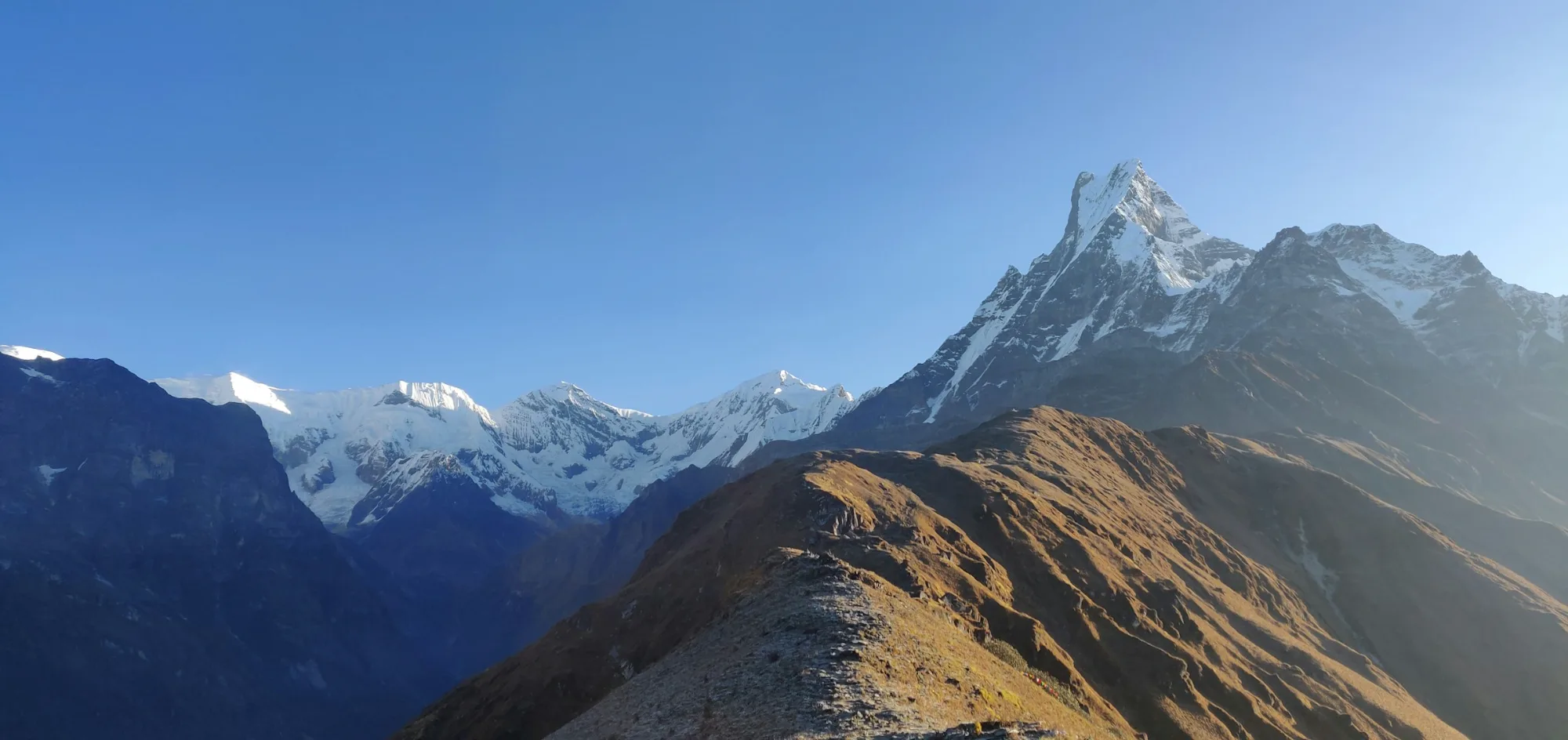
The Mardi Himal trek is a short ridge trek in the Annapurna Conservation Area, starting and finishing close to Pokhara, that takes clients up to Mardi Himal Base Camp at about 4,500 m with close views of Machhapuchhre and the Annapurna range. The Kathmandu Post notes that it was officially opened as a trekking route in 2012, which makes it one of the younger established treks in the region. For agents it fills a useful gap: more altitude and more mountain than a Pokhara foothills walk, far less time than Annapurna Base Camp. This briefing covers what you need before you put Mardi Himal in a brochure or a quote: who it suits, when to run it, the permits and rules that apply, the logistics and risks, and how we suggest packaging it.
Mardi Himal in brief
Mardi Himal is a peak of 5,587 m in the Annapurna region, close to Machhapuchhre. The trek does not climb it. Clients walk up a forested ridge and then open grassland to a viewpoint and to the base camp area beneath the peak, then return the same way or descend by a different spur to a road head.
The usual approaches start from road heads a short drive from Pokhara. The Kathmandu Post notes that most trekkers start from Kande, and has also described a start by jeep from Pokhara to Sidhing (also spelt Siding). The Himalayan Times has described a start from Dhampus, about an hour and a half by jeep from Pokhara. Some itineraries start or finish at Siding, so clients see a different valley on one leg of the trek. A lodge owner interviewed by the Himalayan Times said road construction along the route has shortened the trek, which is one reason published itineraries vary so much in length.
The Kathmandu Post has described a standard itinerary from Kande that descends on day four, and a fast three-day version from Siding for fit walkers. Our own Mardi Himal itinerary, listed on our trekking programmes page, runs 5 to 7 days from Pokhara depending on the pace and acclimatisation the group needs.
Accommodation on the trail is in simple lodges (teahouses) at the main camps. Expect shared bathrooms, basic rooms and set menus, with standards dropping as you climb. There is no luxury lodge option on the ridge itself, so a luxury programme has to put its comfort into the Pokhara nights either side of the trek.
Key stops and altitudes
Altitudes on this route vary between sources and between lodges at the same camp, so treat the figures below as approximate and quote them as "about". We give the source for each one.
| Stop | Approximate altitude | Notes for agents | Source |
|---|---|---|---|
| Kande, Dhampus or Siding (road heads) | Not stated in the sources we checked | Reached by road from Pokhara (Dhampus is about an hour and a half by jeep); choice of start and finish shapes the trek length | Kathmandu Post, Himalayan Times |
| Forest Camp | About 2,600 m | Lodges in rhododendron forest; first or second night on most itineraries | Kathmandu Post |
| Low Camp | About 2,990 m | Often the overnight before High Camp, or the first stop on the way down | Kathmandu Post |
| High Camp | About 3,550 m | Highest overnight on most programmes; pre-dawn start from here for the viewpoint and base camp | Himalayan Times |
| Mardi Himal Base Camp | About 4,500 m | Turnaround point and highest point of the trek; day visit, not an overnight | Himalayan Times, Kathmandu Post |
| Mardi Himal summit | 5,587 m | Not part of the trek; a summit attempt is a separate climbing enquiry | Kathmandu Post |
The important number for planning is the jump between the last sleeping altitude and the high point. Most clients sleep at High Camp, at about 3,550 m, and then walk to about 4,500 m and back in one long day. That is a day-trip gain of close to a thousand metres, which is fine for most fit, acclimatised adults but needs to be explained in the pre-departure notes.
Who it suits and who it does not
Mardi Himal works best for clients who want a real Himalayan high point within a week, and who are happy with simple lodges. In our experience it suits:
- Time-limited FIT clients who have already booked Kathmandu and Pokhara and want a trek that slots into a 10 to 12 day Nepal trip.
- Repeat Nepal visitors who have done Poon Hill and want something higher and quieter without committing to Annapurna Base Camp.
- Small groups of fit adults, such as walking clubs and friends travelling together, where everyone walks at a similar pace.
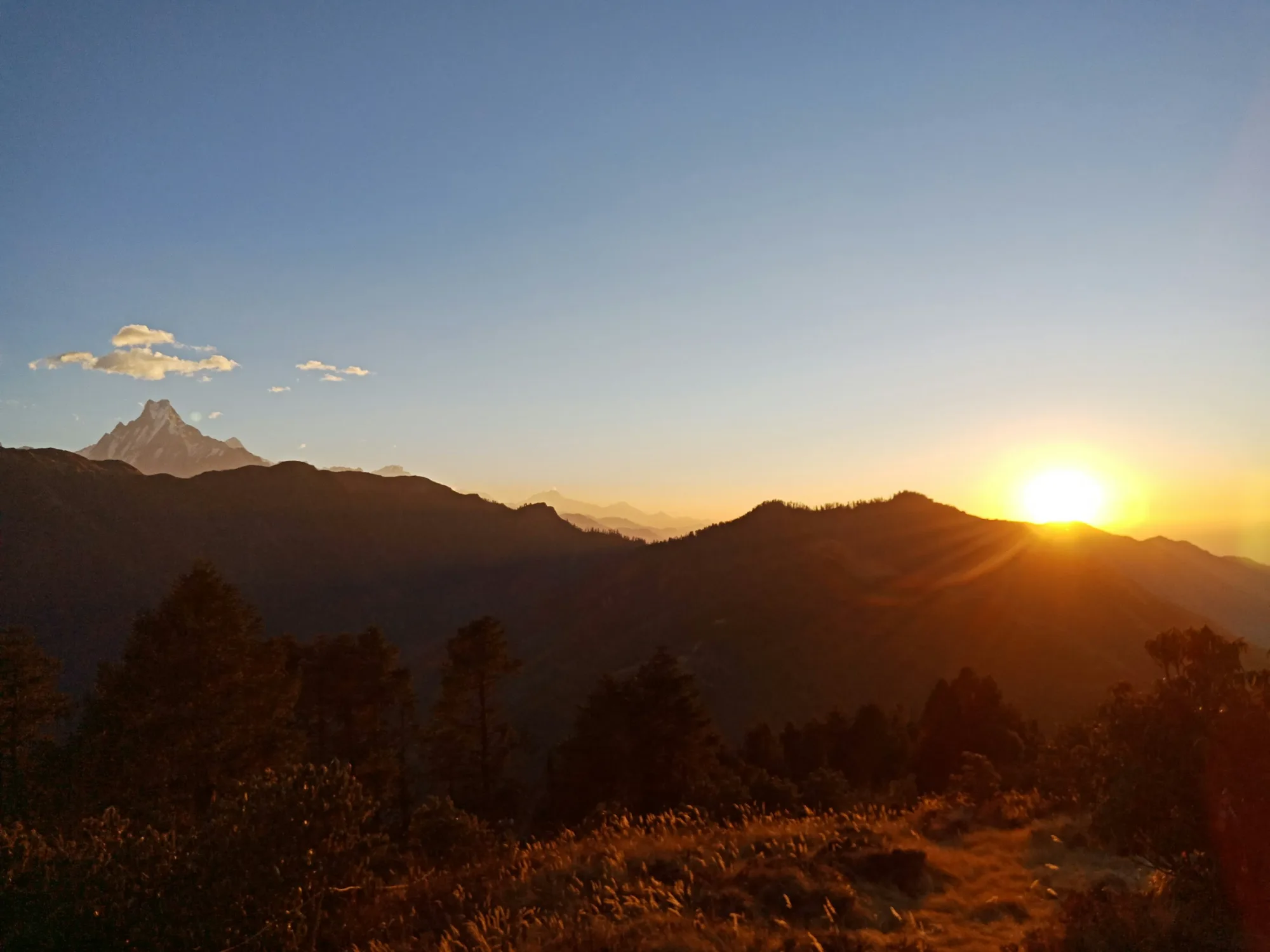
- Photography-led clients, because the ridge gives open sunrise views of Machhapuchhre and the Annapurnas.
It is a weaker fit for some profiles, and it is better to say so at the quote stage:
- Clients with no hill-walking experience. The trail is steep in places, and the base camp day is long. It is not technical, but it is not a gentle stroll either.
- Families with young children and mixed-ability groups. Lodges are small and the ridge has few easy turning points, so a slow walker shapes the whole group's day.
- Large groups in peak weeks. Lodge capacity at the upper camps is limited, and splitting a group between lodges is common when the trail is busy.
- Clients expecting comfort on the trail. If hot showers and private bathrooms matter, sell a shorter walk with better Pokhara hotels instead.
- Clients with heart, lung or other medical conditions that make altitude a concern. They need medical advice before booking, as for any trek above 4,000 m.
Best months to run Mardi Himal
The Nepal Tourism Board's trade site notes that, as with most trekking areas in Nepal, the best time to visit is spring and autumn, and that around 80 percent of rainfall comes in the monsoon, from June to September. Mardi Himal follows that pattern, and because the upper ridge is so open, clear skies matter more here than on a forest trek.
| Season | How Mardi Himal behaves | Our advice to agents |
|---|---|---|
| Autumn (October to November) | Clearest views and settled weather on most days; the busiest period on the trail | Main selling season. Book lodges early and confirm group sizes well ahead. |
| Winter (December to February) | Cold nights at High Camp; snow can cover the upper ridge and close the base camp section for a time | Sell with a flexible high day and a clear rule for turning back. Brief clients on cold-weather kit. |
| Spring (March to May) | Rhododendron forest on the lower trail; views can haze over later in the season | Good second season. Early starts give the best chance of clear views. |
| Monsoon (June to September) | Rain, mud, leeches in the forest and frequent cloud on the ridge | Not a season we recommend for view-led clients. Road heads can also be affected by landslides. |
Shoulder weeks at either end of the main seasons can be excellent value and quieter on the trail, but they carry more weather risk. If a client is set on a late September or early December departure, sell it with an extra contingency day rather than a tight schedule. For clients who can only travel in the cold months, our winter trekking guide explains which routes hold up best.
Permits and rules
Mardi Himal lies inside the Annapurna Conservation Area, so two documents apply to foreign trekkers, plus the licensed guide rule. Our Nepal trekking permits guide covers the wider picture; the Mardi Himal specifics are below. Fees were checked on 19 November 2026.
- ACAP entry permit. The Nepal Tourism Board park entry fee page lists the Annapurna Conservation Area fee as NPR 3,000 per person per entry for foreigners and NPR 1,000 for SAARC nationals, with children under 10 free. The NTNC e-permit portal shows the same figures, says the permit is single entry, non-transferable and non-refundable, and states that double fees apply to permits issued at check-posts. Online card payment carries an extra 2.9 percent gateway charge.
- TIMS card. The Nepal Tourism Board TIMS page lists NPR 2,000 for foreign trekkers and NPR 1,000 for SAARC nationals, payable online, and says the card must be issued through a trekking agency on the listed routes. Some older pages online still show earlier TIMS rates, so always quote from the current NTB TIMS page. Our TIMS card explainer has more detail.
- Licensed guide rule. Under the revised TIMS provision that the Nepal Tourism Board dates from 31 March 2023, trekkers on the listed routes, which name the Mardi Himal Trek in the Annapurna region, must be accompanied by a licensed trekking guide and carry an agency-issued TIMS card. Independent trekking is therefore not an option for foreign clients on Mardi Himal. See our mandatory trekking guide rule briefing.
- Local charges. Local governments in Nepal can set their own tourism service charges on trekking routes, and these can change. Ask us to confirm any current local charges before you finalise a quote.
Permits are not the place to save a few hours. Carry passport copies and photos for every client, and send them to us ahead of arrival so permits can be prepared before the group reaches Pokhara.
Operator tip: Never let a client plan to buy the ACAP permit at a check-post on the trail. The NTNC portal states that permits issued at check-posts cost double. Have us issue ACAP and TIMS in advance, and keep a digital copy of every permit with the guide in case a paper copy is lost.
Logistics and risks
Getting to the trailhead
Every Mardi Himal programme pivots on Pokhara. Clients arrive from Kathmandu by road or by domestic flight, rest overnight, then drive a short distance to the trailhead the next morning. Our Kathmandu to Pokhara transport guide compares the options. We arrange a private vehicle to the chosen road head and a pick-up at the finish, which avoids local jeep waits on the return.
Altitude
Mardi Himal is short, and short treks are where clients underestimate altitude. A group that sleeps at about 3,550 m after only a few days and then walks to about 4,500 m is at real risk of acute mountain sickness if the ascent is rushed. The Himalayan Times, reporting ACAP figures in July 2026, said 25 people died of altitude sickness in the Annapurna region in fiscal year 2025/26, among them 12 Nepalis (four of them guides and porters), with one death on the Mardi Himal trekking route. ACAP's advice was to ascend gradually, rest and descend immediately if symptoms appear. Our altitude sickness and itinerary design guide explains how we build pace into programmes, and why we prefer the 5 to 7 day version over a three-day dash for most clients.
Weather and terrain
The upper ridge is exposed. Wind, cloud and snow can arrive fast, and the base camp day starts before dawn. Guides should have the authority to turn the group around at the viewpoint or earlier if conditions turn. Lower down, forest trails become slippery after rain. Good boots, layers and headtorches are essential kit, not extras.
Insurance and evacuation
Clients need travel insurance that covers trekking to the maximum altitude of the programme and helicopter evacuation. Check the policy wording against about 4,500 m, not just "trekking". Our trekking insurance briefing sets out what to check.
Lodge capacity
Upper camps have a limited number of small lodges. In peak autumn weeks, beds go quickly, and groups may need to split across two lodges or adjust their overnight stop. We confirm lodge plans with the guide team close to the date, but agents should tell clients that rooms on the ridge are basic and occasionally shared.
A shorter option for groups
Not every group needs the base camp. For school groups, mixed-ability parties and other groups that would struggle with the full base camp day, a shorter Mardi Himal programme can work well:
- Turn at High Camp or the viewpoint. Groups still get the classic sunrise view over Machhapuchhre without the long walk to about 4,500 m. This keeps the highest point lower and the days shorter.
- Use a different descent. Coming down via Siding gives a different valley and village experience on the way out. Confirm the road condition and drive time back to Pokhara with us, as they change with the season.
- Add a rest day in Pokhara. A free day at the lake after the trek gives a buffer for weather and lets slower walkers recover before the onward journey.
If a group wants more time in the mountains and more facilities on the trail, Annapurna Base Camp is the natural step up. See our Annapurna Base Camp agent guide for how the two compare.
If a client asks about climbing Mardi Himal itself, treat it as a separate climbing enquiry, with its own permit and staffing requirements, rather than an add-on to the trek.
For travel agents: how to package it
What to include. A complete Mardi Himal package from us normally covers private transport between Pokhara and the trailheads, a licensed trekking guide, porters as required, ACAP and TIMS permits, lodge accommodation and meals on the trail, and Pokhara hotel nights before and after. Kathmandu arrival, transfer to Pokhara and departure can be added to make a full ground package. Guides in other languages can be arranged on request with advance notice.
Buffers. Build in at least one spare day for the trek, either as a contingency day on the ridge or as a flexible Pokhara day after the trek. If the programme connects to an international flight, do not schedule the trek finish for the day before departure. Weather on the ridge and on the Kathmandu to Pokhara leg can both slip by a day.
Who to sell it to. Lead with time-limited, fit FIT clients and small adult groups. For families, school groups and mixed-ability parties, offer the shorter High Camp version and make the turning point clear in the itinerary so no one feels they have missed out.
Upsells. Popular add-ons are an extra night in a better Pokhara hotel, a morning flight between Kathmandu and Pokhara instead of the road, a sunrise boat on Phewa Lake, a Kathmandu Valley heritage day before the trek, or a few days in Chitwan afterwards. For clients who want more altitude next time, Mardi Himal is a good first trek before a longer Annapurna programme.
What to tell clients before they book. Be clear that lodges are simple, that the base camp day is long and early, that a licensed guide is required by the rules, and that weather can change the plan on the high day. Clients who know this in advance are rarely disappointed.
If you want to add Mardi Himal to your programme, or need a quote for a specific group, talk to us about a trade partnership. Our office is open Sunday to Friday, 10:00 to 17:30 Nepal time.
Frequently asked questions
How hard is the Mardi Himal trek?
It is a moderate trek with no technical sections, but the trail is steep in places and the base camp day is long, climbing from High Camp at about 3,550 m to about 4,500 m and back. Clients should be fit, regular walkers and should be briefed on altitude.
How many days for Mardi Himal?
The Kathmandu Post has described a standard walk from Kande that descends on day four, and a fast three-day version from Siding for very fit walkers. Our own Mardi Himal itinerary runs 5 to 7 days from Pokhara, which gives a steadier pace and room for weather.
Is Mardi Himal crowded?
Separate visitor figures for Mardi Himal are not published in the official sources we checked, but the small lodges at the upper camps fill quickly in peak autumn weeks. Book early for October and November and expect larger groups to split between lodges at times.
Do clients need a guide for Mardi Himal?
Yes. The Nepal Tourism Board lists the Mardi Himal Trek among the Annapurna region routes where its revised TIMS provision requires trekkers to be accompanied by a licensed trekking guide and to carry an agency-issued TIMS card.
What permits are needed for Mardi Himal?
Foreign trekkers need an Annapurna Conservation Area entry permit and a TIMS card. Arrange both in advance through your ground operator, because ACAP permits issued at check-posts cost double.
Sources
- Nepal Tourism Board: Park entry fees
- Nepal Tourism Board: TIMS card
- NTNC e-permit portal
- Kathmandu Post: Chiya Kaka and the unfinished story of Mardi Himal
- Nepal Tourism Board trade site: Climate
- Kathmandu Post: How to do the Mardi Himal trek in three days
- The Himalayan Times: Footsteps to heaven, the Mardi Himal trek
- The Himalayan Times: 25 tourists die of altitude sickness in Annapurna region in FY 2025/26