Short treks in Nepal for groups and families: Poon Hill, Mardi Himal, Khopra and valley hikes
The best short treks in Nepal for groups and families are the Ghorepani Poon Hill trek (3,210 m, three to five days from Pokhara), a short version of Mardi Himal, Helambu near Kathmandu, and Nagarkot valley rim hikes. Poon Hill is the default choice for first-time trekkers, children and active seniors, but it needs an ACAP permit, a TIMS card and a licensed guide.
| Poon Hill altitude | 3,210 mSource: The Kathmandu Post |
|---|---|
| Ghorepani altitude | 2,860 mSource: The Kathmandu Post |
| Mardi Himal High Camp | About 3,550 mSource: The Himalayan Times |
| Nagarkot altitude | 2,175 mSource: Nepal Tourism Board (trade site) |
| ACAP entry fee (foreign nationals) | NPR 3,000 per person per entry; under 10 free (checked 19 Nov 2026)Source: Nepal Tourism Board |
| TIMS card (foreign nationals) | NPR 2,000 (checked 19 Nov 2026)Source: Nepal Tourism Board |
| Licensed guide rule | Mandatory on listed routes incl. Poon Hill-ABC, Mardi Himal, Khopra and Helambu, from 31 March 2023Source: Nepal Tourism Board |
Short treks in Nepal are the easiest way to put the Himalaya into a programme that is mainly about culture, food and heritage. For groups, families and older clients, a few days on a well-supported trail delivers the sunrise views and village nights people expect, without the cost, the time or the altitude risk of a base camp trek. This guide is written for agents and tour operators who need to choose the right short trek, explain it honestly to clients and fit it around Kathmandu and Pokhara.
We cover the Ghorepani Poon Hill trek in detail, then the main alternatives: a short version of Mardi Himal, Khopra Danda, Helambu, and the Nagarkot and Kathmandu valley rim walks. Every altitude and government fee below is sourced and was checked on 19 November 2026.
Why short treks sell to groups and families
Most mixed groups contain a spread of fitness levels, ages and appetites for discomfort. A 14-day trek splits that kind of group; a four-day trek usually does not. Short treks also solve practical problems that agents raise with us every season:
- Leave and budget: clients with ten to twelve days in Nepal can trek and still see Kathmandu, Pokhara and perhaps Chitwan.
- Altitude: Poon Hill tops out at 3,210 m and its highest overnight, Ghorepani, is 2,860 m, so it needs a much shorter acclimatisation profile than a base camp trek, although the CDC still counts sleeping at 2,450 m or higher as an altitude illness risk.
- Mixed abilities: non-trekking partners or grandparents can stay in Pokhara and rejoin the group two or three nights later.
- Repeat business: a good first experience on an easy trek is often what brings a client back for Annapurna Base Camp or Everest.
Easy treks in Nepal are still real treks. Days involve stone staircases, steady climbs and cold mornings, and the licensed guide rule applies on most of the routes in this guide. The point is that the demands are manageable for a reasonably active person with sensible pacing.
Ghorepani Poon Hill trek: the default short trek
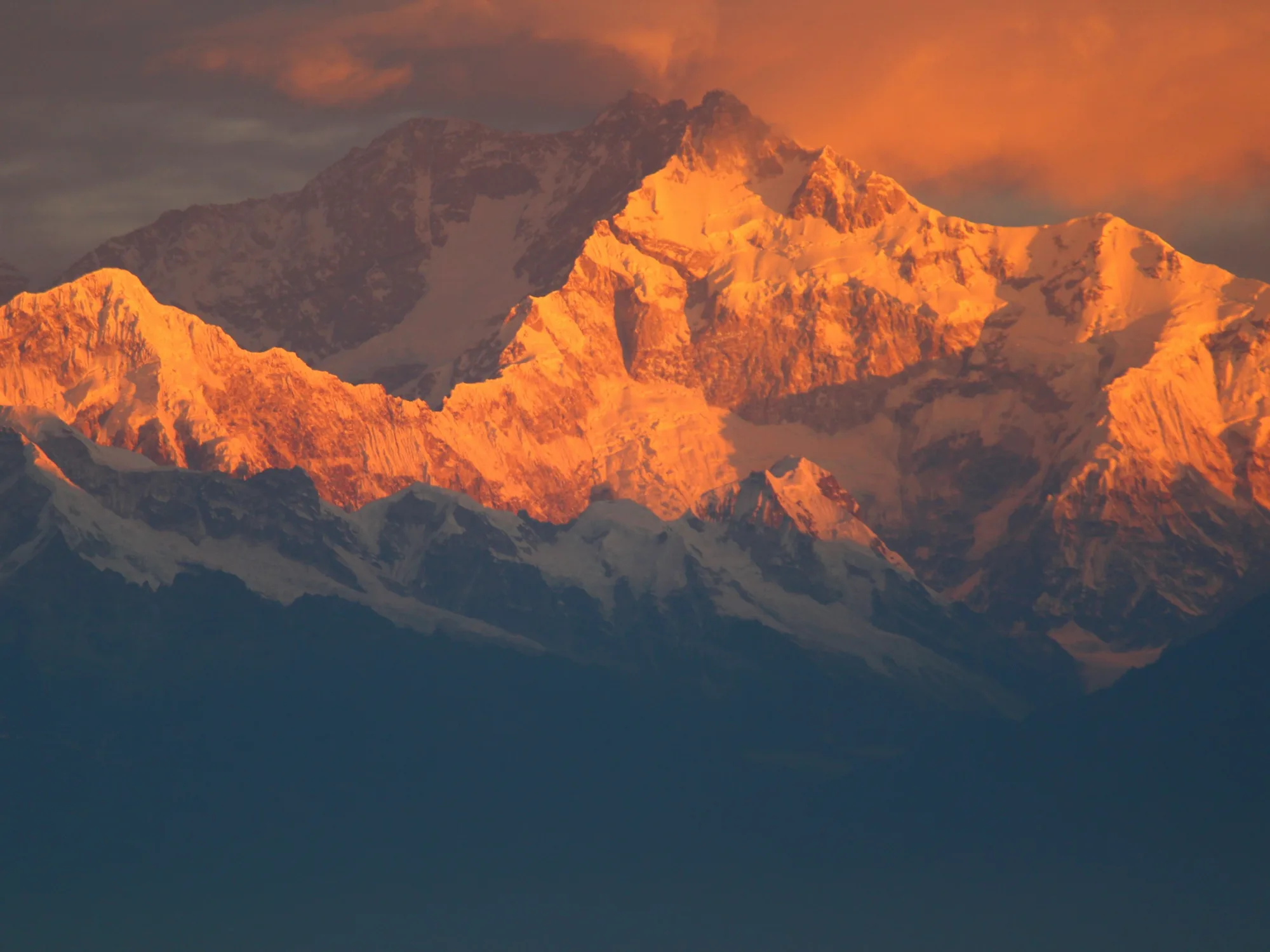
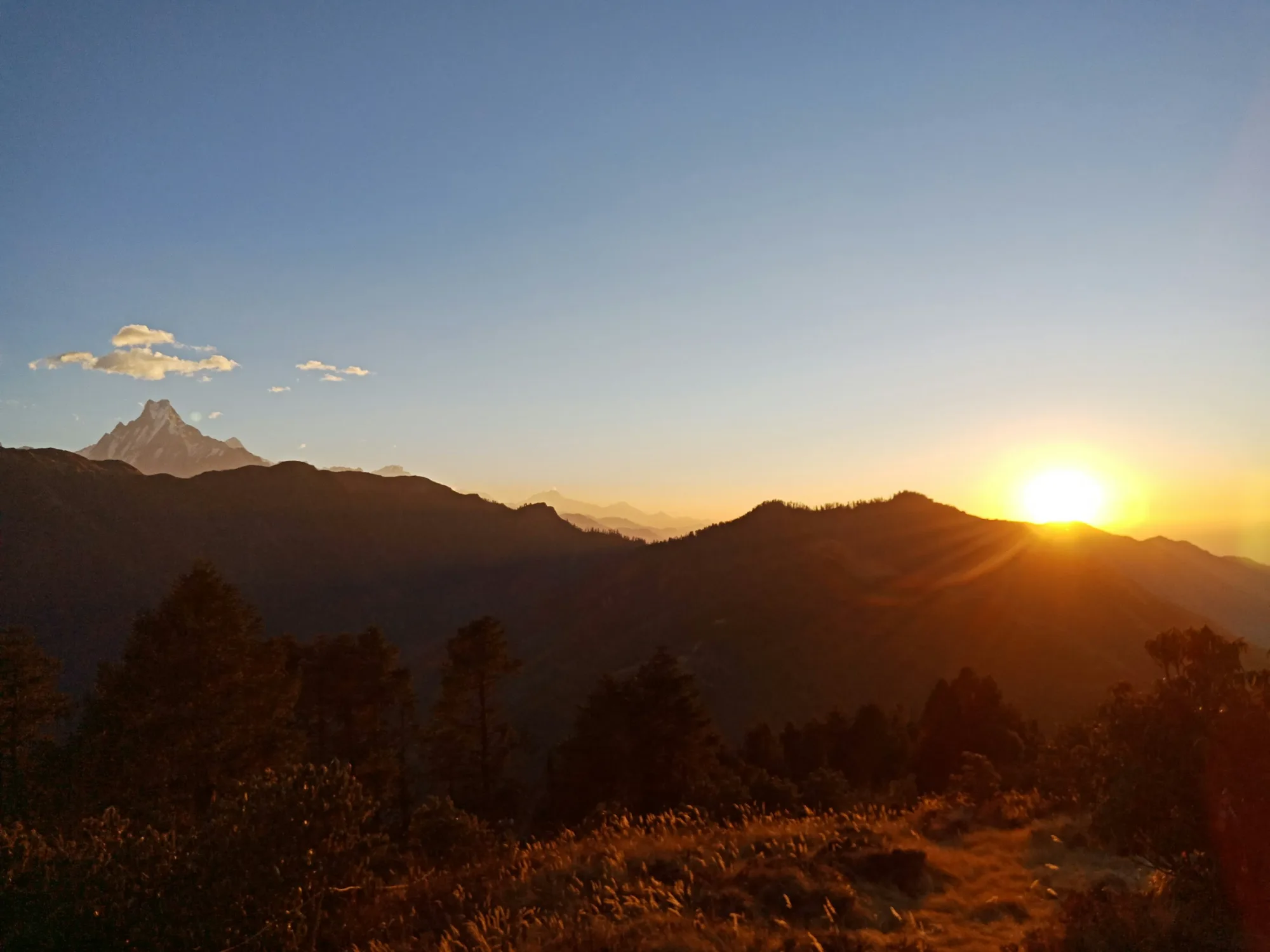
If a client asks for one short trek, this is usually the answer. Poon Hill sits at 3,210 m and the village of Ghorepani below it at 2,860 m, according to The Kathmandu Post. The viewpoint is about a 45-minute walk uphill from Ghorepani, which is why the classic moment of the trek is a pre-dawn climb for sunrise over Annapurna South and more than 20 snow peaks, then breakfast back at the lodge.
Route and length
The Kathmandu Post describes the route through Birethanti, Tikhedhunga, Ulleri and Ghorepani, returning via Tadapani and Ghandruk, and says the trek takes three to five days. Our own Ghorepani Poon Hill programme on the trekking page runs over four to five days from Pokhara. The longest climb for most groups is the staircase up to Ulleri, so we pace that day carefully and put the slower walkers at the front with a guide.
The Ghorepani Poon Hill trek works as a loop because it starts and ends close to Pokhara. Groups can arrive in Pokhara by road or air, trek, and be back on the lakeside in time for a farewell dinner. For the leg between the two cities, see our comparison of Kathmandu to Pokhara transport options.
Rules that apply
Poon Hill lies inside the Annapurna Conservation Area, so every trekker aged 10 or over needs an ACAP entry permit (children below 10 do not need one), and trekkers need a TIMS card issued through a registered agency. The Nepal Tourism Board lists "Poon Hill-ABC" among the routes where trekkers must be accompanied by a licensed trekking guide, a rule NTB dates to 31 March 2023. We explain what that means for groups in our note on the mandatory licensed guide rule.
Operator tip: Poon Hill sunrise is a shared experience, and in peak season the viewpoint is crowded. For larger groups we split the morning into two waves with a guide each, so the faster walkers are not standing in the cold and the slower ones are not rushed on a dark trail. Ask clients to carry a head torch and a warm layer for the climb even if the afternoon before was mild.
Other short treks in Nepal: options from one day to nine days
Poon Hill is not the only choice, and some groups want quieter trails or a different region. These are the alternatives we most often build into programmes.
Mardi Himal, short version
Mardi Himal climbs a ridge east of Poon Hill with close mountain views. The Himalayan Times places High Camp at about 3,550 m and Mardi Base Camp at 4,500 m, with a start near Dhampus about an hour and a half by jeep from Pokhara. For families and seniors we turn the group at High Camp or a lower viewpoint rather than pushing to base camp, which keeps the maximum sleeping altitude modest. Our Mardi Himal trek runs over five to seven days; a shorter family version is possible on request. Mardi Himal is on NTB's licensed guide list. Our Mardi Himal trek agent guide covers the route in full.
Khopra Danda
Khopra Danda is the quieter alternative to Poon Hill, on a ridge with views of the Annapurna, Baraha and Nilgiri ranges. The Kathmandu Post gives its elevation as 3,660 m and says Khopra has many homestays and a community lodge, and reports a single community lodge with 20 beds at Dhandkharka (as reported in 2019). Our Khopra Danda trek runs over seven to nine days, so it is the longest option here; it suits active families with older children who want something beyond the Poon Hill crowds. Khopra is on NTB's licensed guide list. Bed capacity on this route is limited, so we confirm lodges for each group before quoting.
Helambu
Helambu lies north of Kathmandu and can be walked without any flight or long drive, which is its main selling point for groups with little time. It offers villages, monasteries and forest walking, and it combines easily with a Kathmandu stay. Our Helambu Circuit runs over five to seven days. NTB lists Helambu among the routes where a licensed guide is mandatory. The high point depends on the routing chosen, so we confirm the maximum altitude and the permit set (which may include Langtang National Park and Shivapuri Nagarjun National Park entry) on the final itinerary rather than quote a single figure here.
Nagarkot and the Kathmandu valley rim
For clients who want a taste of hill walking with no trekking at all, the valley rim is the answer. The Nepal Tourism Board trade site places Nagarkot at 2,175 m, about 30 km east of Kathmandu, and describes a walk down along a ridge from Nagarkot to the temple of Changu Narayan, as well as a trail south to Nala and Banepa. It also describes Dhulikhel, about an hour east of Kathmandu, with a 30-minute sunrise hike to the Bhagawati Temple and an all-day hike to Namo Buddha. These are day or overnight options that suit almost any group, including those with young children or limited mobility. Our Nagarkot Sunrise and Hike day trip and a three-day Kathmandu and Nagarkot package appear on the tours page.
Dhampus
The Nepal Tourism Board's family travel page suggests short treks of three to four days to Poon Hill or Dhampus, depending on the age of the child. Dhampus is close to Pokhara, so it works as a gentle introduction before, or instead of, Poon Hill.
Short treks compared
| Trek | Our programme length | Max altitude (source) | Start point | Suits |
|---|---|---|---|---|
| Ghorepani Poon Hill | 4 to 5 days | 3,210 m at Poon Hill (Kathmandu Post) | Near Pokhara, via Birethanti | First-time trekkers, families, school groups, active seniors |
| Mardi Himal | 5 to 7 days | About 3,550 m at High Camp; 4,500 m if continuing to base camp (Himalayan Times) | Near Dhampus, by jeep from Pokhara | Fit families with teenagers, small groups wanting fewer crowds |
| Khopra Danda | 7 to 9 days | 3,660 m (Kathmandu Post) | Annapurna foothills, routing varies | Active families, repeat clients, community lodge interest |
| Helambu Circuit | 5 to 7 days | Depends on routing; confirmed per itinerary | Kathmandu valley, no flight | Short-stay groups, culture-focused clients |
| Nagarkot and valley rim hikes | Day trip or 3 days | 2,175 m at Nagarkot (NTB trade site) | Kathmandu | Everyone, including young children and seniors |
Easy treks in Nepal for families, children and seniors
The question we hear most is whether a child or an older client can do Poon Hill. In most cases the answer is yes, with the right pacing and preparation, but agents should be honest about what the trek involves.
Children
The CDC Yellow Book states that children are as susceptible to altitude illness as adults, and that preverbal children with acute mountain sickness can show loss of appetite, irritability and pallor. It also notes that unacclimatised travellers sleeping at 2,450 m or higher are at risk. Ghorepani, at 2,860 m, is above that line, so parents need to know what to watch for. NTB's family page advises getting advice from a medical adviser at home before trekking at altitude and notes that porters can carry younger children in a traditional basket. For school groups, our article on school trips to Nepal and BS 8848 covers supervision ratios and risk assessment.
Seniors and clients with health conditions
The CDC Yellow Book says people over 50 have slightly less risk of altitude illness, but that travellers with pre-existing medical conditions should have them stable before departure and consult a physician familiar with altitude. On Poon Hill the stone staircases, especially on the descent, are a real physical challenge for older clients, alongside the altitude. We recommend trekking poles, shorter walking days and an extra night on the trail if the group wants a gentler pace.
Practical points for mixed groups
- Build in a spare day in Pokhara so a slower group never has to rush the last descent.
- Offer a non-trekking option in Pokhara for partners or grandparents.
- Brief guides in advance on any medical conditions, mobility limits or dietary needs.
- Make sure trekking insurance covers the maximum altitude of the chosen route.
Adding a short trek to a cultural tour
A short trek works best as the middle section of a wider Nepal programme. A typical shape for a 10 to 12 day trip is Kathmandu heritage sites first, then Pokhara, the trek, a rest day by the lake, and either Chitwan or a return to Kathmandu. Valley rim hikes such as Nagarkot to Changu Narayan can replace a sightseeing half day without adding nights. Our Nepal group tours planning guide explains how we sequence hotels, transport and guides for larger groups.
Two sequencing rules make the difference. First, put the trek after at least one full day in Kathmandu so the group has recovered from long-haul travel. Second, keep the day after the trek light: a lake morning in Pokhara or a short transfer, not an early flight. If you are building permits into the costing, our Nepal trekking permits guide explains how ACAP, national park and TIMS documents fit together.
Permits and government fees for short treks
These are government fees only, as published by the Nepal Tourism Board and checked on 19 November 2026. Confirm the current fee with us before quoting, as rates change. NTNC charges double the ACAP fee for permits issued at check-posts.
- Annapurna Conservation Area (Poon Hill, Mardi Himal, Khopra): NPR 3,000 per person per entry for foreign nationals and NPR 1,000 for SAARC nationals; children below 10 are free.
- Langtang National Park: NPR 3,000 per person per entry for foreign nationals and NPR 1,500 for SAARC nationals; children below 10 are free.
- Shivapuri Nagarjun National Park: NPR 1,000 per person per entry for foreign nationals and NPR 600 for SAARC nationals; children below 10 are free.
- TIMS card: NPR 2,000 for foreign nationals and NPR 1,000 for SAARC nationals, issued through a registered agency on routes covered by the licensed guide rule.
Nagarkot and the Kathmandu valley rim day hikes do not appear on NTB's licensed guide list, but any hike that enters Shivapuri Nagarjun National Park pays that park's entry fee. We still send our own guides with every group.
For travel agents: how to package it
A short trek is easy to sell and easy to get wrong. This is how we suggest agents put it together.
What to include
- Licensed guide, with an assistant guide for larger groups, and porters with weight limits respected.
- ACAP or national park permits and TIMS cards, arranged by us before arrival.
- Road or air transport to and from Pokhara or the trailhead, with our own vehicles where possible.
- Lodge accommodation on the trail and a confirmed hotel in Pokhara before and after the trek.
- A pre-departure briefing on altitude, footwear, layers and what to expect from teahouse rooms.
Buffers
Add at least one spare day between the end of the trek and any international departure. Weather can delay flights between Pokhara and Kathmandu, and a slower group may need an extra night on the trail. For families and seniors, plan shorter walking days rather than squeezing the route into the minimum number of nights.
Who it suits
Poon Hill suits first-time trekkers, families with school-age children, school groups and active seniors. Mardi Himal and Khopra Danda suit fitter clients who want quieter trails. Helambu suits short-stay groups based in Kathmandu. Nagarkot and the valley rim suit everyone, including clients who do not want to trek at all.
Upsells
- An extra night at Ghandruk or Tadapani for a slower, village-focused pace.
- A Pokhara add-on day for boating or a museum visit after the trek.
- Chitwan National Park after Pokhara for wildlife.
- Upgraded hotels in Kathmandu and Pokhara, standard to luxury.
- A guide in the group's own language, arranged with advance notice.
If you would like a short trek priced into a group programme, or a family itinerary built around Poon Hill or Nagarkot, register as a trade partner and send us your dates and group profile.
Frequently asked questions
What is the easiest trek in Nepal?
There is no official ranking, but for most groups the Ghorepani Poon Hill trek is the easiest multi-day option, with a high point of 3,210 m. For clients who do not want to trek at all, Nagarkot and Kathmandu valley rim day hikes are easier still.
How many days is the Poon Hill trek?
The Kathmandu Post describes it as a three to five day trek from the Pokhara side. Our Ghorepani Poon Hill programme runs over four to five days, which gives groups and families a comfortable pace.
Can children do the Poon Hill trek?
Many children do, and the Nepal Tourism Board suggests short treks to Poon Hill or Dhampus for families depending on the child's age. The CDC notes that children are as susceptible to altitude illness as adults, so parents should take medical advice before travel and know the warning signs.
Do you need a guide for Poon Hill?
Yes. The Nepal Tourism Board lists Poon Hill-ABC among the routes where trekkers must be accompanied by a licensed trekking guide and carry an agency-issued TIMS card.
What permits are needed for the Ghorepani Poon Hill trek?
Trekkers aged 10 or over need an Annapurna Conservation Area entry permit (children below 10 do not need one), and trekkers need an agency-issued TIMS card. We arrange both before the group arrives.
Sources
- Nepal Tourism Board: TIMS card
- Nepal Tourism Board: Park entry fees
- Nepal Tourism Board: Travel with children
- Nepal Tourism Board trade site: Hill stations
- The Kathmandu Post: From sunrise to local heritage, Poon Hill trek is an enriching experience
- The Himalayan Times: Embarking on the Mardi Himal trek
- The Kathmandu Post: Where nature reigns supreme (Khopra trail)
- CDC Yellow Book: High-altitude travel and altitude illness