Pashupatinath temple visits for groups: rules, etiquette and timing
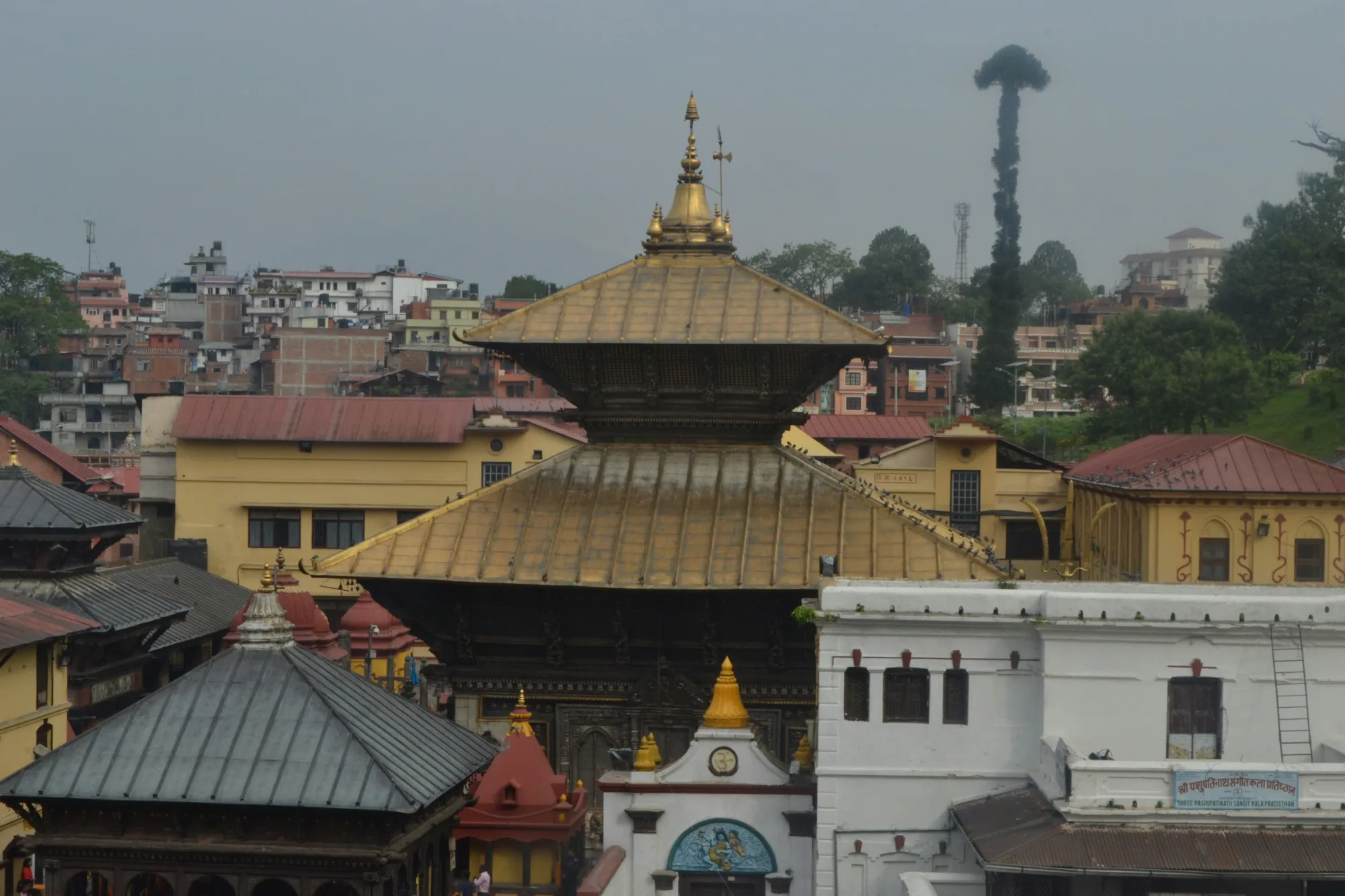
Pashupatinath is one of the most sacred Hindu temples in South Asia and part of the Kathmandu Valley World Heritage Site. The main temple is open only to Hindus, so non-Hindu visitors watch from the terraces on the east bank of the Bagmati, and foreign visitors pay NPR 1,000 per day per entry according to the Nepal Tourism Board, checked on 21 November 2026. Maha Shivaratri falls on 6 March 2027, when the temple is at its most crowded.
| Main temple access | The main temple complex is open only to Hindus; non-Hindus observe from the terraces on the east bank of the BagmatiSource: Nepal Tourism Board |
|---|---|
| Entry fee | NPR 1,000 per day per entry for foreign visitors; Indian nationals free (checked 21 Nov 2026)Source: Nepal Tourism Board |
| Maha Shivaratri 2027 | 6 March 2027, national public holidaySource: Government of Nepal public holiday list (copy published by Pradhan and Associates) |
| Shivaratri 2026 crowds | PADT expected at least 800,000 devotees and about 4,000 sadhusSource: The Kathmandu Post, 14 Feb 2026 |
| Evening aarti | Daily after sunset; timing varies slightly by season; arrive by about 17:30Source: The Kathmandu Post, 6 Sep 2025 |
| World Heritage | Pashupati is one of the seven monument zones of the Kathmandu Valley World Heritage SiteSource: UNESCO World Heritage Centre |
Pashupatinath is on nearly every Kathmandu sightseeing programme, and it is the site where a group needs the clearest briefing. It is a working temple and cremation ground, not a monument, and the rules on who may enter, what may be photographed and how to behave at the ghats are stricter than anywhere else in the valley. This guide is written for travel agents, tour operators and group planners, including those handling Hindu pilgrim groups from India for whom Pashupatinath is the purpose of the trip. Facts below were checked on 21 November 2026 with the Nepal Tourism Board (NTB), the Pashupati Area Development Trust (PADT), UNESCO, the Government of Nepal holiday list and national press.
Pashupatinath in brief
Pashupatinath stands on the banks of the Bagmati river east of central Kathmandu, close to the international airport. It is dedicated to Shiva as Pashupati, lord of animals, and draws pilgrims from across Nepal and India. UNESCO lists Pashupati as one of the seven monument zones of the Kathmandu Valley World Heritage Site and describes it as an extensive Hindu temple precinct. The area is managed by the PADT, a statutory trust.
| Item | Detail | Source, checked 21 Nov 2026 |
|---|---|---|
| Main temple access | Open only to Hindus; non-Hindus watch from the east bank terraces | Nepal Tourism Board |
| Entry fee, foreign visitors | NPR 1,000 per day per entry | Nepal Tourism Board fee page |
| Indian nationals | Free entry | Nepal Tourism Board fee page |
| Main temple hours | Listed as 04:00 to 21:00 daily | Pashupati Area Development Trust |
| Evening aarti | Daily after sunset; NTB gives 18:00, timing varies by season | NTB; The Kathmandu Post, 6 Sep 2025 |
| Maha Shivaratri 2027 | 6 March 2027, public holiday | Government of Nepal holiday list |
Who can enter the main temple
The NTB states that the main temple complex is open only to Hindus, and that non-Hindus must observe from the terraces just across the Bagmati river to the east. The PADT's own site uses slightly looser wording, welcoming non-Hindu visitors to the wider Pashupati area while restricting the main sanctum to Hindus. For a group, the safe rule is simple: non-Hindu clients do not go through the main temple gates, and they see the temple roof and courtyard from the eastern terraces, where they can also watch the ghats and the evening aarti.
Hindu clients, including most Indian and Nepali diaspora pilgrim groups, may enter for darshan. Brief the group leader in advance on who will enter, so that no non-Hindu client tries to go in with the pilgrims. For Indian groups, our guide to Nepal entry rules for Indian travellers covers documents and money rules before they travel.
Operator tip: Split mixed groups at the start, not at the gate. Send Hindu clients with one guide for darshan in the main temple, and take the rest of the group across the river to the eastern terraces with a second guide, then meet at a fixed point by the footbridge. It avoids an awkward scene at the entrance and keeps both halves of the group well briefed.
Etiquette at the ghats
The cremation ghats along the Bagmati are the part of the visit that clients find most moving and most difficult. Families are saying farewell to relatives in public, and the group's behaviour should reflect that. The NTB states that photography is strictly prohibited and that leather items, including shoes, belts and cameras, are forbidden within the temple complex. The PADT site says photography is banned inside the main sanctum and during religious ceremonies, that drones need its prior written permission, and that modest dress is required.
- No photographs of cremations or mourners. We brief every client never to photograph funerals or grieving families, and our guides enforce it.
- Keep a respectful distance. Stay on the terraces and paths, away from the cremation platforms, and keep voices low.
- Dress modestly. Shoulders and knees covered for everyone; the PADT site says shorts, sleeveless tops and western casual wear are not permitted on temple grounds.
- Leave leather behind. Belts, bags and shoes made of leather are best left on the coach.
- Sadhus and photographs. Some sadhus expect a small offering if photographed; agree the approach with your guide in advance.
- Monkeys. Keep food out of sight on the hillside paths.
Evening aarti
The evening aarti on the Bagmati ghats is the best time for most groups to visit. Priests perform the ceremony with lamps, bells and chanting, and the NTB dates the daily aarti to 2006. The NTB gives the start time as 18:00, while the Kathmandu Post reported in September 2025 that the aarti begins after sunset, that the timing varies slightly by season, and that visitors should arrive by about 17:30 for a close view. Non-Hindu visitors can watch from the eastern bank, which gives the clearest view of the ghats.
Allow about an hour and a half on site for the aarti, including time to find a place. Crowds are larger on Mondays, which are sacred to Shiva, and on festival evenings. Agree the pick-up point with your ground handler in advance, as parking around the temple is limited on busy evenings.
Shivaratri and other crowd days
Maha Shivaratri
Maha Shivaratri is the biggest day of the year at Pashupatinath, and in 2027 it falls on 6 March, a national public holiday on the Government of Nepal's holiday list. In 2026, the Kathmandu Post reported that the PADT expected at least 800,000 devotees and about 4,000 sadhus from Nepal, India and elsewhere, with temporary lodging, food and security arranged for the sadhus. The Himalayan Times reported in 2026 that all four gates opened at 02:00 on the day, with three outside queues and parking moved to sites around the area. For most leisure groups the right advice is to visit on another day. For Hindu pilgrim groups who want to be there, plan very early starts, a small group per guide, a fixed meeting point and plenty of water, and expect long waits in the queue.
Teej, Shrawan and Bol Bam
Teej brings large numbers of women devotees in red to Pashupatinath. In 2026 it fell on 14 September and OnlineKhabar reported that all four gates were due to open at 03:00, with five queues outside and eight inside. The Teej date for 2027 has not yet appeared on an official holiday list, so check before setting dates. Mondays in the month of Shrawan, usually July to August, also draw heavy crowds, including Bol Bam pilgrims who carry water from Sundarijal; OnlineKhabar reported special arrangements for them in August 2026. Our Nepal festivals 2027 calendar lists the dates we have confirmed so far.
| Occasion | When | Advice for groups |
|---|---|---|
| Maha Shivaratri | 6 March 2027 | Avoid for leisure groups; very early start for pilgrims |
| Teej | Late August or September; 2027 date not yet published | Visit on another day unless the festival is the purpose |
| Shrawan Mondays | Mondays in Shrawan, usually July to August | Expect long queues for darshan; go early |
| Ordinary evenings | Every day | Best time for aarti; arrive about 17:30 |
Fitting Pashupatinath into a programme
Pashupatinath sits naturally on the first heritage day, between Kathmandu Durbar Square or Swayambhu in the morning and Boudhanath, which is a short drive away, for sunset. If the aarti is the priority, reverse it: Boudhanath in the afternoon and Pashupatinath for the evening ceremony. Our guide to the Kathmandu Valley UNESCO sites sets out a two day plan for all seven monument zones. For Hindu pilgrim groups, Pashupatinath pairs with Muktinath; see our guide to Muktinath for Indian pilgrim groups, and for coach groups entering through the southern border, our notes on ground handling for Indian tour operators.
For travel agents: how to package it
What to include
- The entry fee per non-Indian foreign visitor, shown as a government fee with the date checked.
- A licensed guide who knows the temple customs, with a second guide for mixed groups that split for darshan.
- Transport with a drop-off and pick-up point agreed in advance.
- A written briefing on dress, leather, photography and behaviour at the ghats, sent before arrival.
Buffers and timing
- Plan about two hours for a daytime visit and an hour and a half for the evening aarti.
- Check the date against Shivaratri, Teej and Shrawan Mondays before confirming any programme.
- The temple is close to the international airport, so an aarti visit works well as a last evening before a morning departure.
Who it suits
- Hindu pilgrim groups from India and the diaspora, for whom it is the centre of the trip.
- Cultural and school groups, with a clear briefing on the ghats.
- First time leisure visitors as part of a full Kathmandu Valley day.
Upsells
- An evening aarti visit with a guide who explains the ritual.
- Puja arrangements for Hindu groups through the PADT Puja Booking Office, arranged by us before the visit.
- A combined pilgrimage circuit with Muktinath, or with Janakpur and other Terai temples on request.
For full programme shapes, see our Nepal group tours planning guide.
How we can help
Expert DMC Nepal is licensed by the Government of Nepal for travel, tour, trekking and mountaineering, and is a member of the Nepal Mountaineering Association and a TAAN member. We use our own guides, transport and hotel contracts, handle FIT clients to large pilgrim groups at standard to luxury level, and can arrange guides in Hindi or any other language on request with advance notice. See our Nepal tours, or become a partner and our operations desk will plan the right day and time for your group.
Frequently asked questions
Can non-Hindus enter Pashupatinath?
Non-Hindus can visit the wider Pashupati area but not the main temple, which is open only to Hindus. They watch from the terraces on the east bank of the Bagmati, which also give the best view of the ghats and the evening aarti.
What time is Pashupatinath aarti?
The aarti is held every evening after sunset; the Nepal Tourism Board gives 18:00, and the timing shifts slightly with the season. Arrive by about 17:30 for a good view.
When is Shivaratri 2027?
Maha Shivaratri falls on 6 March 2027, a national public holiday in Nepal. Pashupatinath is extremely crowded on the day, so most leisure groups should visit on another date.
Is there an entry fee for Pashupatinath?
The Nepal Tourism Board lists NPR 1,000 per day per entry for foreign visitors, with Indian nationals free, checked on 21 November 2026. Confirm the current fee with us before quoting.
Can you take photos at Pashupatinath?
The Nepal Tourism Board says photography is strictly prohibited, and the temple trust bans it inside the main sanctum and during religious ceremonies. We ask every client never to photograph cremations or mourning families.
Sources
- Nepal Tourism Board: Pashupatinath
- Nepal Tourism Board: Heritage site entry fees
- Pashupati Area Development Trust: Visitor information
- UNESCO: Kathmandu Valley
- Government of Nepal public holidays list (copy)
- The Kathmandu Post: Why people gather for Pashupati's aarati
- The Kathmandu Post: Sadhus throng Pashupatinath for Maha Shivaratri
- OnlineKhabar: All four gates of Pashupati open for Teej