Chitwan National Park for groups: safari activities, lodges and timing
Chitwan National Park works best for groups on a two or three night stay in Sauraha or near Meghauli, with a jeep safari, a canoe trip and a guided walk or birding morning. October to March is the most comfortable period, while jeep safaris inside the park are suspended in the monsoon. Entry is NPR 2,000 per foreign visitor per day, checked on the Chitwan National Park website on 21 November 2026.
| Park entry fee | NPR 2,000 per foreign visitor and NPR 1,000 per SAARC national; tickets are valid for one day (checked 21 Nov 2026)Source: Chitwan National Park Office |
|---|---|
| Online tickets | Trial launched at Sauraha on 15 October 2026; tickets are valid for one daySource: OnlineKhabar English, 15 Oct 2026 |
| Tiger count 2026 | 145 in Chitwan National Park and its buffer zone, 429 nationallySource: The Kathmandu Post, 30 Jul 2026 |
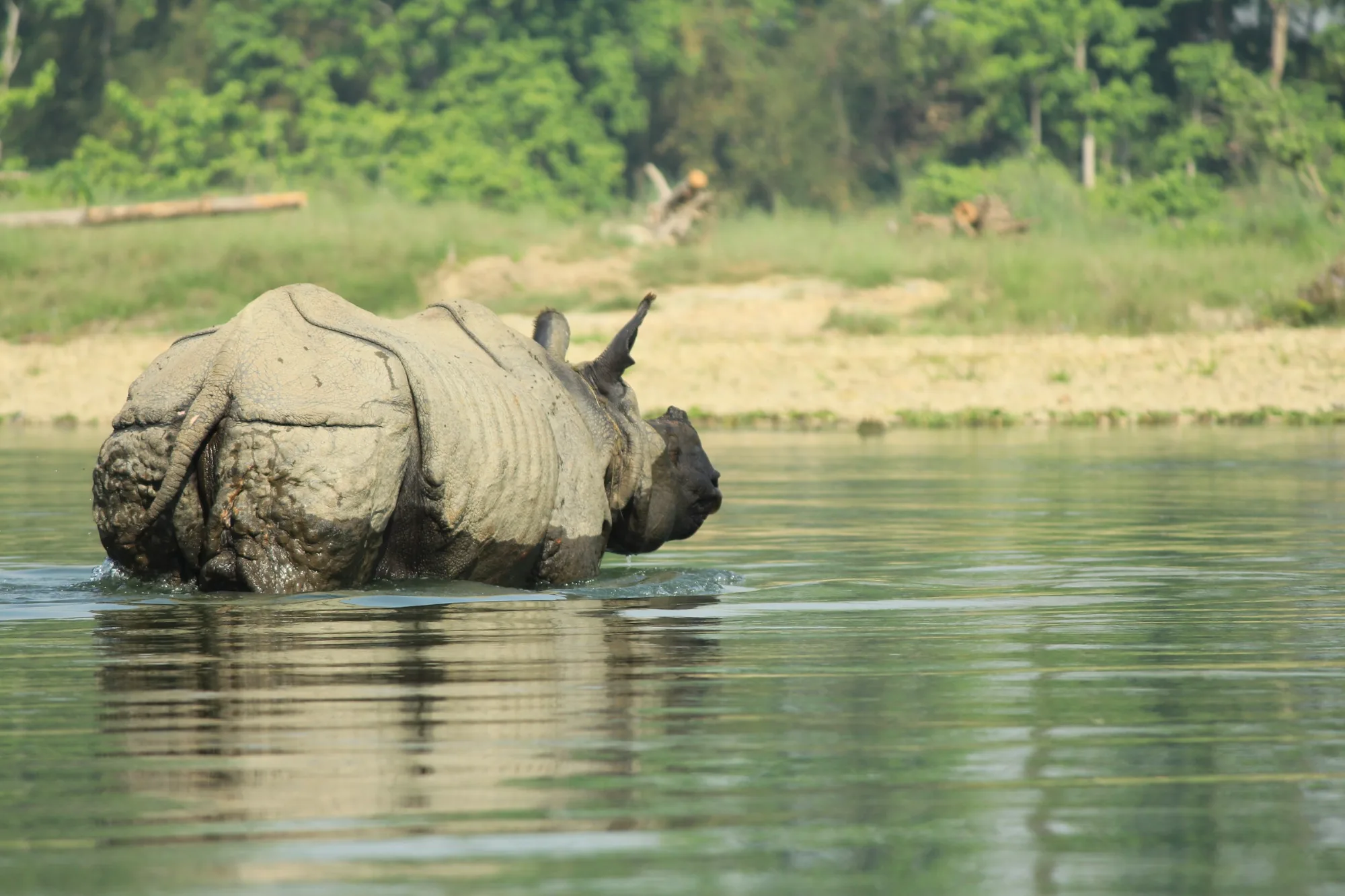
| Rhino count | 694 in Chitwan and 752 nationally in the 2021 count; no newer count has been publishedSource: The Kathmandu Post |
| Elephant rides | Not allowed inside the park for nearly 15 years; run only in buffer zone community forestsSource: The Kathmandu Post, 19 Jul 2026 |
| Monsoon 2026 | Jeep safari inside the park suspended from 1 July 2026; buffer zone safaris continuedSource: The Kathmandu Post, 1 Jul 2026 |
| Kathmandu to Bharatpur flight | About 25 minutes, 6 daily flights listedSource: Buddha Air |
Chitwan National Park is the easiest wildlife add-on in a Nepal programme. It sits in the lowland Terai south of the hills, a short flight or a long drive from Kathmandu, and it gives clients something no other part of a Nepal itinerary does: one-horned rhinos, a small chance of a tiger, and a very different landscape after the temples and mountains. This guide is written for travel agents, tour operators and group planners who need to choose activities, set the number of nights, pick a lodge area and brief clients on park rules. Every figure below was checked on 21 November 2026 against the park website, the Department of National Parks and Wildlife Conservation (DNPWC), UNESCO or national press.
Chitwan National Park in brief
Chitwan was established in 1973 as Nepal's first national park and was inscribed as a natural World Heritage Site by UNESCO in 1984. The DNPWC park brochure gives its area as 952.63 square kilometres, with a buffer zone of 729.37 square kilometres around it, and lists 68 mammal species and 546 bird species. Most visitors stay at Sauraha on the northern edge of the park, which the OnlineKhabar report on the park's online ticketing put at more than 80 per cent of the 272,923 visitors recorded in fiscal year 2082/83, of whom 88,665 were non-SAARC foreigners. Smaller lodge areas sit around Meghauli to the west and in the buffer zone further along the park boundary.
| Item | Detail | Source, checked 21 Nov 2026 |
|---|---|---|
| Entry fee, foreign visitors | NPR 2,000 per person per day | Chitwan National Park website |
| Entry fee, SAARC nationals | NPR 1,000 per person per day | Chitwan National Park website |
| Jeep entry fee | NPR 5,000 per jeep per entry | OnlineKhabar, 15 Oct 2026 |
| Online tickets | Trial launched at Sauraha on 15 Oct 2026, QR code at the gate, valid for one day | OnlineKhabar, 15 Oct 2026 |
| Tigers | 145 in Chitwan and its buffer zone, 429 nationally | The Kathmandu Post, 30 Jul 2026 |
| Rhinos | 694 in Chitwan, 752 nationally (2021 count, the latest published) | The Kathmandu Post, 23 Sep 2026 |
| Flight to Bharatpur | About 25 minutes, 6 daily flights listed | Buddha Air |
Because the entry permit is per person per day, a two night stay with activities on two days means two days of park fees. Activity charges, guide fees and the jeep fee are separate from the entry permit, so build them into the ground cost rather than treating the park fee as the whole cost of access.
Activities and what clients see
Jeep safari
The jeep safari is the core activity for most groups. It covers more ground than any other option, which matters in tall grass where animals can be close but hidden. OnlineKhabar reported on 5 October 2026 that jeeps carry up to 10 people and that about 52 jeeps operate inside the park, so book the safari early for larger groups in the busy months. A half day drive is enough for most clients; a full day suits keen wildlife and photography groups.
Canoe trips
Dugout canoe trips on the Rapti and Budhi Rapti are quiet and good for birds and mugger crocodiles. They work well as the first activity on arrival afternoon or as a short morning trip before the jeep safari. Clients sit low in the boat, so this is not the right choice for anyone with poor mobility.
Guided walks and birding
Walking in the park brings clients closest to the forest, and also closest to the risk. Chitwan's animals are wild and dangerous on foot: the Kathmandu Post reported that a local man was killed by a rhino while fishing at Meghauli in June 2025. We arrange walks only with experienced, registered nature guides, keep group sizes small, brief clients on what to do if they meet a rhino or elephant, and do not offer walks to clients who cannot move quickly. The park regulation page strictly prohibits walking inside the park between sunset and sunrise.
Elephant Breeding Centre, lakes and Tharu culture
The Elephant Breeding Centre at Khorsor, near Sauraha, was set up in the 1980s and is an easy short visit. Beeshazar and Associated Lakes in the buffer zone is a Ramsar wetland of international importance, designated in 2003, and a good half day for birders. An evening of Tharu cultural performance or a village walk in Sauraha rounds off the stay for groups who want something beyond wildlife.
Operator tip: Put the jeep safari on the first full morning, not the last. If fog, a closure or a vehicle problem cancels the first attempt, you still have a second chance before departure. Groups that leave the safari to the final morning have no fallback.
Responsible wildlife choices
Elephant-back safaris are the topic agents ask about most. According to the Kathmandu Post on 19 July 2026, elephant rides have not been allowed inside the national park for nearly 15 years and now run only in buffer zone community forests with privately owned elephants. The same report says a Supreme Court verdict of 17 December 2025 directed the authorities to reconsider elephant rides and look at alternatives such as elephant walks, but there is no outright ban yet. We do not include elephant rides in our programmes and suggest the jeep safari, canoe trip and guided walk instead. If a client asks, explain the welfare concern plainly and offer the alternatives.
Other simple steps make a difference: keep vehicles on the tracks, keep voices low, do not feed animals, take litter out and choose lodges that employ local staff and guides. Our note on responsible tourism in Nepal covers what you can ask a ground operator to commit to.
Seasons: when to send groups
Chitwan is lowland, so the season works differently from the mountains. Winter days are mild and dry, while early mornings and evenings are cool and often misty. Spring brings heat and better visibility after grass management. The monsoon brings floods and suspended activities.
| Months | Conditions | What to plan for |
|---|---|---|
| October to November | Dry, comfortable, migratory birds arriving | Jeep safaris inside the park resumed in early October in 2026; tall grass can hide animals; book early for groups |
| December to January | Cool, misty mornings, mild days | Morning fog can delay starts and flights; warm layers for early activities |
| February to March | Warming, grass cut and burned by the park | Good visibility for wildlife; a strong period for photography groups |
| April to May | Hot, humid towards the end | Early starts, rest in the middle of the day |
| June to September | Monsoon, floods | In 2026 jeep safari inside the park was suspended from 1 July to early October; buffer zone activities continued |
The park's own programmes page says grass is cut and burned in February and March each year, which opens up views across the grasslands. The DNPWC brochure gives September to November and February to April as the periods for migratory birds. In 2026 the Kathmandu Post reported that jeep safaris inside the park were suspended from 1 July for the monsoon, while buffer zone safaris continued, and OnlineKhabar reported that the park planned to reopen jeep safaris in early October. Dates change each year, so we confirm the position before quoting any June to September departure. For the wider picture, see our guides to Nepal weather by month and what still works in the monsoon.
Lodges and group sizes
The government ordered the resorts inside the park to leave in 2012, as the Kathmandu Post recounted in February 2023, so every lodge now sits outside the park boundary. That leaves three broad choices.
- Sauraha: the largest choice of hotels and lodges, from simple guesthouses to comfortable resorts, close to the main entry point, canoe launch and breeding centre. Best for most groups, students and anyone on a tighter budget.
- Meghauli and the western side: quieter lodges near the western entry points, often with more space and a more remote feel. Good for incentive and luxury groups.
- Buffer zone and community lodges: smaller properties with a stronger village setting. Better for small groups and special interest travellers than for a coach of 40.
For groups above about 20 we split activities into smaller units: two or three jeeps, two canoe departures and walking groups of a handful of clients per guide team. Keep the whole group together for meals and the evening programme. For larger programmes, check early that the lodge can hold the full group on your dates, especially at Christmas, New Year and in the February to March peak. Our Nepal group tours planning guide covers rooming, vehicles and tour leaders in more detail.
Getting there
Groups reach Chitwan by road through Mugling and Narayangadh, or by air to Bharatpur. Buddha Air lists 6 daily flights from Kathmandu to Bharatpur of about 25 minutes, with the park roughly 30 minutes by road from the airport. The road takes most of a day and is exposed to landslides in the monsoon; the UK Foreign, Commonwealth and Development Office advises against travel on overloaded buses or at night. Our Kathmandu to Chitwan transport guide compares road and flight in detail, and many programmes continue by road to Pokhara or Lumbini.
For travel agents: how to package it
What to include
- Park entry fees for each day of activity, shown as government fees with the date checked.
- A jeep safari, a canoe trip and either a guided walk, birding morning or breeding centre visit.
- Registered nature guides for every activity, with walking groups kept small.
- Lodge accommodation with meals, since most lodges are some way from independent restaurants.
- Road transfers or flights to Bharatpur, with luggage allowances checked for the flight.
Nights and buffers
- Two nights is the practical minimum: arrival afternoon, one full day, departure morning.
- Three nights suit wildlife, photography and slower paced groups, and give a second chance at the jeep safari.
- Do not schedule Chitwan as the last stop before an international flight without a buffer in Kathmandu.
Who it suits
- Families and school groups. See our notes on school trips to Nepal.
- First time visitors on classic Kathmandu, Pokhara and Chitwan circuits, as in our itinerary templates.
- Photographers and birders, especially from February to April.
Upsells
- A full day jeep safari for keen wildlife groups.
- A birding morning at Beeshazar Lakes with a specialist guide.
- A Tharu village walk and cultural evening.
- A continuation to Lumbini or a soft adventure day in Pokhara from our activities list.
How we can help
Expert DMC Nepal is licensed by the Government of Nepal for travel, tour, trekking and mountaineering, and is a member of the Nepal Mountaineering Association and a TAAN member. We use our own guides, transport and hotel contracts, and handle everything from FIT clients to large groups, at standard to luxury level. Browse our Nepal tours for Chitwan combinations, or become a partner and our operations desk will send net rates and sample programmes for your dates.
Frequently asked questions
How many days in Chitwan?
Two nights is the practical minimum, giving an arrival afternoon, one full day of activities and a departure morning. Three nights suit wildlife and photography groups and give a second chance at the jeep safari.
Can you see tigers in Chitwan?
It is possible but never guaranteed. The 2026 national count recorded 145 tigers in Chitwan National Park and its buffer zone, but they are shy, so set expectations around rhinos, deer, crocodiles and birds.
Best time to visit Chitwan?
October to March is the most comfortable period, and February to March gives good visibility after the park cuts and burns the grass. Jeep safaris inside the park are suspended in the monsoon.
Are elephant rides allowed in Chitwan National Park?
Elephant rides have not been allowed inside the park for nearly 15 years and now run only in buffer zone community forests. We do not include them and offer jeep, canoe and walking activities instead.
Are there lodges inside Chitwan National Park?
No. The resorts inside the park were ordered out in 2012, so all lodges now sit outside the boundary, mainly in Sauraha and around Meghauli.
Sources
- Chitwan National Park: Regulation
- OnlineKhabar: Chitwan National Park launches online ticketing
- The Kathmandu Post: Nepal counts a record 429 tigers
- The Kathmandu Post: Nepal's rhino census is getting a scientific makeover
- The Kathmandu Post: Elephant safaris at crossroads as Chitwan weighs ethical tourism shift
- The Kathmandu Post: Jeep safari inside Chitwan National Park suspended for monsoon
- DNPWC: Chitwan National Park brochure
- Buddha Air: Flights from Kathmandu to Bharatpur