Kathmandu Valley tour: the seven UNESCO sites, a group touring guide
The Kathmandu Valley World Heritage Site, inscribed by UNESCO in 1979, is made up of seven monument zones: the Durbar Squares of Kathmandu, Patan and Bhaktapur, and Swayambhu, Boudhanath, Pashupati and Changu Narayan. Most groups need two full days to see them without rushing. Foreign visitors pay a separate entry fee at each site, from NPR 200 at Swayambhu to NPR 2,000 at Bhaktapur, as checked on 21 November 2026.
| World Heritage listing | Inscribed 1979; seven monument zones; on the danger list 2003 to 2007Source: UNESCO World Heritage Centre |
|---|---|
| Kathmandu Durbar Square fee | NPR 1,000 foreigners, NPR 500 SAARC (checked 21 Nov 2026)Source: OnlineKhabar English, 5 Sep 2025 |
| Bhaktapur fee | NPR 2,000 non-SAARC, NPR 500 SAARC (checked 21 Nov 2026)Source: Republica, FY 2024/25 report |
| Patan, Swayambhu, Boudhanath fees | Patan NPR 1,000, Swayambhu NPR 200, Boudhanath NPR 400 for foreigners (NTB page, checked 21 Nov 2026)Source: Nepal Tourism Board |
| Changu Narayan fee | NPR 400 non-SAARC, NPR 300 SAARC (checked 21 Nov 2026)Source: OnlineKhabar English, 31 Jul 2025 |
| Basantapur nine storey palace | Rebuilt after the 2015 earthquake and reopened to the public on 20 May 2025Source: OnlineKhabar English, 21 May 2025 |
Almost every Nepal programme starts with the Kathmandu Valley, and for many first time visitors the heritage days are what they remember most. The valley holds an unusual concentration of royal palaces, temples and stupas within a short drive of each other, and the whole group of them is listed by UNESCO as a single World Heritage Site. This guide is written for travel agents, tour operators and group planners building a Kathmandu Valley tour: what the seven sites are, what they cost to enter, how to sequence them around traffic, and how to handle a group at each one. Fees and facts below were checked on 21 November 2026 against UNESCO, the Nepal Tourism Board (NTB) and national press.
The seven monument zones
UNESCO inscribed the Kathmandu Valley in 1979. Its listing describes seven monument zones: three Durbar Squares, or urban centres, at Hanuman Dhoka in Kathmandu, Patan and Bhaktapur, and four religious ensembles at Swayambhu, Bauddhanath (Boudhanath), Pashupati and Changu Narayan. The site was placed on the List of World Heritage in Danger in 2003 and removed in 2007, after a boundary modification accepted in 2006 and an integrated management plan adopted in 2007.
| Site | What it is | Foreigner fee | SAARC fee | Fee source |
|---|---|---|---|---|
| Kathmandu (Hanuman Dhoka) Durbar Square | Old royal palace square in the city centre | NPR 1,000 | NPR 500 | OnlineKhabar, 5 Sep 2025 |
| Patan Durbar Square | Newar royal square, includes Patan Museum | NPR 1,000 | NPR 500 | NTB fee page |
| Bhaktapur Durbar Square | Best preserved medieval town, about 12 km east of Kathmandu | NPR 2,000 | NPR 500 | Republica, FY 2024/25 report |
| Swayambhu | Hilltop stupa west of the city | NPR 200 | NPR 50 | NTB fee page |
| Boudhanath | Great stupa and centre of Tibetan Buddhist life | NPR 400 | NPR 100 | NTB fee page |
| Pashupati | Hindu temple precinct on the Bagmati | NPR 1,000 per day per entry | NPR 1,000 (Indian nationals free) | NTB fee page |
| Changu Narayan | Hilltop temple on a ridge above Bhaktapur | NPR 400 | NPR 300 | OnlineKhabar, 31 Jul 2025 |
All fees are per person and were checked on 21 November 2026. The NTB fee page carries no update date, and on the day we checked it still showed older figures for Bhaktapur and Changu Narayan than the 2025 press reports, so treat every figure as subject to change and confirm with us before you quote. Each site sells its own ticket; there is no single valley pass.
Patan, Bhaktapur and Kathmandu Durbar Squares
Kathmandu Durbar Square
Hanuman Dhoka is the old royal centre of Kathmandu and one of the busiest squares in the valley. It suffered heavily in the 2015 earthquake. The nine storey palace at Basantapur, rebuilt with Chinese support, reopened to the public on 20 May 2025, according to OnlineKhabar. Kasthamandap, the timber pavilion that gives Kathmandu its name, was rebuilt and reopened on 4 April 2022, but Rising Nepal reported that its gates were locked to the public soon afterwards and were still closed in 2025, so do not promise clients entry. Republica reported in 2024 that after paying the entry fee visitors are issued a card allowing repeat visits during their stay in Nepal, which helps if the group returns to the square in the evening; ask for it when you buy.
Patan Durbar Square
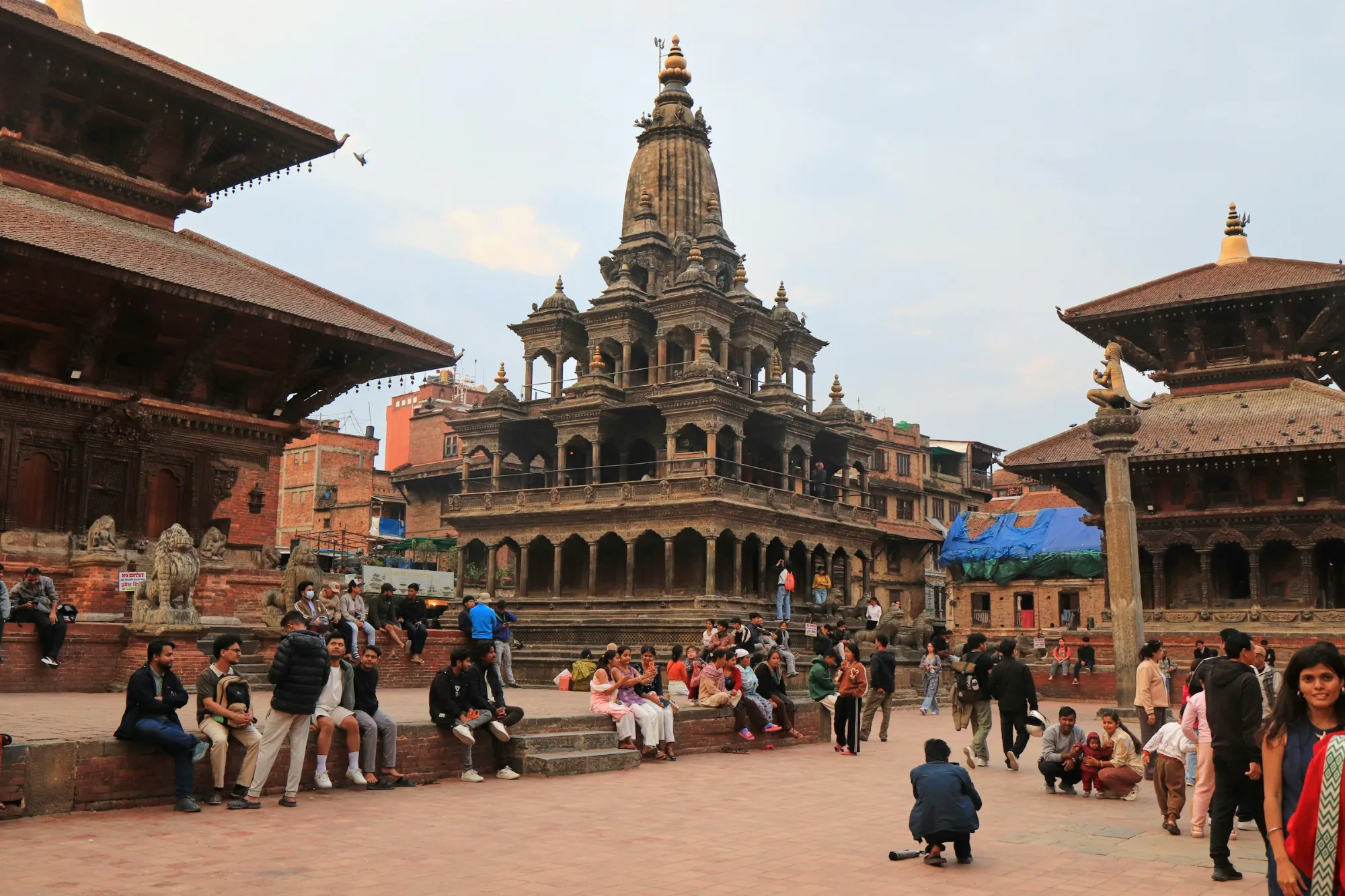
Patan, across the Bagmati in Lalitpur, is quieter and easier to walk than Kathmandu. The square is lined with temples, including the stone Krishna Mandir, and the Patan Museum in the old palace is the best single introduction to Nepali sacred art. OnlineKhabar reported in February 2026 that the museum had 313,300 visitors in 2025, of whom 105,300 were foreign, and that online ticketing was being trialled. Allow two to three hours including the museum.
Bhaktapur Durbar Square
Bhaktapur is the most complete historic town in the valley, with brick lanes, pottery squares and the Nyatapola temple at Taumadhi. The NTB places it about 12 km east of Kathmandu. Republica reported a foreigner fee of NPR 2,000 in its report on the 2024/25 fiscal year, the highest in the valley. The NTB fee page notes that for groups of 11 to 20 at Bhaktapur, one tour leader enters free. Bhaktapur deserves a half day at least, and it combines naturally with Changu Narayan, which the NTB describes as sitting on a ridge overlooking Bhaktapur, and with an overnight at Nagarkot.
Swayambhu, Boudha, Pashupati and Changu Narayan
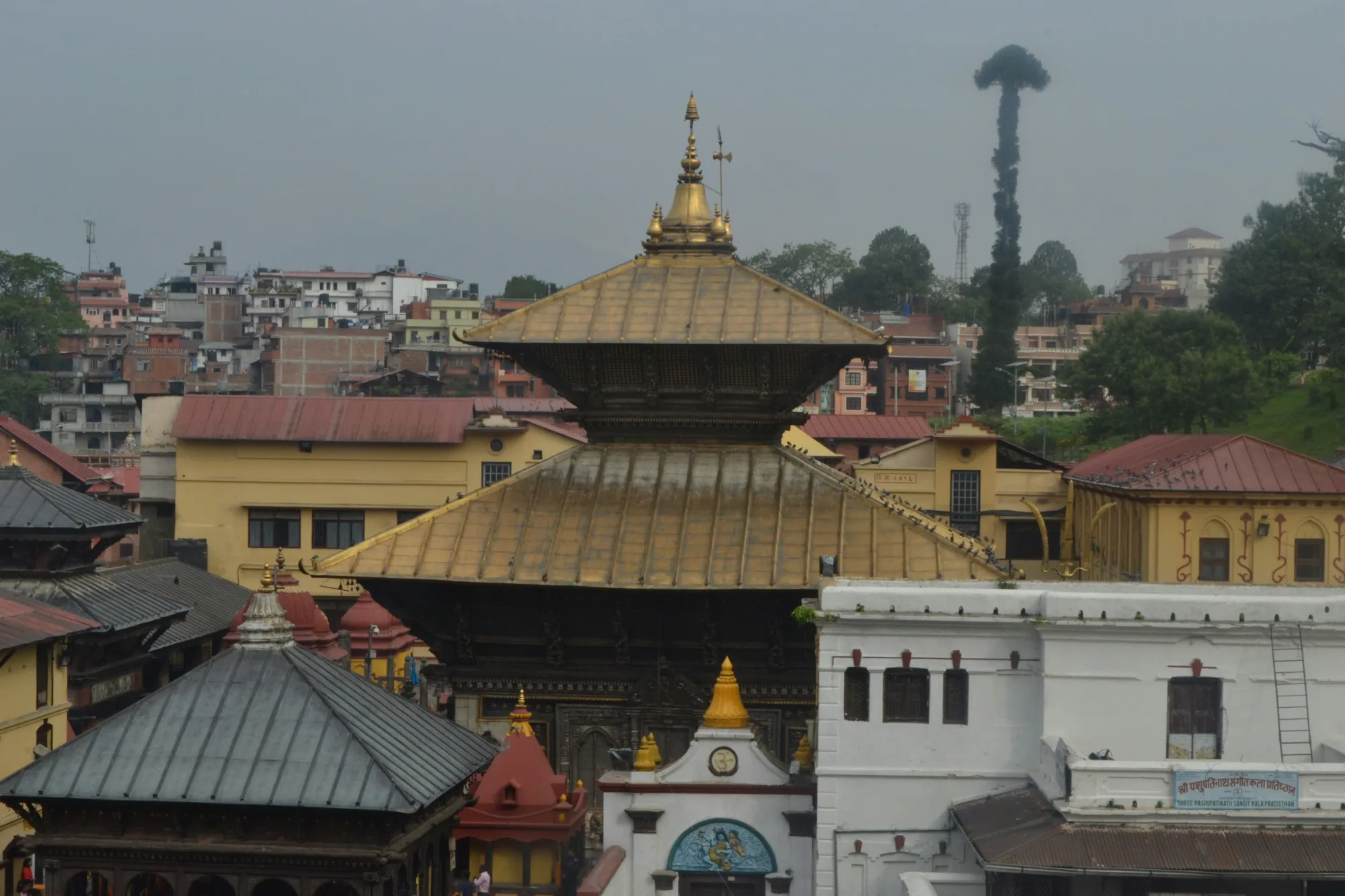
Swayambhu sits on a hilltop west of the city with views across the valley. The main stairway up the hill is long and steep, so less mobile clients are better dropped by vehicle closer to the top. Boudhanath is one of the most imposing landmarks in Kathmandu and the heart of the valley's Tibetan Buddhist community; the Kathmandu Post reported that it reopened after earthquake repairs in November 2016, paid for by private donors. Visit late afternoon, when pilgrims walk the circuit and butter lamps are lit. Pashupati is the valley's great Hindu temple precinct, and according to the Nepal Tourism Board its main temple is open only to Hindus; we cover the rules, etiquette and evening aarti for groups separately. Changu Narayan is usually one of the quieter sites; OnlineKhabar reported just over 31,000 tourists in a year, which makes it a good choice for groups who want space.
For Buddhist groups, our guide to Buddhist pilgrimage in Nepal shows how Swayambhu and Boudhanath fit with Lumbini.
Operator tip: Do the Durbar Squares in the morning and the stupas in the late afternoon. Squares are cooler and less crowded early, while Boudhanath and Swayambhu are at their best around sunset when local devotees fill the circuit. Splitting the day this way also keeps the coach out of the worst city traffic around midday.
Timing and traffic
Distances in the valley are short but traffic is slow, and it decides how much a group can see in a day. We plan two full days for all seven sites and do not try to fit them into one.
| Day | Morning | Afternoon |
|---|---|---|
| Heritage day 1 | Kathmandu Durbar Square, then Swayambhu | Pashupati, then Boudhanath for sunset |
| Heritage day 2 | Bhaktapur and Changu Narayan | Patan Durbar Square and Patan Museum, or overnight Nagarkot |
Festivals change the picture. Indra Jatra fills Kathmandu Durbar Square with crowds and processions; in 2026 the main day was 25 September, according to Rising Nepal. Bisket Jatra takes over Taumadhi Square in Bhaktapur around Nepali New Year; in 2026 it began on 10 April and ran for nine days. These are wonderful to see but slow down any fixed timetable, so check our Nepal festivals 2027 calendar before you set dates. The Kathmandu Post reported in August 2026 that a new transport master plan proposes car-free zones in Thamel and the Kathmandu and Patan Durbar Squares; it is a proposal awaiting Cabinet approval, not a rule, but it is worth watching for coach drop-off points in future seasons.
Group handling tips
- Licensed guides. Use a licensed tourist guide for each coach or sub-group of about 15, so everyone can hear. At busy squares, radio headsets make a real difference.
- Dress. Ask clients to cover shoulders and knees at temples and stupas, and to bring shoes that slip on and off easily.
- Walk clockwise. Explain that stupas and Buddhist shrines are circled clockwise.
- Leather and photography. Some temples do not allow leather items inside, and photography is restricted at certain shrines; the guide will say where.
- Tickets and cash. Each site sells its own ticket, so carry the group's fees in cash or arrange tickets in advance, and keep receipts for your own reconciliation.
- Rest stops. Old squares have uneven paving and steps. Build in coffee or toilet stops for senior groups, and keep the walking per site to about two hours.
- Earthquake rebuilding. Rising Nepal reported in May 2025 that 174 structures in the World Heritage Site were damaged in 2015, of which 134 had been rebuilt, 16 were in progress and 24 not yet started, so some scaffolding is still part of the scene.
For travel agents: how to package it
What to include
- Entry fees for each site, shown as government fees with the date checked.
- A licensed guide per sub-group, and an air-conditioned vehicle sized for the group.
- Two full heritage days, ideally with Bhaktapur on a separate day from Kathmandu Durbar Square.
- Lunch near the sites; Patan and Bhaktapur have good options around the squares.
Buffers and pacing
- Keep the arrival day light; international arrivals are often delayed.
- Do not schedule heritage touring on the same day as a domestic flight to Lukla or Pokhara.
- Leave a spare half day in Kathmandu before the international departure, which doubles as a shopping afternoon.
Who it suits
- Every first time visitor, including trekking groups on their rest days in Kathmandu.
- School and university groups studying history, religion or architecture.
- Incentive groups who want a strong cultural opening to a programme; see our notes on incentive travel in Nepal.
Upsells
- An overnight in Bhaktapur or Nagarkot for sunrise views.
- A cooking class, pottery session or Newari dinner with cultural performance.
- A morning Everest mountain flight before the heritage day.
- A continuation to Chitwan; see our guide to Chitwan National Park for groups.
For full programme shapes, see our 7, 10 and 14 day itinerary templates and our group tours planning guide.
How we can help
Expert DMC Nepal is licensed by the Government of Nepal for travel, tour, trekking and mountaineering, and is a member of the Nepal Mountaineering Association and a TAAN member. We use our own guides, transport and hotel contracts, handle FIT clients to large groups at standard to luxury level, and can arrange guides in any language on request with advance notice. See our Nepal tours for valley programmes, or become a partner for net rates and a draft programme for your group.
Frequently asked questions
How many UNESCO sites are in Kathmandu Valley?
The Kathmandu Valley is one World Heritage Site made up of seven monument zones: the Durbar Squares of Kathmandu, Patan and Bhaktapur, and Swayambhu, Boudhanath, Pashupati and Changu Narayan. UNESCO inscribed it in 1979.
How long to visit Patan Durbar Square?
Allow two to three hours including the Patan Museum. Groups that only walk the square need about an hour and a half.
Do tourists pay to enter Durbar Squares?
Yes. Foreign visitors pay a separate fee at each square; on 21 November 2026 we found NPR 1,000 for Kathmandu and Patan and NPR 2,000 for Bhaktapur in the sources listed. Confirm the current fee with us before quoting.
Can you see all seven sites in one day?
It is possible on paper but not comfortable, because city traffic is slow. We plan two full days so the group has time at each site.
Can non-Hindus visit Pashupatinath?
Visitors can enter the wider Pashupati area with a ticket, but the main temple is open only to Hindus. Non-Hindus watch from the terraces on the east bank of the Bagmati.
Sources
- UNESCO: Kathmandu Valley
- Nepal Tourism Board: Heritage site entry fees
- OnlineKhabar: Hanumandhoka Durbar Square collects Rs 194 million in revenue
- Republica: Over 200 thousand tourists visit Bhaktapur in a year
- OnlineKhabar: Changunarayan temple welcomes more than 31,000 tourists
- OnlineKhabar: Historic nine storey palace in Basantapur reopens
- Rising Nepal: Kasthamandap and heritage reconstruction status
- Nepal Tourism Board: Bhaktapur