Kathmandu to Muktinath for Indian pilgrim groups: flight, road, altitude and ACAP permit
From Kathmandu, groups reach Muktinath via Pokhara, then either fly to Jomsom (2,736 m) or drive up the Kali Gandaki road via Beni, and finish by jeep to the temple at about 3,710 m. As of 15 November 2026 scheduled Pokhara to Jomsom flights are suspended for the season, so plan by road or charter. Indian pilgrims need an ACAP entry permit (NRs 1,000 at the SAARC rate per NTNC), and elderly pilgrims should sleep in Jomsom, visit the temple as a day trip and see their doctor before booking.
| Muktinath temple altitude | About 3,710 m (NTB gives 3,800 m)Source: The Himalayan Times; Nepal Tourism Board |
|---|---|
| Jomsom aerodrome elevation | 2,736 m (8,976 ft)Source: CAAN e-AIP, AFIS and STOL aerodromes, 30 April 2026 |
| ACAP entry permit fee | NRs 1,000 for SAARC nationals (including Indians), NRs 3,000 for other foreigners, tax included; children under 10 exempt (checked 15 November 2026)Source: NTNC ePermit |
| Permits issued at check-posts | Charged at double the feeSource: NTNC ePermit |
| Pokhara to Jomsom scheduled flights | Suspended by Tara Air and Summit Air from late October 2026 for about five months; charters continueSource: Nepal News, 22 October 2026 |
| Beni to Jomsom road | 76 km; reopened 9 October 2026 on temporary diversions after nearly two weeks' obstruction; confirm current conditionsSource: Khabarhub, 11 October 2026; Rising Nepal, 4 October 2026 |
| CDC ascent guidance above 3,000 m | Raise sleeping altitude by no more than 500 m a nightSource: CDC Yellow Book |
Kathmandu to Muktinath is one of the main pilgrim routes for Indian groups in Nepal, and one of the easiest to get wrong on paper. The temple sits at about 3,710 m in Mustang, behind the main Himalayan range, and the last leg depends on either a weather-sensitive mountain flight into Jomsom or a long drive up the Kali Gandaki valley on a road that floods and landslides close regularly. This guide is written for Indian operators and overseas agents packaging Hindu and Buddhist pilgrim groups. It covers the route options as they stand on 15 November 2026, how to plan for elderly pilgrims at altitude, the ACAP permit Indian nationals need, seasons, and how to combine Muktinath with Pashupatinath and Janakpur.
Muktinath in brief
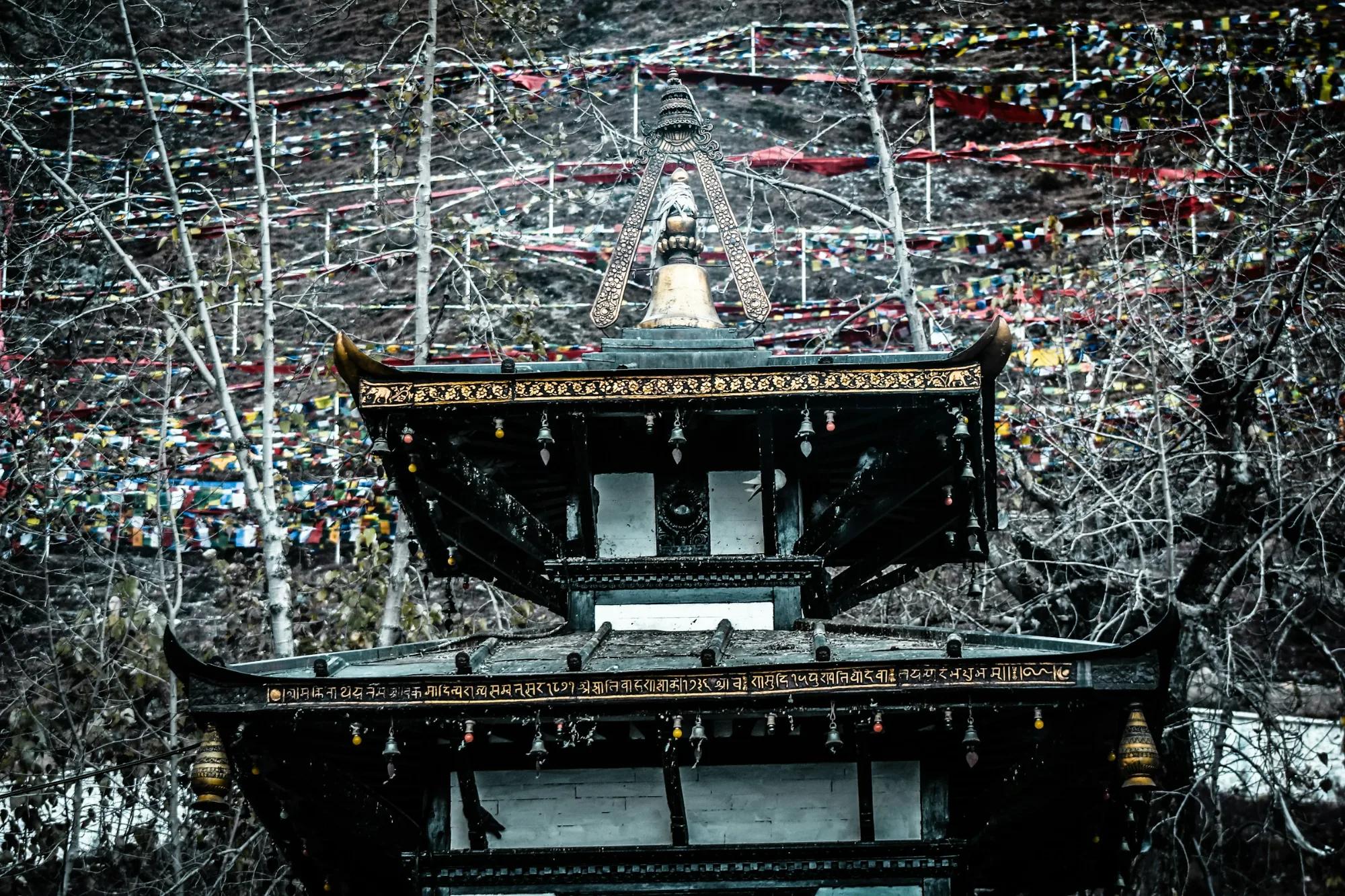
The Nepal Tourism Board describes Muktinath as sacred to both Hindus and Buddhists: Hindu pilgrims from Nepal and India come to worship Lord Vishnu, while Buddhists worship the deity as Avalokiteshwar. Beside the temple are 108 sacred waterspouts where pilgrims take a ritual bath, and for many Indian groups the ritual bath under the spouts is the heart of the yatra. The temple stands at about 3,710 m at the foot of the Thorong La pass, as reported by The Himalayan Times; the Nepal Tourism Board gives 3,800 m. Either way, this is high altitude by any medical definition, and that single fact shapes the whole itinerary.
The nearest airport and the usual overnight base is Jomsom, the district headquarters, whose aerodrome sits at 2,736 m according to the Civil Aviation Authority of Nepal's aeronautical information publication. From Jomsom the temple is a short drive up the valley by jeep; the NTB still lists it as a five-hour walk for those who go on foot.
Getting there: flight or road
Every road and scheduled-flight route from Kathmandu to Muktinath passes through Pokhara or Beni. The first leg, Kathmandu to Pokhara, is covered in our comparison of Kathmandu to Pokhara transport options. Groups entering by road from Gorakhpur via Sunauli and Bhairahawa usually drive north to Pokhara or straight up towards Beni instead; our page on Nepal ground handling for Indian tour operators explains the border side. From Pokhara there are three ways up.
Option 1: Pokhara to Jomsom flight
Tara Air and Summit Air are the two airlines that fly Pokhara to Jomsom. The Rising Nepal reported on 4 October 2026 that the service uses Twin Otter aircraft carrying up to 18 passengers, runs only until about 11 am each day because of strong winds and poor weather, and operates for only about six months a year because it is suspended in the monsoon and winter. The flight cuts out the long Beni road drive and spares elderly pilgrims many hours in a vehicle, but it is the least predictable part of the trip. For baggage limits and delay patterns on mountain routes, see our Nepal domestic flights guide.
Operator tip: As of 15 November 2026 there are no scheduled Pokhara to Jomsom flights. Nepal News reported on 22 October 2026 that the private airlines have suspended regular services for five months, and Jomsom airport's chief said charter flights will continue. Do not sell a scheduled Jomsom flight for winter or early spring departures until the airlines publish a restart date; quote the road, or a charter on request, and tell the client which one you have priced.
Option 2: road via Beni and the Kali Gandaki corridor
The road runs from Pokhara to Beni and then up the Kali Gandaki gorge to Jomsom and on to Muktinath. The Beni to Jomsom section alone is 76 km, according to the Rising Nepal report, and it is the stretch that closes. Heavy rain from 24 to 27 September 2026 blocked it, and Khabarhub reported that it reopened on the evening of 9 October 2026 after nearly two weeks of obstruction. The reopening was on temporary, partly one-way diversions after the September rain damage, with repairs still under way in mid-October, and no later status report was available when we checked on 15 November 2026, so confirm road conditions before departure. Closures after heavy monsoon rain are routine, so any road programme needs a spare day. Large coaches are not the right vehicle for the upper valley: plan jeeps or smaller vehicles beyond Beni, and split big groups across several vehicles travelling together.
Option 3: helicopter charter
Helicopter charters from Pokhara or Kathmandu are used by pilgrims who cannot spend several days on the road. The Rising Nepal reported on 4 October 2026 that pilgrims arrive by chartered helicopter almost daily, and Nepal News reported on 22 October that visitors to the temple are using helicopters while scheduled flights are suspended. It is the fastest option and the most expensive, and it carries the highest altitude risk because the passenger goes from low altitude to about 3,710 m in a single short flight. Quote charters only on request, and only for clients whose doctor has cleared them.
| Route from Pokhara | Status on 15 November 2026 | Who it suits | Main watch-outs |
|---|---|---|---|
| Scheduled flight to Jomsom, then jeep | Regular services suspended from late October 2026 for about five months (Nepal News) | Short programmes and elderly pilgrims, in the months it operates | Morning-only flights, weather cancellations, small aircraft, rapid gain in altitude |
| Road via Beni and Jomsom | Reopened 9 October 2026 (Khabarhub) on temporary, partly one-way diversions; confirm conditions before departure | Budget and larger groups, and anyone travelling while flights are off | Long days, landslide closures after heavy rain, need for smaller vehicles beyond Beni |
| Helicopter charter | Helicopter charters in use (Nepal News, 22 October 2026) | Time-poor or VIP pilgrims, small parties | Very fast ascent to about 3,710 m, weather holds, cost |
Altitude and elderly pilgrims
Pilgrim groups often include older travellers, and many travel with conditions such as high blood pressure, diabetes or heart disease. The two questions to settle before quoting are whether senior citizens can go and how to keep them safe. Our full method is in altitude sickness and itinerary design; the points that matter for a pilgrimage are below.
- Altitude illness starts well below the temple. The CDC Yellow Book treats a sleeping altitude of 2,450 m or more as a risk for unacclimatised travellers. Jomsom at 2,736 m is above that line, so even the overnight base needs care.
- Fast arrival raises the risk. The CDC places travellers who fly directly to above 3,400 m in a high-risk category. A Pokhara to Jomsom flight followed by a same-day drive to the temple is a fast ascent, and a helicopter straight to Muktinath is faster still.
- Keep the sleeping altitude down. Once above 3,000 m, the CDC advises raising sleeping altitude by no more than 500 m a night. The simplest way to respect this is to sleep in Jomsom, visit the temple as a morning excursion, and come back down the same day, rather than sleeping near the temple on the first night.
- Age alone is not the main issue. The CDC notes that people over 50 have slightly less risk of acute mountain sickness than younger adults. What matters more is existing illness: the CDC says travellers with coronary artery disease, chronic lung disease or low blood oxygen should have stable conditions and consult a physician familiar with high-altitude medicine before travelling.
- Descent is the treatment. According to the CDC, mountain sickness improves rapidly with a descent of 300 m or more, and anyone whose symptoms get worse despite rest should go down. Plan the vehicle, and the guide's authority to turn a pilgrim back, before the group leaves Jomsom.
- No alcohol at first. The CDC advises avoiding alcohol for the first 48 hours at high altitude, which rarely conflicts with a pilgrimage programme but is worth writing into the joining notes.
We do not give medical clearance and neither should an agent. Our standard advice is that every pilgrim over 60, and anyone of any age with a heart, lung or blood pressure condition, sees their own doctor before booking and carries their medicines in hand luggage. The walk from the vehicle stop to the temple is uphill and on uneven steps, and the cold water of the 108 spouts is a real shock for frail pilgrims; ponies, porters and wheelchair-friendly arrangements are limited, so set expectations early. Travel insurance that covers helicopter evacuation is essential; see how helicopter rescue works in Nepal.
Permits and seasons
ACAP entry permit for Indian nationals
Muktinath lies inside the Annapurna Conservation Area, managed by the National Trust for Nature Conservation (NTNC), and every visitor needs an ACAP entry permit, including Indian nationals. India is a SAARC member, so Indian pilgrims pay the SAARC rate. NTNC's ePermit support page, checked on 15 November 2026, lists the fee as NRs 1,000 for SAARC nationals and NRs 3,000 for other foreigners, tax included. Children under 10 do not need a permit. NTNC charges double for permits issued directly at check-posts, and online card payments carry a 2.9 percent gateway charge. For Indian nationals, NTNC accepts an Aadhaar card or Voter ID in place of a passport on the permit application. This applies only to the ACAP permit; Aadhaar is not accepted as a travel document for entering Nepal. Confirm the current fee with us before quoting, as rates are revised from time to time.
Entry documents for Nepal itself are a separate matter: see our page on Nepal entry rules for Indian travellers. Ask us whether a TIMS card applies to your group's itinerary; we confirm the requirement for each group at booking. Our TIMS card explainer covers the trekking rules. The Upper Mustang restricted area, further north towards Lo Manthang, needs its own special permit; a standard Muktinath yatra does not go there.
When to go
Spring and autumn are the main pilgrim seasons, and they are also the months when the Jomsom flights normally operate. In the monsoon the main risk is the Kali Gandaki road below Jomsom, and the September 2026 closure shows how quickly a road programme can stall. In winter the temple area is very cold, snow is possible, and scheduled flights have recently been suspended for the season. Our Nepal weather by month guide gives the wider picture. Major Hindu festival days and long Indian holiday weekends bring very large crowds to the temple, so check dates against the client's calendar and book Jomsom rooms early.
Combining with Pashupatinath and Janakpur
Muktinath is often combined with other sites. The common circuit links three sites:
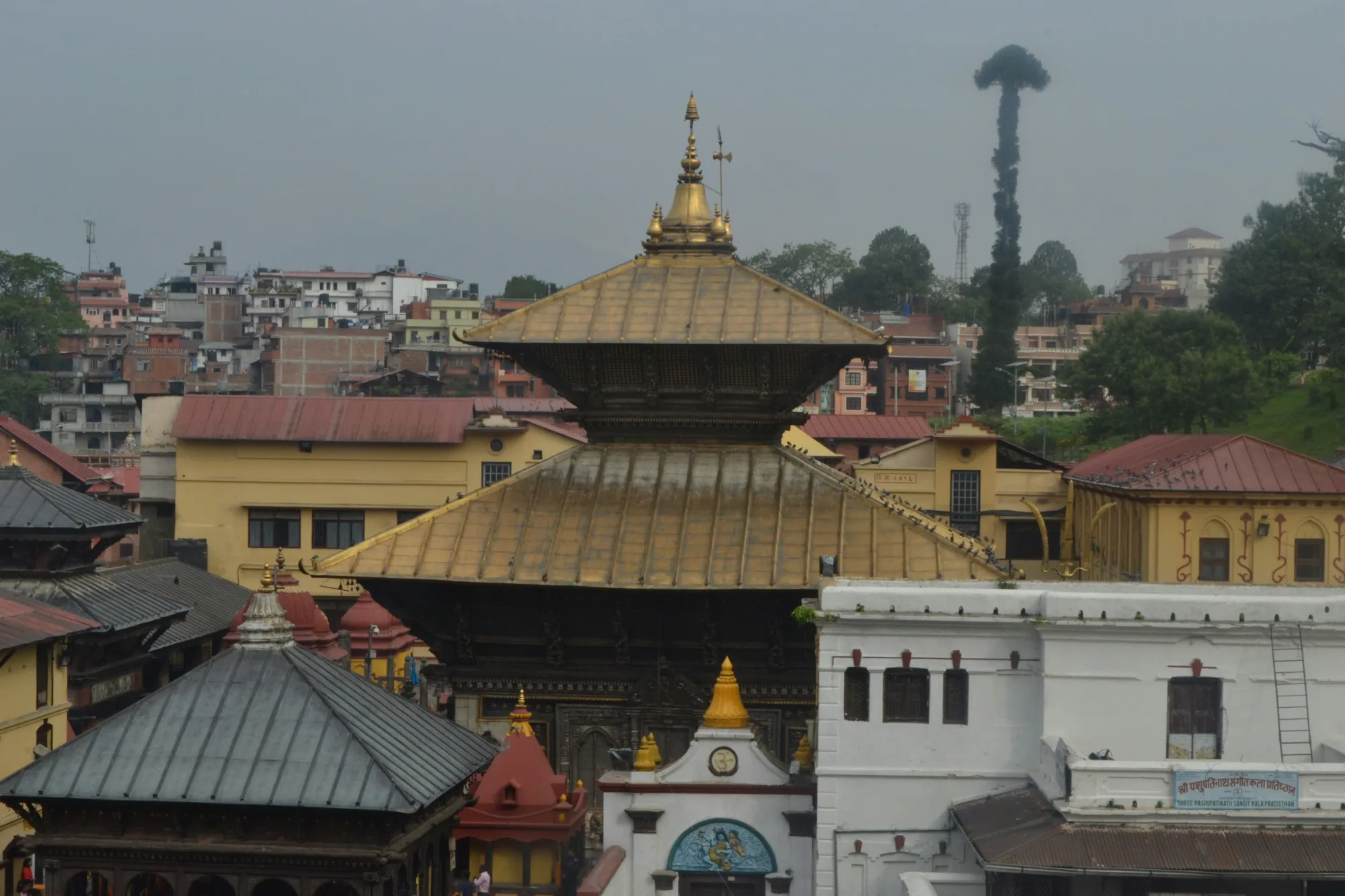
- Pashupatinath, Kathmandu. The great Shiva temple on the Bagmati is usually visited on arrival or departure day in Kathmandu, often with an evening aarti. Allow half a day, and brief mixed or overseas groups on temple etiquette and on who may enter the inner courtyard before they arrive.
- Muktinath, Mustang. The Vishnu shrine and the core of the yatra, via Pokhara and Jomsom as above. Many groups also take darshan at temples in Pokhara on the way.
- Janakpur. The city of the Janaki Mandir, revered as the home of Sita. It is in the plains, so groups usually visit it on a separate leg from Kathmandu or on the way to or from the Indian border, not in the middle of the Muktinath section.
Buddhist groups and mixed groups often swap Janakpur for Lumbini. In every combination, put the Muktinath leg early enough in the programme that a closed road or a weather hold does not cost the group its international flight or border crossing.
For travel agents: how to package it
What to include. A clean package covers the ACAP permit, all ground transport (with jeeps or small vehicles above Beni), a guide who handles darshan logistics and the altitude plan, vegetarian meal arrangements, and hotel nights in Pokhara and Jomsom. Price the Jomsom flight as a separate, clearly conditional element in the months it runs, and price the road as the base case for winter and the monsoon.
Buffers. Build in at least one spare day on the Pokhara side and one in the mountains. A flight cancelled because of afternoon winds or cloud cannot simply be moved to the afternoon, and a road closed by a landslide can stay closed for days. Do not schedule international departures on the day after the group returns to Pokhara.
Who it suits. Fit senior citizens who have their doctor's clearance, family groups, and spiritual groups who want both darshan and the Himalayan landscape. It does not suit pilgrims with unstable heart or lung conditions, or anyone who will not accept a turnaround on medical advice.
Upsells. Pashupatinath and Janakpur extensions, Lumbini for Buddhist and mixed groups, a lakeside rest day in Pokhara, or a helicopter return on request for clients who want to cut the drive. Our tours page shows how we structure cultural and pilgrimage programmes.
What to tell clients. Be honest that the last leg depends on weather and road conditions, that elderly pilgrims should see their doctor first, and that the order of days may change on the ground to keep the group safe.
If you package Muktinath yatras for Indian or overseas pilgrims and want a Kathmandu ground handler with its own guides, transport and hotel contracts, talk to us about partnering. We are licensed by the Government of Nepal and are a TAAN member, and our office is open Sunday to Friday, 10:00 to 17:30 Nepal time.
Frequently asked questions
How to reach Muktinath from Kathmandu?
Travel to Pokhara by air or road, then either fly to Jomsom or drive via Beni up the Kali Gandaki valley, and take a jeep from Jomsom to the temple. As of 15 November 2026 scheduled Jomsom flights are suspended for the season, so winter groups go by road or helicopter charter.
Is Muktinath safe for senior citizens?
It can be, with careful planning: the temple is at about 3,710 m and altitude illness is a real risk. Plan to sleep in Jomsom and visit the temple as a day trip, and anyone with a heart, lung or blood pressure condition should consult a doctor before booking.
Do Indians need a permit for Muktinath?
Yes. Indian nationals need an ACAP entry permit, charged at the SAARC rate of NRs 1,000 according to NTNC's ePermit site checked on 15 November 2026; children under 10 are exempt.
Are Pokhara to Jomsom flights running now?
Not on a scheduled basis. Tara Air and Summit Air suspended regular services in late October 2026 for about five months, and charter flights continue, so check the restart date before selling a spring flight.
What is the best time for a Muktinath yatra?
Spring and autumn are the main seasons. Monsoon rain can close the Beni to Jomsom road and winter brings severe cold, possible snow and the seasonal flight suspension.
Can pilgrims go to Muktinath by helicopter?
Yes, helicopter charters operate on request and are the fastest option. They also mean the fastest climb to altitude, so they suit only clients whose doctor has cleared them.
Sources
- NTNC ePermit: support and fees
- Nepal Tourism Board: Muktinath, Mustang
- The Himalayan Times: Indian PM Modi pays homage to Lord Muktinath
- CAAN e-AIP: AFIS and STOL aerodromes
- CDC Yellow Book: High-Altitude Travel and Altitude Illness
- Nepal News: Pokhara-Jomsom air services suspended for five months
- The Rising Nepal: Pokhara to Jomsom air travel report from Muktinath, 4 October 2026
- Khabarhub: Beni-Jomsom road reopens, 173 cargo containers head to destinations