Annapurna Base Camp trek: what agents need to know before selling it
The Annapurna Base Camp trek climbs from the foothills near Pokhara into the Annapurna Sanctuary to base camp at 4,130 m, and our programmes run 7 to 12 days depending on start point and add ons. It suits fit first time trekkers who want big mountain scenery at a lower altitude than Everest, but agents must plan for the avalanche prone gorge below Machhapuchhre Base Camp, full lodges in October and the licensed guide rule.
| Annapurna Base Camp and Poon Hill | ABC 4,130 m; Poon Hill 3,210 mSource: Nepal Tourism Board (checked 18 Nov 2026) |
|---|---|
| ACAP entry permit | NPR 3,000 foreigners, NPR 1,000 SAARC nationals, tax included; doubled at check postsSource: NTNC e-permit (checked 18 Nov 2026) |
| TIMS card and guide rule | NPR 2,000 (NPR 1,000 SAARC); licensed guide required since 31 March 2023 on the Poon Hill and ABC routesSource: Nepal Tourism Board (checked 18 Nov 2026) |
| Base camp capacity | Six lodges with capacity for up to 350 trekkers; around 300 trekkers a day in early October 2026Source: The Himalayan Times, 5 October 2026 (checked 18 Nov 2026) |
| Avalanche precedent | 17 January 2020, Hinku Cave and Deurali section: four trekkers and three guides swept away; route closed about a monthSource: The Kathmandu Post, 14 February 2020 (checked 18 Nov 2026) |
| Altitude sickness deaths | 25 across the Annapurna Conservation Area in FY 2025/26, one at Annapurna Base CampSource: The Himalayan Times, July 2026 (checked 18 Nov 2026) |
The Annapurna Base Camp trek, often sold as the Annapurna Sanctuary trek or simply ABC, is one of the easiest Himalayan treks to fit into a Nepal programme. It starts within a short drive of Pokhara, reaches a ring of high peaks without the long approach of the Everest region, and tops out lower than Everest Base Camp. That accessibility is also its main operational challenge: in October the upper lodges are full, and one section of the trail carries real avalanche risk after heavy snow. This briefing gives agents the facts as checked in November 2026 and how we package the trek.
Annapurna Base Camp in brief
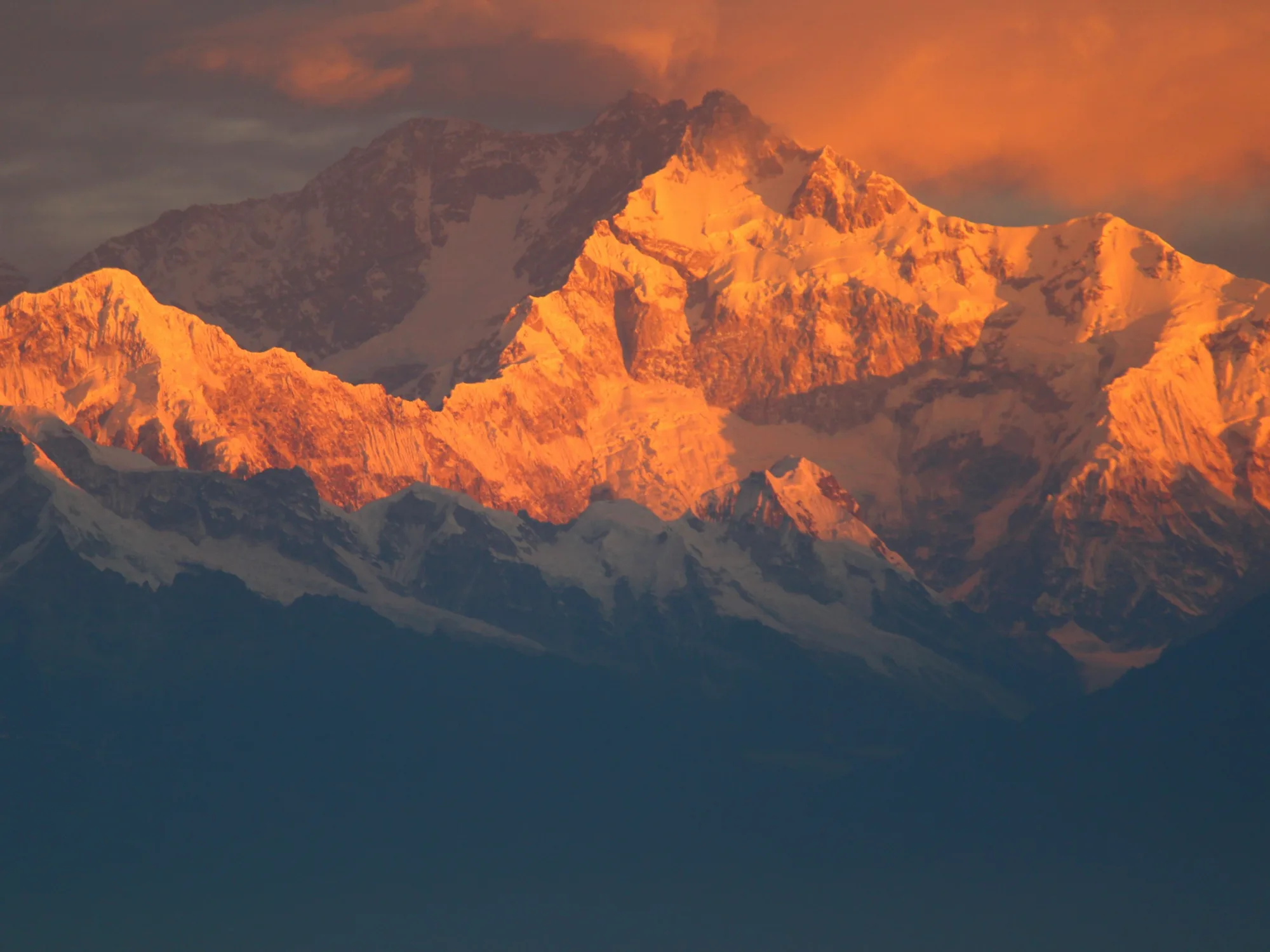
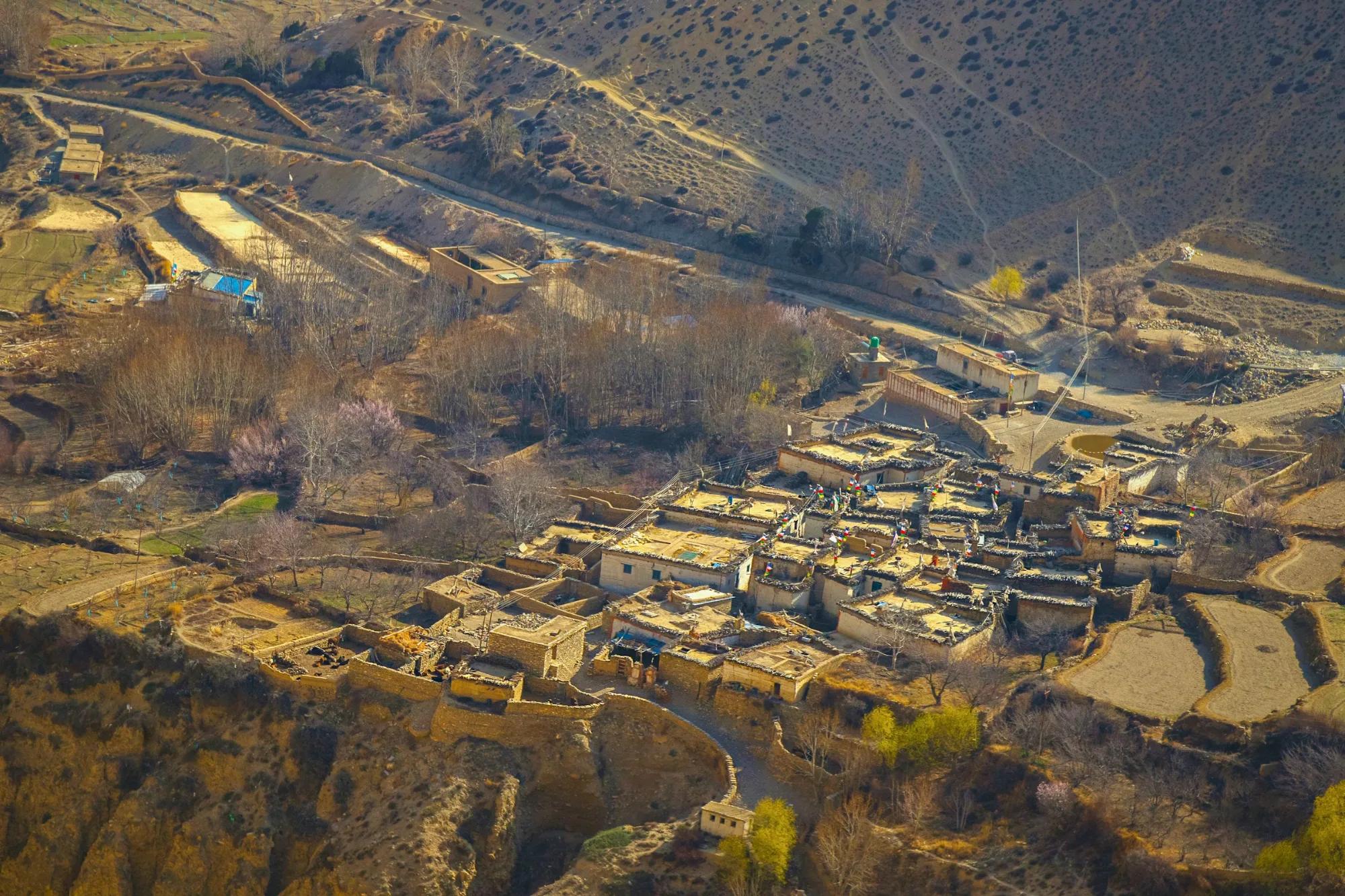
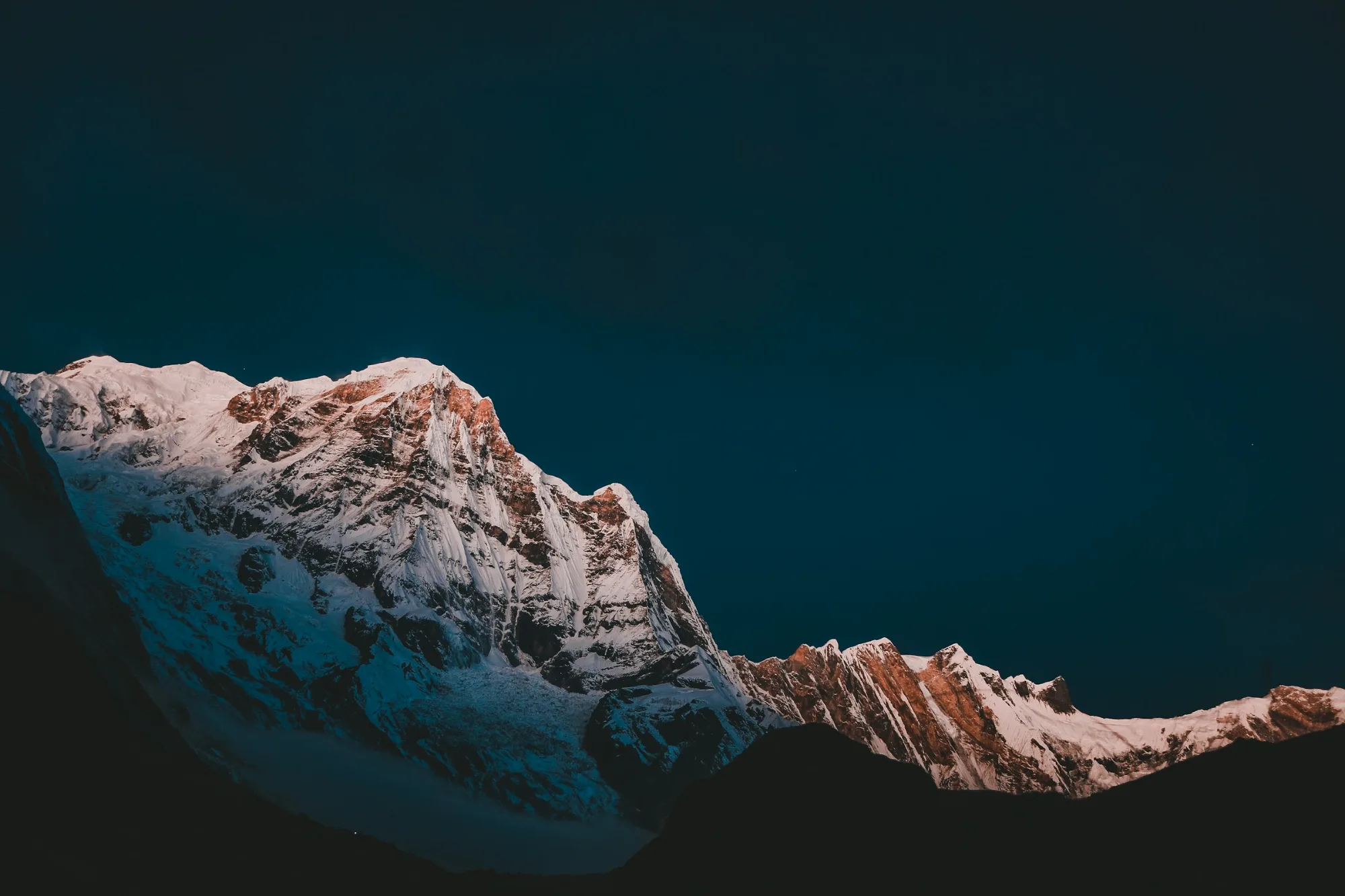
The route climbs from the Modi Khola valley north of Pokhara through Gurung villages and rhododendron forest, past Chhomrong and Bamboo, into the narrow gorge below Machhapuchhre, and out into the Annapurna Sanctuary. According to the Nepal Tourism Board, the trail leads into the heart of the sanctuary at 4,130 m, surrounded by Annapurna I, Hiunchuli and Machhapuchhre.
| Item | Planning detail |
|---|---|
| Highest point | Annapurna Base Camp, 4,130 m (NTB) |
| Last stop before base camp | Machhapuchhre Base Camp (MBC), about 3,700 m |
| Usual start points | Nayapul, Ghandruk, Kimche or Jhinu Danda by road from Pokhara |
| Protected area | Annapurna Conservation Area, managed by NTNC through ACAP |
| Lodges at base camp | Six lodges with capacity for up to 350 trekkers, as reported in October 2026 |
| Our programme length | 7 to 12 days for ABC; Ghorepani Poon Hill alone 4 to 5 days |
| Nearest city | Pokhara, reached by road or a short domestic flight from Kathmandu |
The trek is in high demand. The Himalayan Times reported on 5 October 2026 that around 300 trekkers a day were arriving at base camp after the routes reopened from monsoon landslides, and that a first aid centre had opened at MBC.
Who it suits and who it does not
Good fit
- First time Himalayan trekkers who want close up views of very high peaks without sleeping above 4,200 m.
- Clients with limited time; the trek can be done in about a week from Pokhara.
- Families with older children and mixed ability groups in spring or autumn, as long as the steep stone staircases around Chhomrong are explained in advance.
- Groups already visiting Pokhara as part of a wider Nepal tour.
Poor fit
- Clients with knee problems. The trail has long stone staircases, especially around Chhomrong, and the descent is hard on joints.
- Clients who want a quiet trail in October; the sanctuary is busy.
- Large groups wanting to sleep at base camp on fixed dates in peak weeks, unless lodges are confirmed well in advance.
- Winter clients who cannot accept a turnaround below MBC if snow conditions are poor.
Best months
Spring (March to May) and autumn (late September to November) are the main seasons. Our Everest or Annapurna season guide compares the two regions month by month.
| Period | Conditions | Our view |
|---|---|---|
| March to May | Rhododendron in bloom lower down, warmer days; snow can linger in the gorge in March | Good, with April the most reliable |
| June to September | Monsoon rain, leeches, landslides on access roads | Possible for keen trekkers, not for most groups |
| Late September to November | Clearest views, busiest lodges | Best overall; reserve upper lodges early |
| December to February | Cold, clear days; snow and avalanche risk from Himalaya upwards after storms | Only with flexible plans and an experienced guide |
Weather can close the upper trail outside winter too. In October 2025 heavy snowfall disrupted the upper trail, and The Himalayan Times reported that 72 people, 17 of them foreigners, were rescued from base camp. For the wider picture, see our guide to which treks work in winter.
Permits and rules
ABC lies in the Annapurna Conservation Area and is covered by the national licensed guide rule. Fees below were checked on official pages on 18 November 2026.
| Permit or rule | Current position | Source |
|---|---|---|
| ACAP entry permit | NPR 3,000 for foreigners, NPR 1,000 for SAARC nationals, tax included; doubled if bought at a check post | NTNC e-permit |
| TIMS card | NPR 2,000, or NPR 1,000 for SAARC nationals, issued through a registered agency | Nepal Tourism Board |
| Licensed guide | Required since 31 March 2023; the Poon Hill and ABC routes are listed under the Annapurna region | Nepal Tourism Board |
The ACAP fee and the check post surcharge are on the NTNC entry permit page; the TIMS fee and the guide rule are on the Nepal Tourism Board TIMS page. Our full list of Nepal trekking permits and our explainer on the mandatory guide rule cover the detail.
Logistics and risks
Access from Pokhara
All ABC itineraries are built around Pokhara. Groups reach it by a short domestic flight or by road from Kathmandu; our comparison of Kathmandu to Pokhara transport options sets out the trade offs for groups. From Pokhara, jeeps run up the roads towards the trailheads, and the Kathmandu Post described in October 2026 a jeep from Pokhara as far as Jhinu Danda. Road ends move as roads are extended and as monsoon damage is repaired, so we confirm the start point for each departure shortly before arrival.
The avalanche prone section
The narrow gorge from Himalaya past Hinku Cave and Deurali up to MBC sits below steep slopes that release snow after heavy falls. On 17 January 2020 an avalanche on the Hinku Cave to Deurali stretch swept away four South Korean trekkers and three Nepali guides, and the route stayed closed for about a month, as the Kathmandu Post reported when it reopened. Our rules for this section are simple: no movement through it during or just after heavy snowfall, early starts, no lingering, and the guide's decision to wait or turn back is final.
Altitude
ABC is lower than Everest Base Camp, but the gain from Chhomrong to base camp is quick, and clients do fall ill. The Himalayan Times reported in July 2026 that 25 tourists died of altitude sickness across the Annapurna Conservation Area in the 2025/26 fiscal year, one of them at Annapurna Base Camp, and that ACAP advises a gradual ascent. Our article on designing itineraries around altitude sickness explains how we pace the climb.
Lodge pressure
In peak weeks there are not enough beds in the upper sanctuary. The Kathmandu Post reported in October 2026 that lodges at Himalaya were full and that trekkers were sleeping in dining halls at Deurali. For groups, we reserve upper lodges early and plan an alternative night lower down if base camp is full.
Operator tip: Sell ABC with a night at MBC and a sunrise walk to base camp as the default, and a night at base camp as an upgrade subject to availability. It protects the itinerary when base camp is full or snow closes the gorge, and clients still get the sunrise in the sanctuary.
Combining with Poon Hill
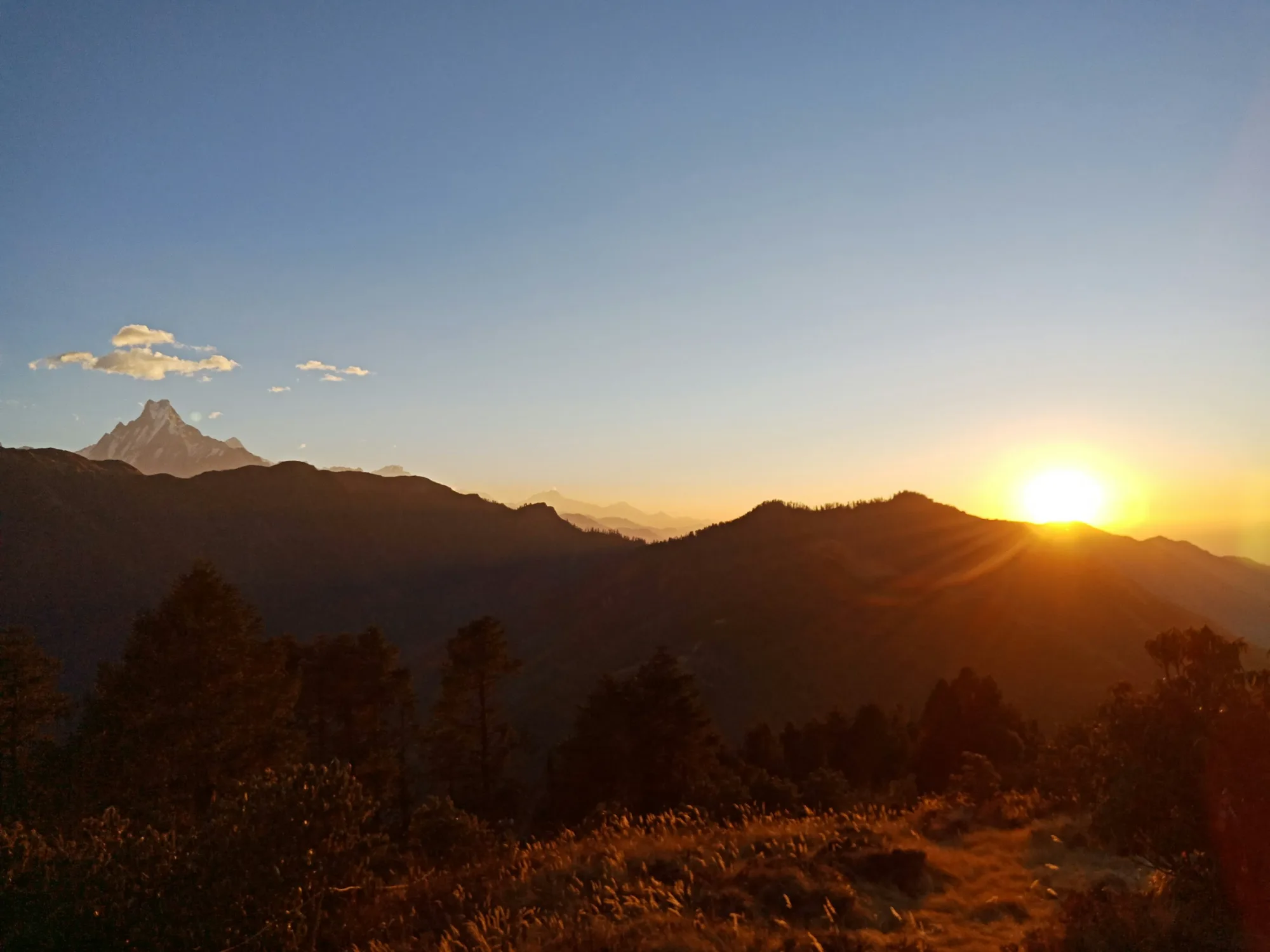
The classic extension links ABC with Ghorepani and the Poon Hill viewpoint, 3,210 m according to the Nepal Tourism Board, via a forest traverse to Tadapani and Chhomrong. It adds a sunrise view over the Dhaulagiri and Annapurna ranges and spreads the ascent, which helps acclimatisation. A typical shape for the combined trek runs like this:
- Drive from Pokhara to the trailhead and walk up through Gurung villages towards Ghorepani.
- Climb Poon Hill before dawn for sunrise, then traverse through forest via Tadapani.
- Descend and climb again to Chhomrong, the gateway village to the sanctuary.
- Continue through Bamboo and Deurali to Machhapuchhre Base Camp.
- Walk to Annapurna Base Camp for sunrise, or overnight there if beds are confirmed, then start the descent.
- Return down the Modi Khola valley via Jhinu Danda and drive back to Pokhara.
The order can be reversed, but going via Poon Hill first gives a more gradual build up before the sanctuary.
| Option | Typical length | Best for |
|---|---|---|
| ABC only, from Kimche or Jhinu Danda | About a week from Pokhara | Clients short of time |
| ABC with Ghorepani and Poon Hill | Longer, at the top end of our 7 to 12 day range | First time trekkers who want variety and a gentler build up |
| Ghorepani Poon Hill only | 4 to 5 days | Families, short programmes and clients not suited to 4,000 m |
All three are on our trekking programmes page. If a client wants a longer and more remote trek, see our Manaslu Circuit briefing; if they want the highest of the classic teahouse treks, our Everest Base Camp briefing covers it.
For travel agents: how to package it
What to include
- ACAP permit and TIMS card, shown as government fees with the date checked.
- A licensed guide and porters, with a ratio that lets the guide split the group if one client must descend.
- Road transfers from Pokhara to the trailhead and back, with the start point confirmed shortly before departure.
- Lodge nights on the trek, with upper sanctuary lodges reserved early in October and April.
- Insurance with helicopter evacuation as a booking condition.
Buffers
- One spare day for weather on the upper trail, more in winter.
- A Pokhara night after the trek before any onward flight.
Upsells
- The Poon Hill extension for first time trekkers.
- Extra days in Pokhara, or a Chitwan safari after the trek.
- Guides in the client's language on request with advance notice.
We are licensed by the Government of Nepal for travel, tour, trekking and mountaineering, we are an NMA member and a TAAN member, and run our own guides and transport for groups from FIT to large parties. To add Annapurna Base Camp departures to your programme, talk to us about a partnership.
Frequently asked questions
How hard is the Annapurna Base Camp trek?
It is a moderate trek with long stone staircases and a quick gain in altitude above Chhomrong. Fit clients with no technical experience manage it well if the pace allows for acclimatisation.
How many days to Annapurna Base Camp?
Our programmes run 7 to 12 days, depending on the start point and whether Poon Hill is added. The shortest versions start close to the end of the road and take about a week from Pokhara.
Is ABC safe in winter?
It can be done in winter, but the section from Himalaya through Deurali to Machhapuchhre Base Camp is exposed to avalanches after heavy snow. Winter departures need flexible dates, an experienced guide and acceptance that the group may turn back.
Do clients need a guide for Annapurna Base Camp?
Yes. The Nepal Tourism Board lists the Poon Hill and ABC routes under the licensed guide and TIMS rule in force since 31 March 2023.
Can a group sleep at Annapurna Base Camp?
Yes, but base camp lodges hold only around 350 trekkers and fill in peak weeks. We sell a base camp night as subject to availability, with Machhapuchhre Base Camp as the fallback.
Sources
- Nepal Tourism Board: Top trekking destinations in Nepal
- National Trust for Nature Conservation: entry permit support
- Nepal Tourism Board: TIMS card
- The Himalayan Times: Annapurna Base Camp sees surge in trekkers as routes reopen after landslides (5 October 2026)
- The Kathmandu Post: Annapurna trek, days of physical strain and mental calm (19 October 2026)
- The Kathmandu Post: Trekkers return to Annapurna trail after avalanche (14 February 2020)
- The Himalayan Times: Snowfall resumes in Myagdi, 72 tourists rescued from Annapurna Base Camp (October 2025)
- The Himalayan Times: 25 tourists die of altitude sickness in Annapurna region in FY 2025/26 (July 2026)