Ama Dablam expedition: royalty, season, camps and experience, what operators need to know
Ama Dablam (6,812 m on the Department of Tourism schedule) is an expedition peak climbed mainly in late October and November by the south west ridge. Royalty is USD 1,000 per foreign climber in spring and autumn, the garbage deposit is USD 2,000, and guiding companies typically require a previous climb around 6,000 m and fixed rope experience.
| Height | 6,812 m on the DoT fee scheduleSource: Department of Tourism (checked 16 Nov 2026) |
|---|---|
| Royalty, foreign climber | USD 1,000 spring, USD 1,000 autumn, USD 500 winter and summerSource: Department of Tourism, mountaineering fee (checked 16 Nov 2026) |
| Garbage deposit | USD 2,000 per expedition teamSource: Department of Tourism, mountaineering fee (checked 16 Nov 2026) |
| Autumn 2026 route opening | Fixed to the summit on 13 October by the EOA Nepal teamSource: Explorersweb, 17 October 2026 |
| Sagarmatha National Park entry | NPR 3,000 foreigners, NPR 1,500 SAARC nationalsSource: DNPWC Sagarmatha National Park brochure (checked 16 Nov 2026) |
| Khumbu Pasang Lhamu Trek Card | NPR 3,000 other countries, NPR 2,000 SAARC and ChinaSource: Khumbu Pasang Lhamu Rural Municipality (checked 16 Nov 2026) |
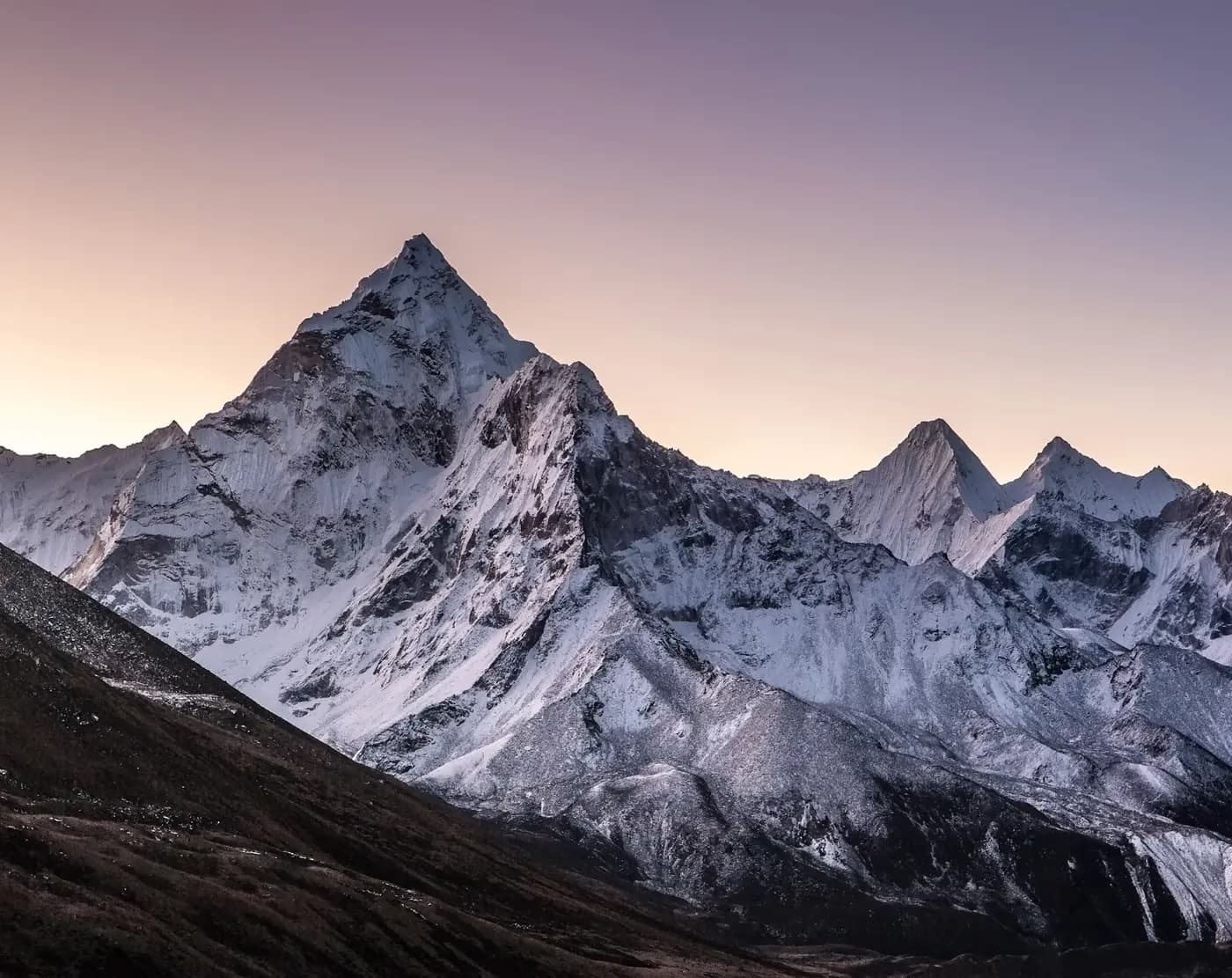
Ama Dablam is a common next step for climbers moving on from trekking peaks. It rises above Pangboche on the Everest Base Camp trail and it is steep on every side. Explorersweb calls it late autumn's most popular peak, and by late October 2026 only Manaslu had more climbing permits, The Rising Nepal reported. For an agent it is also a step up in planning: it is a Department of Tourism (DoT) expedition peak, not a trekking peak, with its own royalty row, a higher garbage deposit, a liaison officer and a client profile that must include real rope and rock skills. This guide covers what operators need to know before they put it on sale.
For the permit system behind it, read our explainer on trekking peaks and expedition peaks in Nepal, and for seasons and logistics across all peaks see the mountaineering in Nepal guide.
Ama Dablam in brief
The DoT fee schedule lists Ama Dablam at 6,812 m. You will see other figures in older books and brochures; use the DoT figure in client materials. The standard route is the south west ridge, climbed from a base camp in the meadows above Pangboche. The name is usually translated as mother's necklace; the hanging glacier high on the face is the Dablam, the pendant, and it shapes where teams place their top camp.
| Item | Detail | Source, checked 16 Nov 2026 |
|---|---|---|
| Height | 6,812 m (DoT fee schedule) | Department of Tourism |
| Royalty, foreign climber | USD 1,000 spring, USD 1,000 autumn, USD 500 winter and summer | DoT mountaineering fee page |
| Garbage deposit | USD 2,000 per expedition team | DoT mountaineering fee page |
| Sagarmatha National Park entry | NPR 3,000 foreigners, NPR 1,500 SAARC nationals | DNPWC park brochure |
| Khumbu Pasang Lhamu Trek Card | NPR 3,000 other countries, NPR 2,000 SAARC and China | Khumbu Pasang Lhamu Rural Municipality |
| Autumn 2026 permits to 28 October | 386 climbers in 32 teams; only Manaslu had more (500) | The Rising Nepal, 28 October 2026 |
Ama Dablam does not follow the 6,501 m to 6,999 m height band in the DoT schedule. It has its own row, with the same royalty in spring and autumn, so quote it from that row. Confirm the current fee with us before quoting.
Season: why autumn leads
Ama Dablam can be climbed in spring and autumn, but autumn is the busier season. Explorersweb notes that in spring the Everest season draws guides and high altitude staff away, while in autumn Ama Dablam has the experienced Khumbu workforce largely to itself. The ropes are fixed each season by a team working for the Expedition Operators Association of Nepal (EOA Nepal), which The Himalayan Times reports has fixed the route with its own teams since spring 2011, funded by member agencies, and removed old rope after the busy autumn of 2025.
- Autumn 2026: the EOA Nepal team opened the route to the summit on 13 October, according to Explorersweb, which also notes the high season runs until the end of November.
- Autumn 2025: The Himalayan Times reported 436 climbers in 34 teams by early November.
- Spring 2025: the route opened on 2 April, The Himalayan Times reported.
For agents this means late October and November departures are the core product. Spring departures are possible and quieter, but staff availability needs confirming earlier because of Everest. Check weather and staffing together when you set dates.
Route and camps
Camp heights vary between operators, and some teams no longer use the traditional top camp. The ranges below are drawn from guiding company trip notes and Explorersweb, and should be read as approximate.
| Camp | Approximate height | Notes |
|---|---|---|
| Base camp | 4,470 m to 4,570 m | Meadow camp above Pangboche; long stays for rotations |
| Camp 1 | 5,640 m to 5,810 m | On rock slabs and ledges; often reached via an advanced or yak camp |
| Camp 2 | 5,900 m to 6,080 m | Tiny platforms near the Yellow Tower, the main technical step |
| Camp 3 or high camp | about 6,200 m to 6,350 m | Some teams use a camp on the Mushroom Ridge and avoid the traditional Camp 3 below the Dablam |
| Summit | 6,812 m | Steep snow and ice on fixed rope above the top camp |
The reason some teams avoid the old Camp 3 is objective danger. In November 2006 part of the Dablam collapsed onto Camp 3 and six climbers died, according to the Himalayan Database and the American Alpine Journal. Explorersweb reports that some climbers now go for the summit from Camp 2 and skip Camp 3 entirely. Ask your ground partner where the team will sleep high and why, and expect a clear answer.
The climbing is sustained. Clients jumar and abseil on fixed rope for long sections of rock, mixed ground and steep snow, at altitude, often with little room to rest. Late season accidents happen: in late October 2026 a German climber died after reaching the summit, The Himalayan Times reported.
Operator tip: the descent is where clients tire. Ask for a summit day plan that sets a turnaround time and builds in enough daylight to abseil back to a camp, and make sure the guide ratio on summit day is written into the contract, not left to the morning.
Experience required
No Nepali rule sets a minimum climbing record for Ama Dablam, but guiding companies set their own, and the published trip notes we checked are similar. Typical requirements in published trip notes include a previous climb around 6,000 m, comfort on fixed rope with jumar and abseil, and climbing on steep rock and ice. Some ask for alpine mixed routes or rock climbing around grade 5.7. Adventure Consultants describes it as not a climb for novice mountaineers.
A sensible progression for your clients is an NMA trekking peak first, such as Lobuche East or Island Peak, then Ama Dablam. Some programmes climb Lobuche East during the Ama Dablam trip to acclimatise. A client who has not used fixed rope in the mountains should not be sold Ama Dablam as a first peak.
Logistics and staff
Getting there
The approach is the Everest region trek: a flight to Lukla, then Namche Bazaar and Pangboche to base camp. In the busy seasons many Lukla flights operate from Manthali (Ramechhap) rather than Kathmandu, which adds a road transfer of several hours; our note on Ramechhap airport and Lukla flights explains the routing and delays. Published programmes range from about 16 days for rapid ascent formats with pre acclimatised clients to about 28 days for standard expeditions.
Staff and supervision
- Guide: a February 2025 amendment to the mountaineering regulation, reported by The Kathmandu Post, requires at least one guide per team on peaks below 8,000 m. That is a legal minimum, not a plan: agree the summit day ratio in writing.
- Liaison officer: the Nepal Tourism Board states that expedition peaks above 6,500 m must employ a liaison officer, so budget for one.
- Base camp crew: cook, kitchen staff and a base camp manager for the rotation weeks.
- Insurance: clients need cover for climbing to the summit height, including helicopter rescue. See our note on Nepal trekking insurance requirements.
The fee line on your quote should show the royalty, the USD 2,000 garbage deposit, park and municipality entry, and the liaison officer as government or official costs, each with its date checked.
Common planning mistakes
Many Ama Dablam problems start in the sales stage rather than on the mountain. Avoid these:
- Quoting from the height band: the 6,501 m to 6,999 m band is cheaper than Ama Dablam's own row, so a quote built from the band will be short on royalty and on the garbage deposit.
- Treating it as a long trekking peak: the rope work, exposure and camp life are those of an expedition. Clients who expect a harder Island Peak will be underprepared.
- Too few days: rotations between base camp and the high camps need time, and the weather in late autumn brings wind on the ridge. A short programme with no spare days leaves the guide team no room to wait.
- Ignoring the cold: November is colder than October high on the ridge. Kit lists should reflect the departure date, not a generic autumn list.
- Booking flights too tight: clients who must leave on a fixed day put pressure on summit and descent decisions. Keep international flights flexible or add buffer days in Kathmandu.
For travel agents: how to package it
- What to include: DoT royalty and garbage deposit, liaison officer, climbing guides and high altitude staff, base camp services, fixed rope contribution, park and Trek Card fees, Lukla flights or the Ramechhap transfer, and a gear check in Kathmandu.
- Buffers: at least three to four spare days on the mountain for weather and rotations, plus one or two days at the end for Lukla flight delays. Do not sell tight international connections.
- Who it suits: climbers with a previous peak around 6,000 m, real fixed rope skills and the fitness to repeat long days at altitude. It does not suit trekkers moving up for the first time.
- Upsells: a one to one guide ratio on summit day, a Lobuche East acclimatisation climb, a pre trip skills course, or a helicopter return from Pangboche or nearby where weather and budget allow.
For the wider royalty picture, including how Everest compares, see our note on the Everest climbing permit and royalty, and the peaks we run on our climbing and expedition page.
If you are planning Ama Dablam departures for autumn 2027, talk to our operations desk about a ground partnership.
Frequently asked questions
How hard is Ama Dablam?
It is a technical climb on fixed rope over rock, mixed ground and steep snow and ice, with exposed camps. Guiding companies typically ask for a previous climb around 6,000 m and confident jumar and abseil skills.
When is the best season for Ama Dablam?
Autumn, especially late October and November, is the main season. Spring is possible and quieter, but Everest draws experienced staff away at that time.
How long is an Ama Dablam expedition?
Published programmes range from about 16 days for rapid formats with pre acclimatised clients to about 28 days for standard expeditions, including the trek in and out.
Is Ama Dablam a trekking peak?
No. It is a Department of Tourism expedition peak with its own royalty row and a USD 2,000 garbage deposit, not one of the NMA trekking peaks.
Who fixes the ropes on Ama Dablam?
The Expedition Operators Association of Nepal has fixed the route with its own teams since spring 2011, funded by member agencies, according to The Himalayan Times.
Sources
- Department of Tourism: mountaineering fee (effective 1 September 2025)
- Explorersweb: Summits begin on Ama Dablam, late fall's most popular peak (17 October 2026)
- Explorersweb: Ama Dablam, a climbers' guide
- The Himalayan Times: EOA removes old ropes on Ama Dablam after autumn rush (27 November 2025)
- Himalayan Database: Ama Dablam 2006 south west ridge
- The Himalayan Times: German climber found dead after Ama Dablam summit success (26 October 2026)
- The Rising Nepal: 1,410 climbers from 76 countries permitted to scale 44 peaks this autumn (28 October 2026)
- Adventure Consultants: Ama Dablam Expedition 2026 trip notes